
Back to blog
Article
Is Cement Prefabricated House Good or Not?
Admin September 18, 2026
Cement prefabricated houses have both advantages and disadvantages, and whether they are good depends on specific needs.
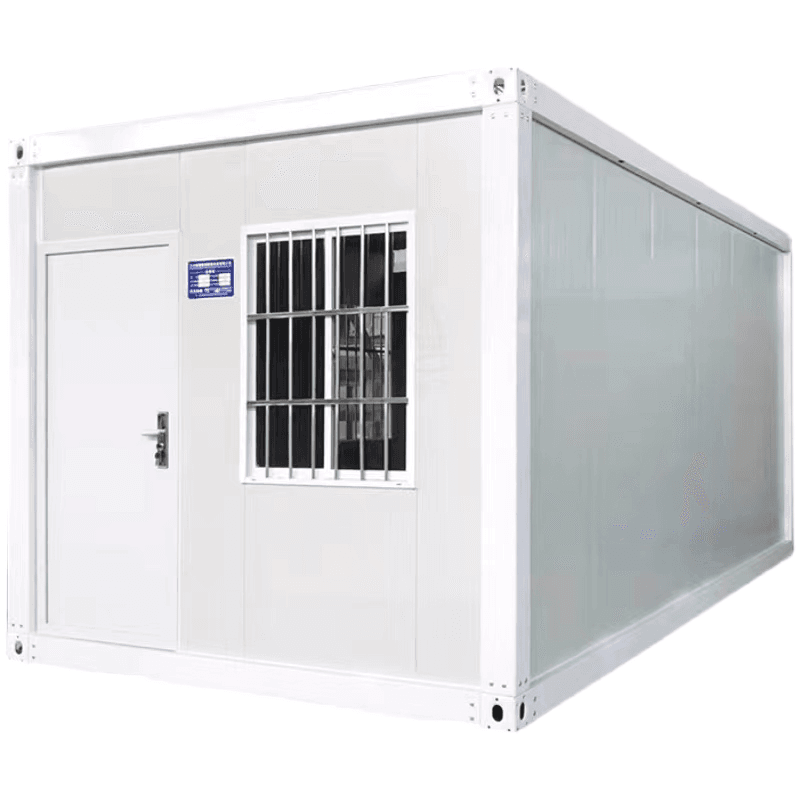
Advantages
- Fast construction speed: Cement prefabricated houses are built by prefabricating cement panels in the factory in advance and assembling them on-site. The construction speed is 60-70% faster than that of traditional house building. For example, the modules from Kouping can be produced and leave the factory in 7 days, and the framework of a Kouping house can be erected in just a few days. This significantly shortens the construction cycle and meets the needs of rapid occupancy or emergency housing.
- Lower cost: The main structure of a cement prefabricated house is about 30% cheaper than that of a brick house, allowing ordinary families to save tens of thousands of yuan. This is because factory production reduces material waste, and the later maintenance costs are also lower than those of traditional houses. From a long-term perspective, the economic efficiency is quite prominent.
- Excellent environmental protection: Most of the construction waste can be recycled, and carbon emissions are directly reduced by half. Some projects have even obtained international certifications, conforming to the current green and environmentally friendly building concept and helping to reduce the negative impact on the environment.
- Good safety: Factory prefabrication results in smaller errors. After seismic testing, these houses can withstand earthquakes of a certain magnitude, and the overall settlement is less than that of ordinary houses. After three years of use, the overall structural stability is good, and the house has strong durability and seismic capacity, providing a relatively safe living environment for occupants.
Disadvantages
- Quality risks: If the construction is not standardized, there is a certain probability of problems such as foundation settlement or wall cracks within 5 years. Construction in low-temperature environments is more likely to cause issues. Some cases show that the maintenance costs after 5 years account for a quarter of the original construction cost, increasing the later use costs.
- Poor sound insulation and waterproofing: The sound insulation effect of prefabricated panels is not good, and the water leakage rate at the joints is nearly twice that of traditional buildings, requiring regular leak-proof treatment. The probability of roof leakage in prefabricated houses is 30% higher than that of brick houses. During the rainy season or high-temperature seasons, problems such as water leakage and dampness are likely to occur inside the house, affecting living comfort.
- Cost affected by the market: Fluctuations in the prices of raw materials such as cement can affect costs. After the cement price increase last year, prefabricated houses were only 5% cheaper than traditional buildings. If transported to remote areas, freight may account for 5% of the total cost, increasing the uncertainty of construction costs.
- Limited design: Currently, they can only be built as houses with a few floors or less, and the exterior facades are prone to color differences. After 5 years, there may be 15% to 20% color differences, requiring frequent maintenance, which limits the aesthetic appeal and personalized design of the buildings.
- Poor thermal insulation: Poor thermal insulation performance leads to air-conditioning electricity costs that are 20-30% higher. The design life is 60 years, but in practice, major repairs are needed after about 40 years, increasing long-term use costs.
Related



