
Effect of Cement Prefabricated Houses
The effect of cement prefabricated houses is remarkable, featuring multiple advantages such as efficiency, cost-effectiveness, and durability, though there are also certain limitations.
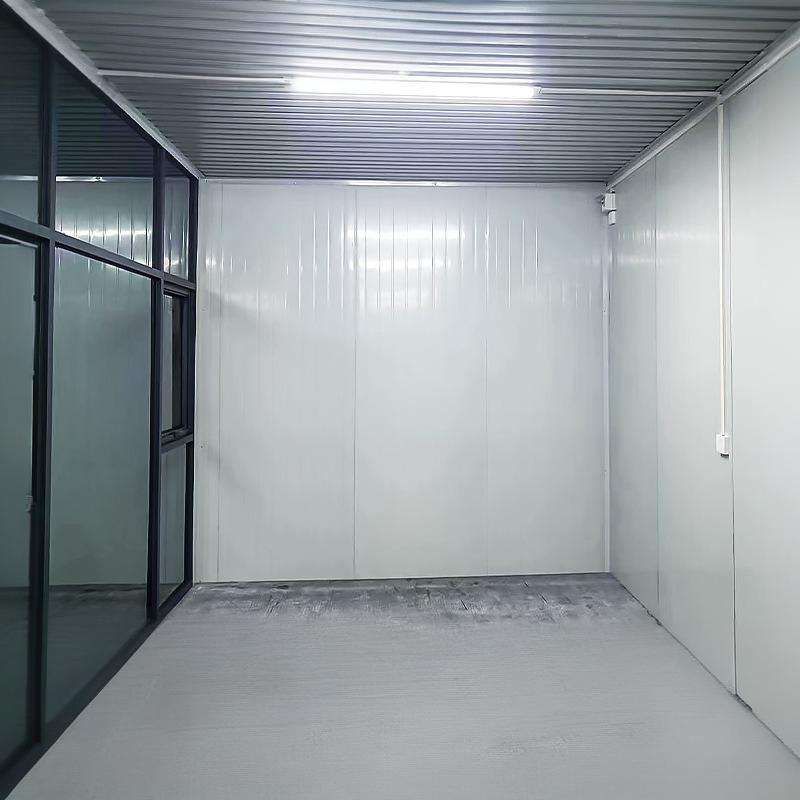
1. Outstanding Advantages in Construction Speed and Cost Cement prefabricated houses are constructed using factory-prefabricated components assembled on-site, significantly shortening the construction period. For example, a cement prefabricated house of about 200 square meters in rural Henan can be erected within 4 hours, with an entire building taking only two days. Their cost is also much lower than that of traditional brick-and-mortar structures, with a construction cost of approximately 300 yuan per square meter, and the total price of a large villa being just over 100,000 yuan. These efficient and cost-effective characteristics make them highly competitive in scenarios such as rural dilapidated house renovations and temporary buildings.
2. Excellent Performance and Strong Adaptability Cement prefabricated houses possess multiple excellent properties: earthquake and pressure resistance, fire and flame retardancy, thermal insulation and energy efficiency, wind and moisture resistance, and corrosion and weathering resistance. Their designed service life exceeds 70 years, with simple maintenance and no restrictions from seasons or weather, allowing construction throughout the year. Additionally, the houses support overall relocation and secondary disassembly and assembly, enabling recycling and further cost savings.
3. Wide Application Scenarios and Flexible Customization Cement prefabricated houses are suitable for various scenarios, including office buildings, small hotels, staff dormitories, private garages, etc., as well as rural self-built housing and temporary buildings on construction sites. They come in a variety of specifications and styles and can be customized according to site size and usage requirements to meet the housing needs of different groups.
4. Room for Improvement in Design Flexibility and Performance Optimization Despite their obvious advantages, cement prefabricated houses still have shortcomings. For example, their design flexibility may be limited, making it difficult to meet complex architectural needs; their thermal insulation performance requires further optimization under extreme climatic conditions; and their earthquake resistance in earthquake-prone areas still needs technological improvements.
In summary, cement prefabricated houses perform excellently in terms of efficiency, cost, and durability, but they require optimization in design flexibility and specific performance to adapt to a wider range of application scenarios.



