
Back to blog
Article
Causes of Water Accumulation in Container Houses
Admin September 16, 2026
The causes of water accumulation in container houses mainly include two aspects: water accumulation on the roof panel and the appearance of water droplets due to moisture return inside the house, as detailed below:
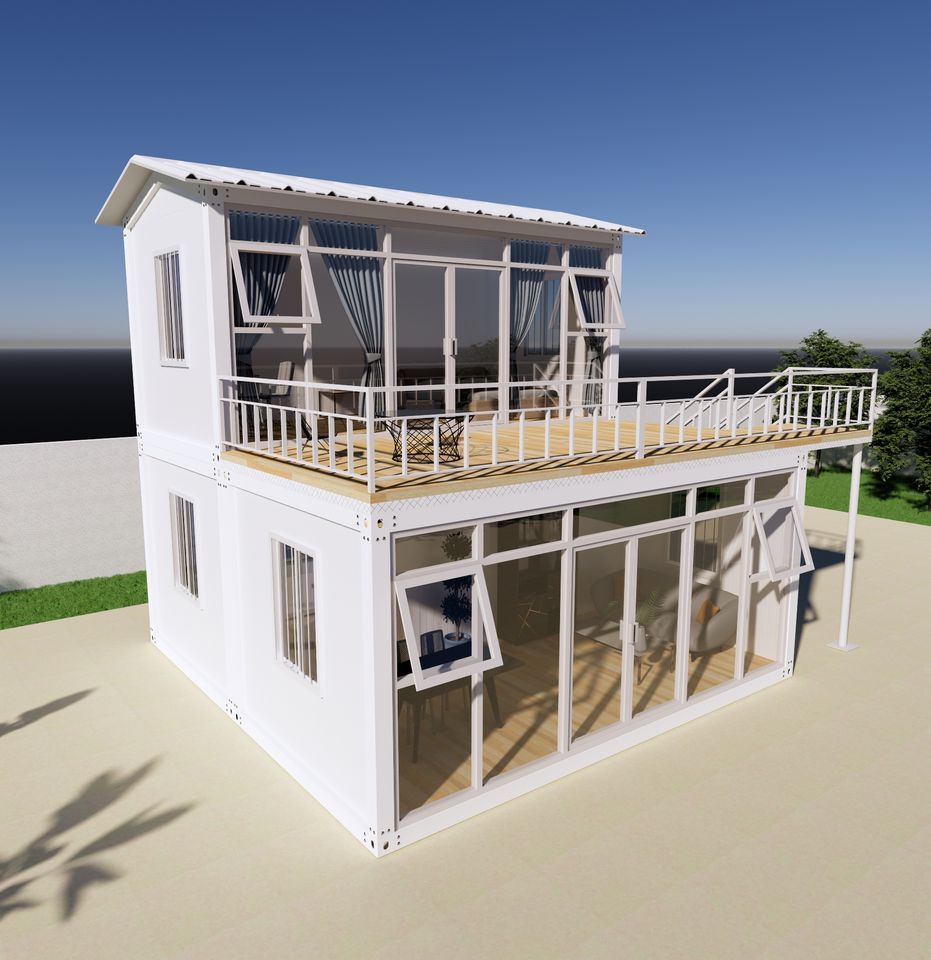
Causes of Water Accumulation on Container Roof Panels
- Rainwater Leakage: In humid climatic conditions, moisture such as rainwater and dew can penetrate the roof panel. If there are cracks, damage, or poor sealing on the roof panel, water tends to accumulate on it, forming puddles. For example, in containers exposed to wind and rain for extended periods, the sealing胶 (sealing compound) on the roof panel may age and crack, allowing rainwater to enter and accumulate on the panel.
- Vehicle and Cargo Loading/Unloading: During the loading and unloading of vehicles and cargo, improper handling that causes cargo to touch the roof panel can generate a rebound force, damaging the roof panel's structure. Once the structure is compromised, its drainage function is affected, leading to water accumulation. For instance, when lifting large cargo, if it collides with the roof panel, causing local deformation, water accumulation may occur.
- Container Storage Location: The environment in which the container is stored also affects water accumulation on its roof panel. Storing it in moldy or waterlogged areas can cause the roof panel to be influenced by the surrounding environment and accumulate water. For example, placing a container in a low-lying area with poor drainage may result in surrounding water seeping onto the roof panel.
Causes of Water Droplet Appearance Due to Moisture Return in Container Houses (Related to Water Accumulation)
- Temperature Differential Condensation: When there is a temperature difference between the inside and outside of the container house, water vapor in the air condenses into water droplets on colder surfaces. For example, this can occur during sudden temperature drops from high daytime temperatures to cold nights or when using air conditioning, causing the floor temperature to drop below the dew point temperature of the indoor air.
- External Moisture Infiltration: Containers are designed with ventilation holes, through which external moisture may infiltrate. Additionally, if a container is placed directly on unhardened mud or grass, ground moisture can rise through capillary action, exacerbating moisture accumulation inside the container.
- Cargo Moisture Content: The moisture contained in the cargo itself can also be released into the air, increasing indoor humidity. For example, wood with a moisture content between 8%-25% continuously releases moisture during storage, raising indoor humidity and leading to moisture return and condensation.
- High Air Humidity: In regions with high temperatures and humidity, the air contains a large amount of water vapor, providing ample 'raw material' for condensation. When encountering temperature differences or surface cooling, water vapor easily condenses into water droplets.
- Improper Insulation Layer Design: If the floor insulation layer is missing, insufficient in thickness, or has poor thermal insulation properties, it cannot effectively block heat exchange. As a result, the floor temperature is more likely to drop below the dew point, leading to moisture return.
Related



