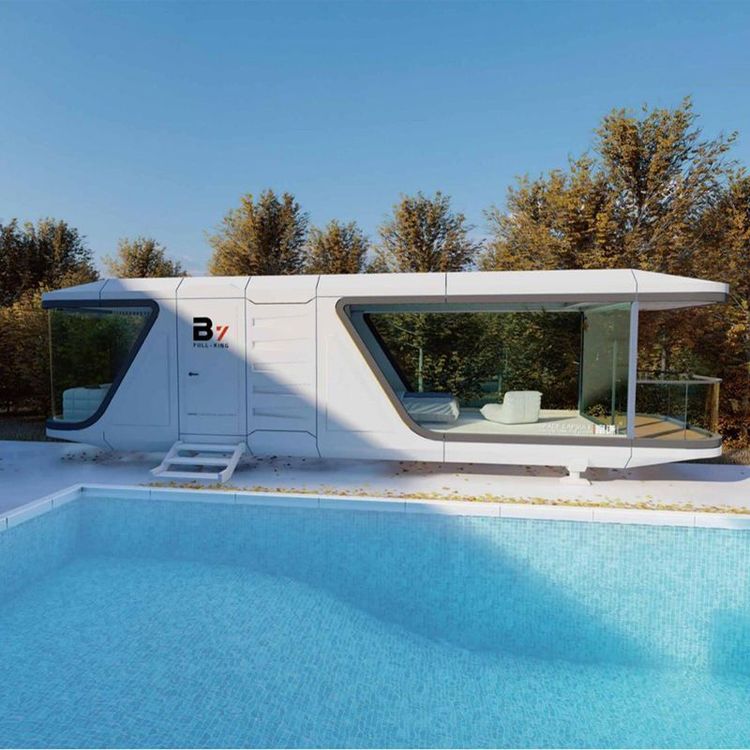
Caoqiao Post Station Container House
The Caoqiao Post Station Container House is a multi-functional convenience service space transformed from containers, characterized by cost-effectiveness, flexibility, and diverse functionality. The following is an introduction from multiple aspects:

I. Basic Concepts and Characteristics The container post station is transformed from standardized containers, featuring portability and reusability, allowing for rapid layout adjustments according to needs. Its procurement and renovation costs are more economical compared to traditional buildings, and the construction period is short. For example, the Shanghai Gubei Post Station took only one month from design to completion, with just a few days of factory production and a few hours of on-site installation.
II. Functions and Service Scenarios The functions of the container post station cover leisure reading, emergency support, water and power supply, simple meal heating, agricultural product exhibitions, and cultural event hosting, among others. The application scenarios include:
- Community Services: For instance, the "Zuoyou Linshe Service Post Station" in the Wunanli Community in Shanghai provides a standardized operating venue for convenience stalls such as shoe repair and mending, addressing governance challenges in old residential areas.
- Party-Mass Services: For example, the Party-Mass Service Station in the Dasanjing Community in Hefei is equipped with tables, chairs, air conditioners, first-aid kits, and other facilities, regularly offering volunteer services such as home appliance repairs and health check-ups.
- Care for Outdoor Workers: Such as the "Nuanxin Post Station" in Qingshan District, Wuhan, which provides rest, power charging, and water supply services for food delivery riders, sanitation workers, and others.
- Cultural Landmarks: For example, the container smart post station on Guangzhou Bio-Island integrates photovoltaic energy storage technology, generating 12,000 kilowatt-hours of electricity annually, serving as a model of "carbon-neutral urban furniture".
III. Design Innovation and Adaptability Modern container architecture breaks away from the traditional metal box image, emphasizing design aesthetics and environmental integration. For example:
- The Shanghai Gubei Post Station features ginkgo leaf warm yellow elements and floor-to-ceiling glass door design, with a three-sided open structure suitable for interactive activities.
- The Daya Bay Aotou Port Coastal Post Station transforms containers into a modern building with a steel structure and glass curtain wall, naturally blending with the coastal ecological environment.