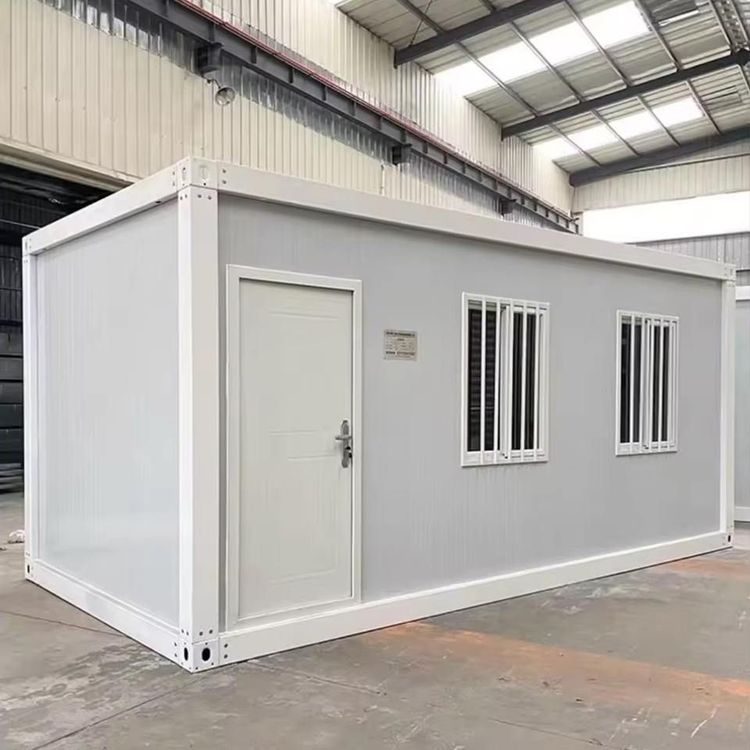
Cangyuan Container House Toilet
There are related practices of container house toilets in Cangyuan area, with the 'toilet revolution' in Paliang Village as a representative example. Through various models, toilet renovations are promoted to improve sanitary conditions and the living environment.

Background and Objectives of the 'Toilet Revolution' in Paliang Village
In the past, Paliang Village had widespread issues of old-fashioned dry toilets and open-air latrines. Problems such as unregulated sewage discharge, manure drying in courtyards, and mixed human-animal habitation were prominent, seriously affecting the village's appearance, breeding mosquitoes and germs, and restricting the improvement of rural quality. To completely break free from environmental constraints and improve people's well-being, Paliang Village has taken the rural 'toilet revolution' as a people-oriented project, coordinating the promotion of key tasks such as the construction of new public toilets, the renovation of household toilets, the separation of humans and livestock, and sewage treatment, systematically addressing the legacy issues of dry toilets, open-air latrines, and dirty toilets.
Specific Renovation Models and Measures
- Sewage treatment facilities: Based on the actual situation of the village, precise measures are taken according to local conditions. Small-scale and efficient sewage treatment facilities such as 'small three-grid' and 'large three-grid' are actively promoted to eradicate rural environmental problems from the source.
- Human-livestock separation governance model: An innovative model combining centralized and decentralized human-livestock separation governance is implemented, completely bidding farewell to the backward lifestyle of mixed human-animal habitation and mixed use of toilets and livestock pens, achieving a win-win situation of improved living environment quality and increased efficiency in ecological livestock farming.
- Promotion mechanism: The governance unit is refined, with 5 households forming a micro-grid. A promotion mechanism of 'government subsidies, farmer self-financing, neighborly mutual assistance, and party member household responsibility' is constructed. Following the思路 (idea) of 'upgrading and renovating a batch, building a new batch, and standardizing and improving a batch', a comprehensive and zero-blind-spot promotion of standardized renovation of sanitary household toilets is carried out. Village-level public toilets are scientifically laid out to fully meet the sanitary service needs of villagers' daily lives and foreign tourists.
Long-term maintenance mechanism
A regular maintenance mechanism is established. A duty system where villagers take turns to clean public toilets in the village is implemented, with定点 (fixed-point) cleaning and sanitation in the morning and evening every day. Toilet maintenance, household hygiene, and village environment are included in the 'small积分 (points) for big governance' evaluation system. Through villager mutual evaluation, point incentives, and regular supervision, the masses are guided to consciously participate in daily maintenance, promoting the transformation of sanitary maintenance from 'cadre supervision' to 'mass consciousness', truly ensuring that sanitary toilets are well-built, well-managed, and well-used.