
Can Toilet Bowl Be Moved?
Whether toilet bowls can be moved depends on the situation, as the moving methods and restrictions vary significantly for different types of toilets:
Toilet Types: Moving Requires Combining Drainage Methods and Tools
The feasibility of moving a toilet bowl primarily depends on the design of the bathroom's drainage system. In same-floor drainage bathrooms, the pipes are buried inside the bathroom itself, making it relatively flexible to adjust the toilet's position. This can be achieved through the use of a toilet offset flange or by re-laying pipes to create a diverse layout. For example, if you need to move the toilet from a wall-mounted position to the center of the bathroom, you simply need to re-plan the pipe route and install an offset flange. Inter-floor drainage bathrooms have more restrictions on movement. The toilet offset flange is only suitable for minor adjustments (e.g., within 15 centimeters). For longer distances, you may need to raise the floor or drill holes in the floor slab to modify the pipes, and this must be done by professionals to avoid damaging the building structure. Additionally, the use of toilet offset flanges has limitations. They can only address minor adjustments in special pit distances or left-right positions. After moving, the increased curvature of the pipes may raise the risk of blockages, requiring regular maintenance with pipe unclogging agents or high-pressure water guns.
Squat Toilet Types: Moving Requires Reconstructing the Sewer System
Moving a squat toilet is more difficult than moving a toilet bowl because it needs to be directly connected to the drainage pipe under the floor. If you need to move the position of a squat toilet, you must reinstall the sewer system, which may involve modifying, extending, or replacing pipes, requiring a significant amount of work and professional operation. For example, moving a squat toilet from one corner of the bathroom to the center requires removing the original pipes and re-laying them to the new position. During this process, it is essential to ensure that the pipe slope meets drainage requirements to avoid water accumulation or odors. Additionally, after moving a squat toilet, the increased length of the pipes makes it prone to blockages, necessitating enhanced daily maintenance, such as regularly checking for loose pipe connections and using filters to intercept debris.
Portable Toilets (Temporary Facilities): Modular Design for Flexible Configuration
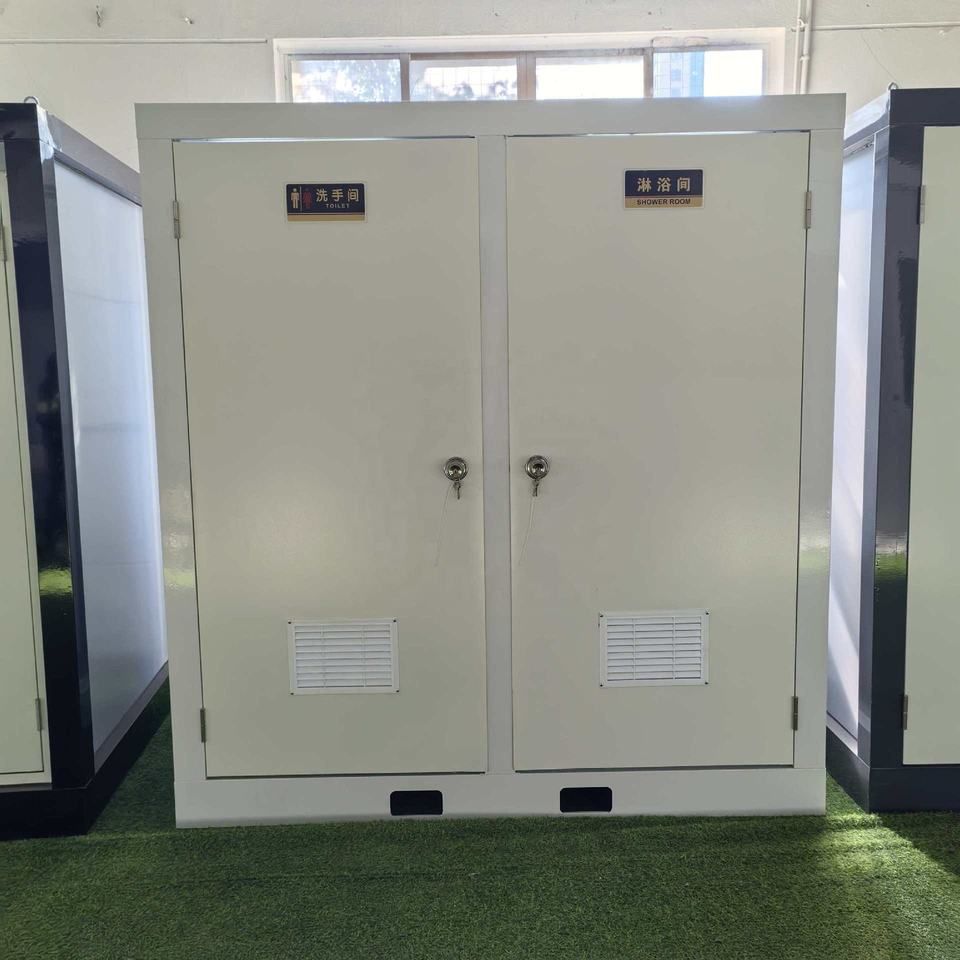
For temporary use scenarios (such as large events or construction sites), the number of stalls in portable toilets can be flexibly adjusted. In the commercial market, models with 1-2 stalls account for 80% and are suitable for small events or short-term construction. If you need to accommodate more people using the toilets simultaneously, you can choose models with 4 or more stalls. Some manufacturers support modular expansion to 10+ stalls by connecting multiple independent units for rapid capacity increase. The movement of such toilets does not require modifying the building structure; they can simply be transferred using forklifts or cranes and connected to water and electricity for use. However, it is important to regularly clean the septic tanks to prevent overflow.



