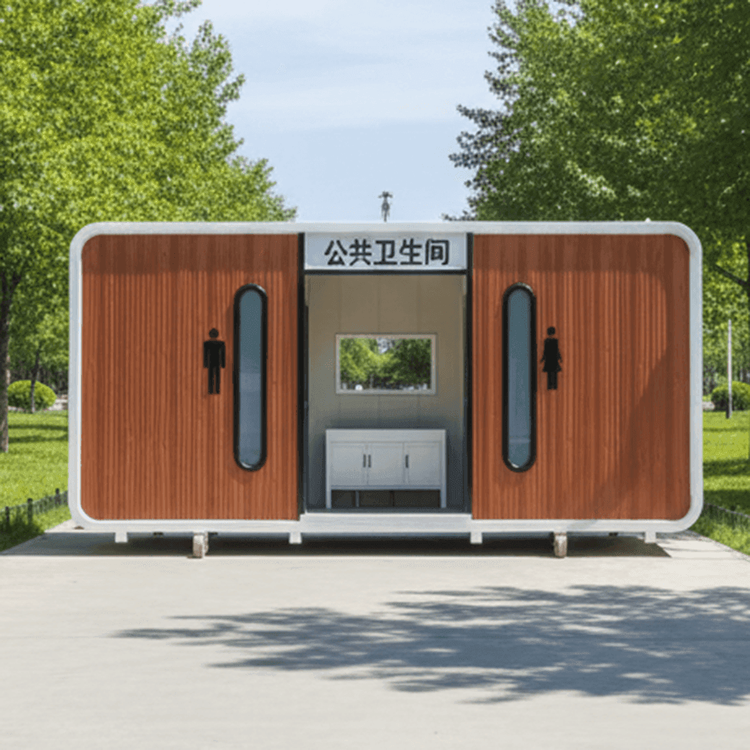
Can Flatbed Trailers Haul Container Houses
Flatbed trailers can haul container houses, but they must meet conditions such as vehicle qualifications, size and weight limits, securing methods, and road transportation regulations. Details are as follows:

1. Vehicle Qualifications and Compliance
Flatbed trailers must possess legal transportation qualifications, including complete documentation such as a vehicle registration certificate and a road transportation permit. If the vehicle has been modified (e.g., by adding container securing devices), it must be declared and approved by traffic management authorities in advance to ensure compliance with the Road Traffic Safety Law and avoid legal risks associated with unauthorized vehicle structure alterations. For example, securing devices must pass safety inspections and be filed; otherwise, they may be considered illegal modifications.
2. Size and Weight Restrictions
The dimensions (length, width, height) and total weight (including cargo) of the container house must not exceed the flatbed trailer's rated load capacity and road height restrictions. According to the Road Traffic Safety Law, the total vehicle height generally must not exceed 4 meters. For example, a 40-foot standard container house can have a maximum load of up to 28 tons and requires a flatbed trailer with a sufficient rated load capacity (e.g., a 13-meter-long flatbed trailer typically has a rated load capacity of 30-35 tons). If the house exceeds size limits (e.g., width exceeding 2.5 meters), an Oversized Vehicle Permit must be obtained, and a dedicated transportation route must be planned.
3. Securing Method Requirements
Professional securing devices must be used during transportation to prevent box displacement. Key requirements include:
- Using twist locks (Safe Working Load, SWL ≥ 10 tons) to secure the four corners of the container, ensuring it is locked to the flatbed trailer chassis;
- Supplementing with straps or container turn locks for reinforcement, especially for foldable or modular container houses. Foldable types require locking the hydraulic system, while modular types need high-strength bolts to connect modules to prevent disassembly during transportation;
- After securing, checking the tightness of the devices to prevent loosening due to bumps.
4. Road Transportation Regulations
Transportation must strictly comply with Article 48 of the Road Traffic Safety Law, prohibiting overloading, speeding, or violating loading requirements (e.g., over-width or over-length). When transporting a 40-foot container, a turning radius of at least 13 meters must be ensured to avoid scraping roadside facilities. For oversized transportation (e.g., height exceeding 4.5 meters), a permit must be obtained from public security traffic management authorities in advance, and the vehicle must travel at specified times and routes while displaying conspicuous signs.
Summary: Transporting container houses with flatbed trailers requires prioritizing legality and safety, ensuring compliance through qualification verification, size matching, securing reinforcement, and regulated transportation. If modifications or oversized transportation are involved, approval procedures must be completed in advance to avoid legal risks.