
Can Container Houses Resist Strong Winds?
Container houses can resist strong winds when reasonably designed and reinforced, but their actual wind resistance is influenced by multiple factors, and some unreinforced or substandard products may not meet the claimed wind resistance ratings. Here is a detailed analysis:
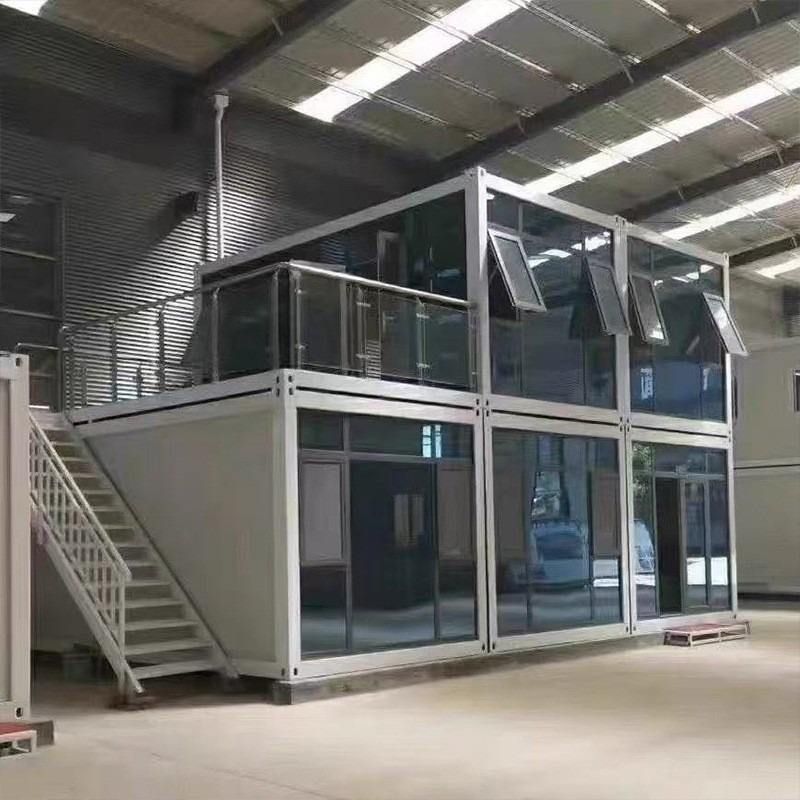
1. Theoretical Wind Resistance
Container houses are primarily structured around steel frames, and their wind resistance mainly depends on frame strength, connection methods, and reinforcement measures. For example, YAZHI standard container products can withstand up to a force 13 strong wind (wind speed of 40m/s). CHENGDONG housing products, through structural reinforcement (such as enlarging beam and column sections, adding reinforcement accessories) and external auxiliary reinforcement (such as wind-resistant cables), can resist hurricanes of force 12 or above, and even successfully withstood a force 17 hurricane in the Bahamas project. Additionally, foldable container houses weigh up to 1265KG, and packing-box units are even heavier at 1350KG, with their solid weight design further enhancing wind stability.
2. Issues in Actual Cases
A case in Haiyan, Jiaxing, showed that a container house labeled as "wind-resistant to force 10" was severely damaged in a force 8 wind. The reasons included:
- Quality Defects: The house had thin iron sheets and shallow nail fixings, causing the side wall panels to lift and the frame to deform under wind pressure;
- Installation Problems: The house was located in an open area with strong winds, where the actual wind force might have exceeded force 8, but no targeted reinforcement was carried out;
- False Advertising: The manufacturer admitted that "wind-resistant to force 10" was merely an advertising slogan and had not undergone actual testing, with the materials and structure of the standard product unable to meet the claimed rating.
3. Key Influencing Factors
- Reinforcement Measures: The stability of the foundation, frame connection strength (such as high-strength galvanized hinges), and reinforcement of enclosure materials (such as adding structural purlins and increasing self-tapping screws) directly affect wind resistance;
- Environmental Conditions: In open areas, wind forces may significantly increase due to the "venturi effect", requiring design adjustments based on actual wind pressure;
- Quality Supervision: Full-process quality supervision (including raw material testing, mechanical calculations, and factory testing) is the foundation for ensuring wind resistance performance, with some manufacturers possibly simplifying processes to reduce costs.
4. Comparison with Other Building Forms
Container houses have significantly better wind resistance than mobile panel houses (light steel structure + color steel sheets, prone to having their roofs blown off), but they need reinforcement to achieve the same stability as foldable container houses and packing-box units. In areas prone to typhoons, container houses are a better choice, while mobile panel houses pose a risk of structural damage.



