Can Container Houses Be Used in the North?
Container houses can be used in the north and can adapt to the northern climate through targeted design and modifications.
The northern region has a cold and dry climate, with winter temperatures often dropping below -20℃ and significant temperature differences between day and night in summer. This places high demands on the insulation, freeze protection, and waterproofing performance of container houses. Through scientific design and modifications, container houses can effectively meet these challenges, with specific measures as follows:
1. Upgrade Insulation Materials
In professional projects, container houses use thickened insulation materials, such as rock wool sandwich panels, which have low thermal conductivity and can effectively block cold air. In extremely cold regions, additional insulation layers can be added inside or outside the container, filled with high-density polyurethane (PU) or extruded polystyrene (XPS) boards, with a recommended thickness of 100-150mm to enhance overall insulation performance.
2. Optimize Door and Window Seals
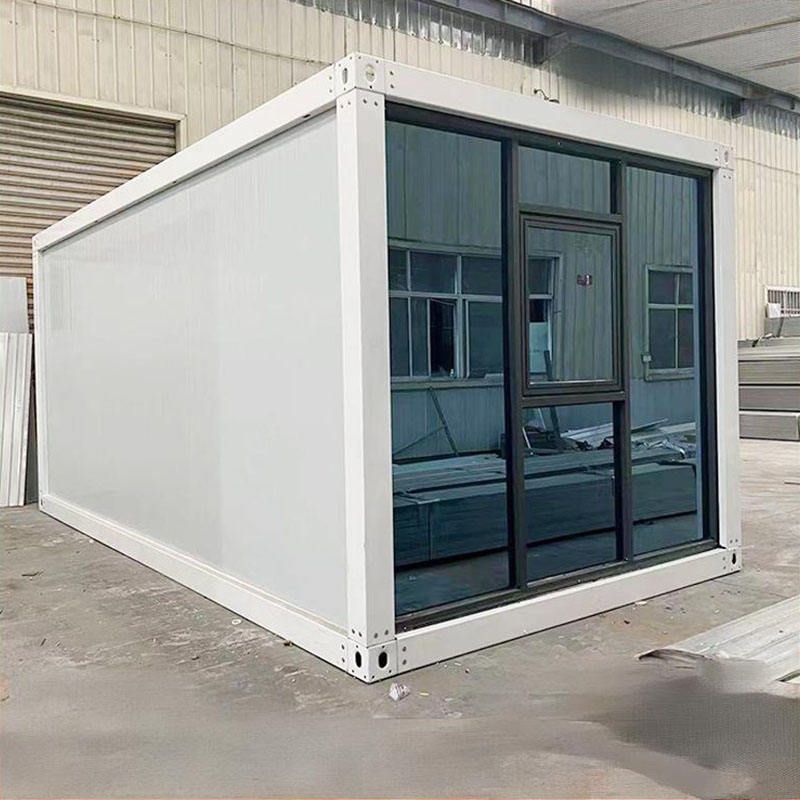
Doors and windows are the main channels for heat loss and should use thermal break aluminum frames paired with double or triple-glazed windows, along with sealing strips to reduce cold air infiltration. Plastic-steel or thermal break aluminum doors and windows offer better sealing performance, and adding sealing strips to gaps can further reduce heat loss.
3. Configure Heating Systems
To ensure indoor warmth, container houses can be equipped with electric heaters, heat pumps, or underfloor heating systems. Underfloor heating systems distribute heat evenly and comfortably through radiant floor heating; electric heating films can be attached to walls or floors for rapid heating. All water pipes and drainage pipes should be wrapped with insulation materials and fitted with electric tracing cables to prevent freezing.
4. Waterproofing and Anti-Corrosion Treatment
For outdoor use in the north, attention should be paid to waterproofing and insulation. The roof should use a single piece of color-coated steel plate, with waterproofing strips added at seams; the thickness of wall insulation rock wool should meet standards to avoid shrinkage; container houses for long-term residence can have additional exterior wall insulation layers and eaves installed. For double-layer construction, the bottom should undergo anti-corrosion treatment to extend service life.
5. Adaptive Modifications for Long-Term Residence
For long-term residence, additional exterior wall insulation layers can be added to the container to enhance energy efficiency; eaves design can prevent rainwater from flowing back; double-layer structures can further improve insulation performance, while bottom anti-corrosion treatment can prevent structural damage caused by moisture.
In conclusion, through material upgrades, seal optimization, heating system configuration, and waterproofing and anti-corrosion measures, container houses can fully adapt to the northern climate and meet residential or usage needs.