Can a Mobile Toilet Be Installed at Home?
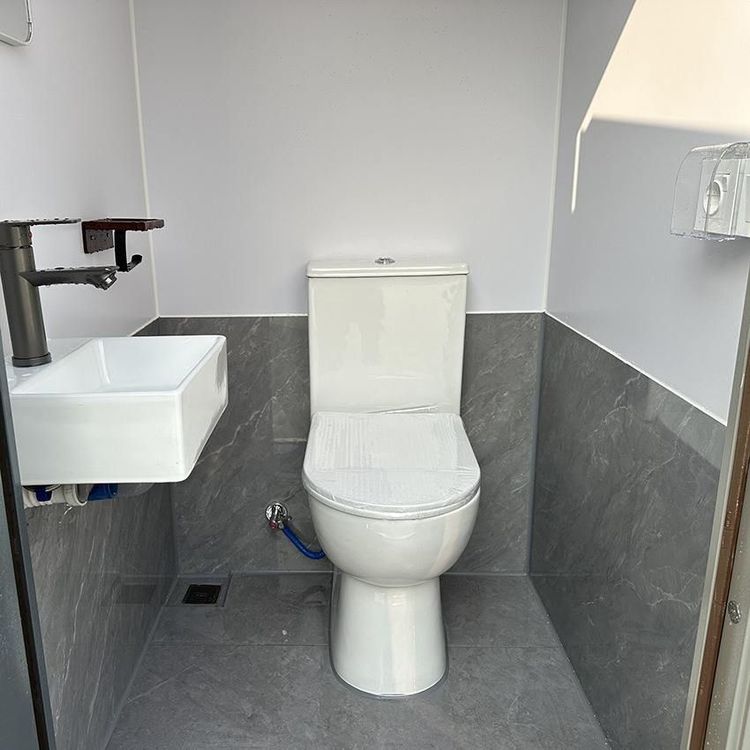
Mobile toilet facilities can be installed at home, but appropriate methods need to be selected based on specific circumstances.
Mobile toilet facilities that can be directly installed
If only basic toilet needs are to be met, a portable commode or an indoor mobile toilet can be installed at home. These facilities usually have an independent water tank and a sewage container, eliminating the need to connect to a complex drainage pipe system. They are relatively easy to install and use. Their relatively small size means they don't take up much space and are suitable for placement in spaces such as bedrooms and living rooms. They are especially convenient for elderly or sick people with limited mobility.
Cases of moving the toilet position
If you want to move the position of the existing toilet at home, you need to consider the type of drainage in the bathroom.
- Same-floor drainage: In this case, the pipes can be directly modified. Since the pipes for same-floor drainage are laid above the floor slab of the current floor, it is relatively easy to modify the pipes without affecting the residents downstairs. You can re-plan the drainage pipe route of the toilet according to the new layout requirements and install the toilet in the desired position.
- Inter-floor drainage: There are several treatment methods. One is to use a toilet offset connector, but it is recommended that the offset distance does not exceed 2m. A toilet offset connector can change the position of the toilet's drainage outlet to a certain extent, but an excessively long offset distance will increase the risk of pipe blockage because the turning angle of the water flow in the pipe increases, making it easier for waste to accumulate. Another method is to change to a wall-mounted drainage system, where the toilet's drainage pipe is hidden inside the wall, and the sewage is discharged through the pipes inside the wall. This method allows for more flexible adjustment of the toilet position, but the construction is relatively complex, requiring operations such as slotting and pipe laying on the wall, and it has certain requirements for the wall structure.
Whether using a toilet offset connector or changing to a wall-mounted drainage system, after moving the toilet position, pay attention to the slope setting of the pipes to ensure that the sewage can be discharged smoothly and avoid problems such as poor drainage and odor emission. At the same time, choose high-quality pipe materials and fittings during construction to ensure the stability and durability of the drainage system.