
Mobile Public Toilets in Camping Parks
Mobile public toilets in camping parks come in various design forms, structural types, mobility methods, and sewage treatment approaches, offering advantages such as mobility, modularity, and ease of transportation.
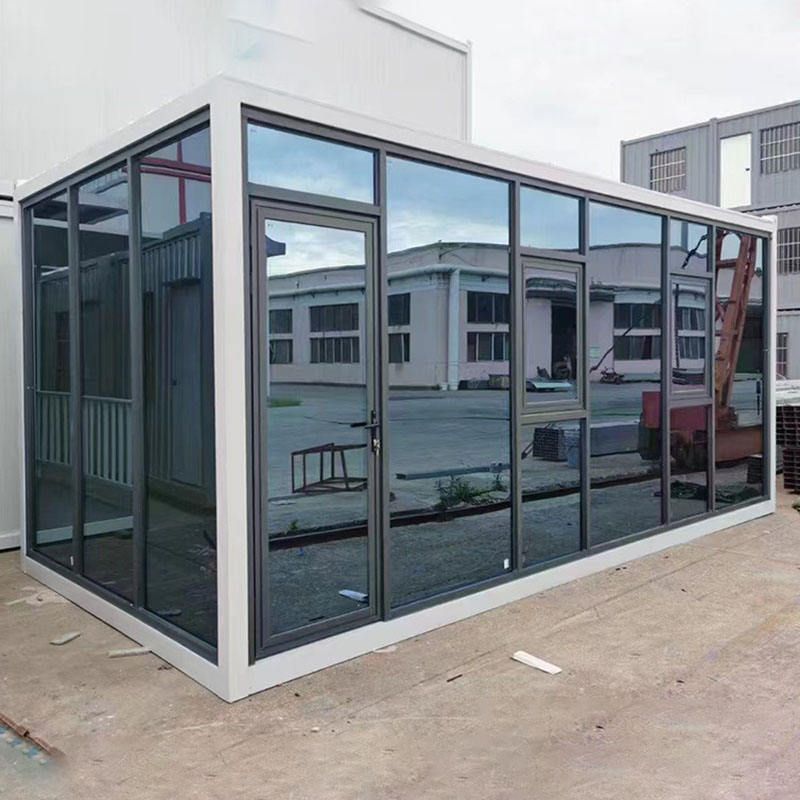
Design Forms
Mobile public toilets in camping parks feature a range of unique designs. For instance, the Apple Pod-style mobile toilet allows for customizable layouts. A customized toilet for Mr. Wang in Zhejiang features eight independent squat toilets, along with rain protection facilities and a communal sink in front. There are also Apple Pod-style mobile toilets with dopamine-inspired color schemes, boasting an attractive exterior and interior ventilation and lighting designs. The number of squat toilets for men and women can be customized according to requirements, and they are equipped with open-style handwashing areas and urinals to meet the needs of different campers.
Structural Types
In terms of structural form, mobile toilets can be divided into single-unit mobile toilets and composite-structure mobile toilets. Single-unit structures are relatively independent and have concentrated functions; composite structures may be composed of multiple parts, offering advantages in space utilization and functional expansion.
Mobility Methods
Based on mobility methods, there are lifting and handling-type mobile toilets, which mainly rely on lifting equipment or manual handling to change positions; and powered and towed-type mobile toilets, which are equipped with power devices or can be towed, providing greater flexibility and convenience in movement, enabling them to quickly reach designated locations within camping parks.
Sewage Treatment Methods
Regarding sewage treatment, mobile toilets can be classified into water-flush and waterless suction-type mobile toilets, recirculating water-flush mobile toilets, and dry-packing mobile toilets. Water-flush and waterless suction-type mobile toilets use water for flushing in the former case and suction for treating fecal sewage in the latter; recirculating water-flush mobile toilets can recycle flushing water, conserving water resources; dry-packing mobile toilets collect feces and other waste in special packing bags for subsequent treatment.
These mobile toilets offer significant advantages such as mobility, modularity, and ease of transportation. They can be conveniently transported to locations where toilets are needed according to the actual requirements of camping parks and can be used repeatedly, providing convenient toilet facilities for campers.



