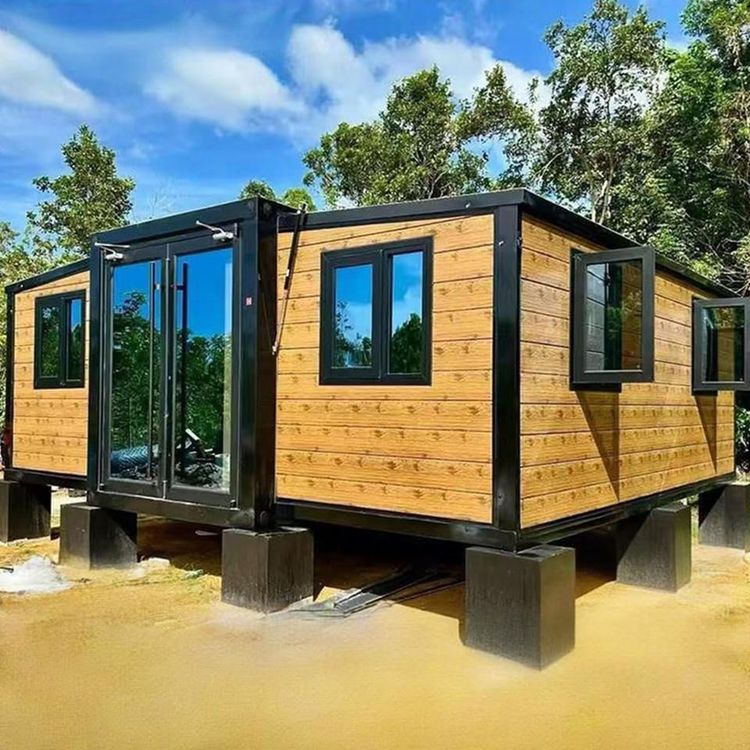
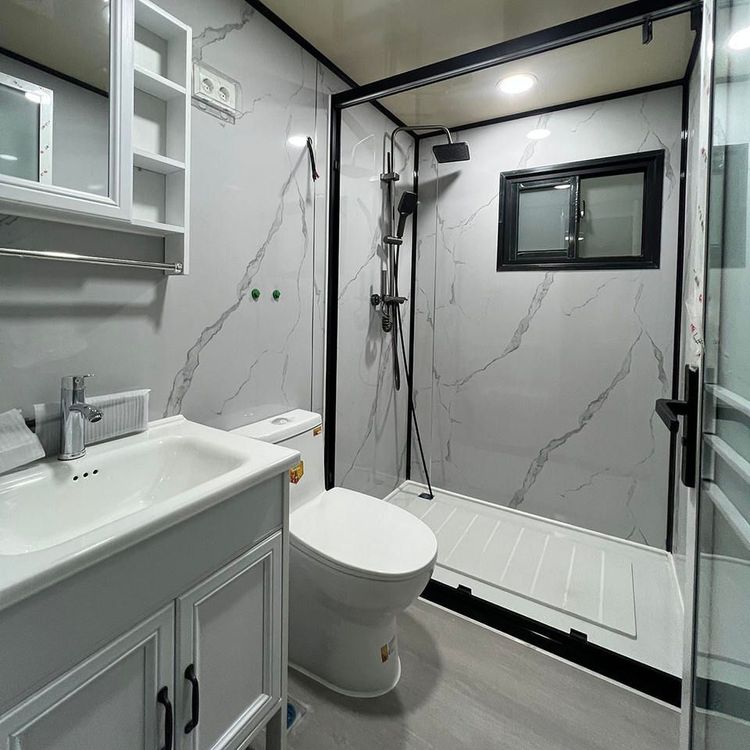
Camping Mobile Toilet Renovation Case
The camping mobile toilet renovation case covers three main directions: landscape integration, integration of environmental protection technologies, and application of standardized products. Below is a specific practical analysis:

1. Landscape Integration Design: 'Toilets with a View' at Beijing Tiankai Picnic and Camping Park
Located 85 kilometers southwest of Beijing, this project was originally a flower field landscape. During the renovation, it was necessary to take into account both ecological protection and land regulations (which prohibit new construction). The toilets feature an open fence design with no roof structure. There are four locations in total, each containing two toilets, a sink, and benches. In terms of material selection, priority is given to natural stones (such as pebbles) and copper faucets, which are hand-built by local workers, reflecting regional characteristics. The sink tops are made of concrete slabs with sloped drainage designed for both functionality and aesthetics. Completed in May 2020, the project has become a landmark facility for the park's transformation into a camping and leisure destination, proving that toilet design can be deeply integrated with natural landscapes to enhance user experience.
2. Integration of Environmental Protection Technologies: Mobile Toilets in Panzhihua Scenic Area and Camping Sites
This case focuses on container-type environmentally friendly mobile toilets as the core, offering a variety of product specifications (such as single-unit single-toilet, standard double-toilet, and multi-functional integrated models). The environmental protection standards are strict: the container body has a waterproof rating of ≥IP65, and the floor is coated with three layers of waterproofing. The integrated sewage storage tank has a leakage rate of ≤0.1% over 24 hours and is equipped with anti-backflow and water-seal odor prevention devices, effectively addressing odor and pollution issues. Structurally, it uses a reinforced steel frame and Class A fire-resistant materials, supporting rapid hoisting and relocation, making it suitable for construction sites, camping sites, and other scenarios. This solution achieves a balance between efficient utilization of mobile toilets and ecological protection through modular design and environmental protection technologies.
3. Application of Standardized Products: Classic 4-Squat Mobile Toilet
For small to medium-sized outdoor venues (such as scenic areas and rural squares), this case adopts an integrated finished product design with a standardized four-compartment layout, requiring no complex civil engineering and ready for use upon placement. Structurally, the steel frame is wind and pressure resistant, and the exterior walls use weather-resistant panels. Internally, it is equipped with ceramic squat toilets, silent exhaust systems, LED lighting, and supports the addition of facilities such as sinks. This solution is characterized by standardization and rapid deployment, balancing durability and comfort, making it suitable for temporary events or long-term fixed use scenarios.
Summary: The renovation of camping mobile toilets requires selecting solutions based on site requirements, regulatory constraints, and user preferences. Landscape integration design enhances the user experience, integration of environmental protection technologies ensures ecological safety, and the application of standardized products balances efficiency and cost. Together, these three aspects drive the professionalization and humanization of camping infrastructure.