
Business Class Container House
Currently, there is no detailed definition or exclusive product introduction directly targeting 'business class container houses'. However, based on the classification logic and functional characteristics of high-end container houses in the modular construction field, it can be inferred that it may refer to the 'sixth-generation box' product launched by Farile Group, which belongs to the high-end packing box series and emphasizes comfort, functional integration, and scenario adaptability.
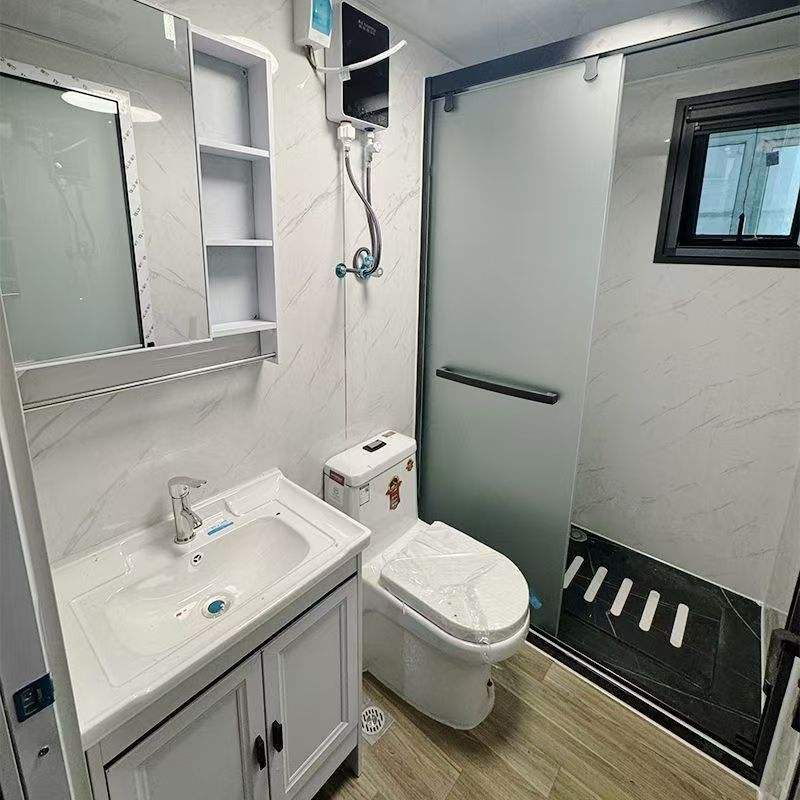
Speculative Features of Business Class Container Houses
Positioning and Functional Adaptation
Farile Group classifies container houses into categories such as economy class, first class (packing boxes), and business class (sixth-generation boxes). Among them, the 'business class' may correspond to high-end commercial scenarios, such as corporate exhibition halls, temporary office headquarters, and cultural and tourism supporting housing. Its design may place greater emphasis on space utilization, functional integration, and brand image display, such as being equipped with standardized office modules, conference systems, or brand display areas.Structural and Performance Standards
High-end container houses typically adopt hot-dip galvanized cold-formed steel frames paired with fire-resistant polyurethane or rock wool sandwich panels, capable of withstanding wind speeds of up to 12 and earthquakes of magnitude 8, with a frame deformation rate of less than 0.3%. Business class products may further optimize sound insulation and thermal insulation performance on this basis, such as adopting a three-layer structure (outer layer of galvanized sheet, middle layer of rock wool, and inner layer of PVC-coated steel sheet) to reduce indoor temperature fluctuations and enhance comfort.Customization and Flexibility
Business class container houses may support modular assembly, personalized facade customization (such as glass curtain walls, themed spray paintings), and internal functional modifications. For example, the quick-assembly boxes from Suzhou Zhongnan Steel Structure Co., Ltd. can expand space through assembly and support special structures such as curved walls and floor-to-ceiling windows. Business class products may further simplify the customization process and shorten delivery cycles.Reusability and Cost-Effectiveness
High-end products typically have a design life of over 20 years and support multiple disassembly and reassembly cycles. Business class container houses may reduce disassembly and reassembly losses by optimizing details such as connecting bolts and sealing strips. For example, a single set of products can be disassembled and reassembled more than 15 times, with the cost per use being only one-third of that of a brand-new product, making them suitable for commercial scenarios requiring frequent relocation.
Industry Trends and Purchase Recommendations
The current modular construction industry is moving towards a full life cycle of low-carbon recycling and cross-scenario versatility. When purchasing a business class container house, it is recommended to prioritize verifying the manufacturer's domestic and foreign certification qualifications, project delivery capabilities, and after-sales maintenance system to ensure that the product complies with fire prevention, earthquake resistance, and other compliance standards, while also paying attention to its customization flexibility and long-term operation and maintenance costs.



