
Built-in Water Trough for Container Houses
The built-in water trough for container houses is primarily used to address drainage issues, prevent water accumulation and leakage, and enhance the waterproof performance and service life of the house. The specific functions and implementation methods are as follows:
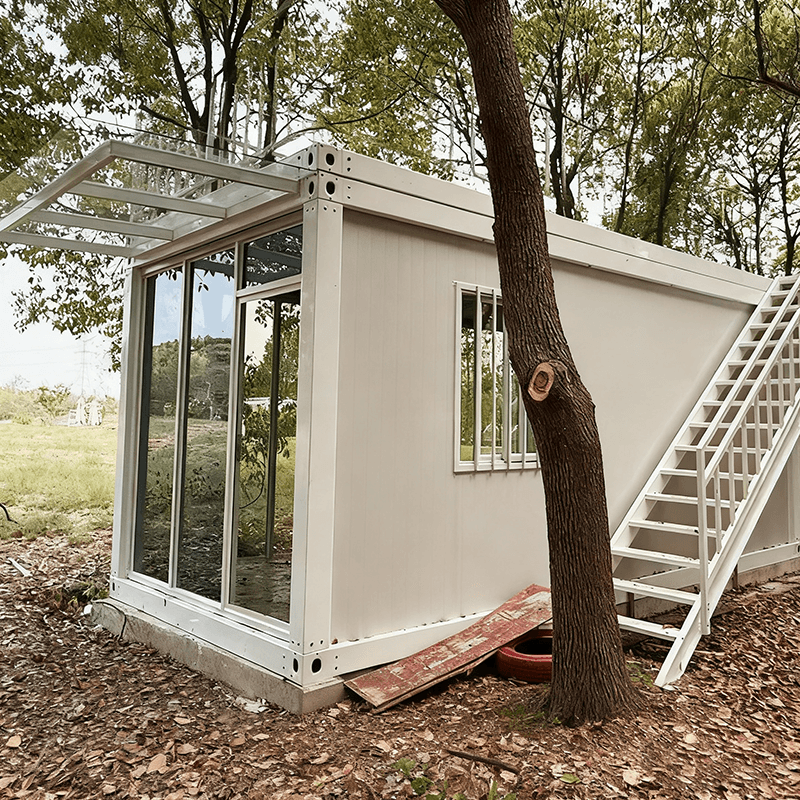
I. Core Functions of the Built-in Water Trough
The waterproof design of container houses needs to focus on solving two problems: leakage at the joints and drainage of water accumulated on the roof. Traditional low-end containers are prone to forming leakage channels at the seams due to limitations in the panel joining process. Especially in rainy or snowy weather, accumulated water may seep into the interior, damaging the decoration or equipment. The built-in water trough guides the accumulated water to flow in a specific direction, collecting rainwater or melted snow from the seams or roof and directing it to preset drainage outlets, thereby preventing water accumulation and completely resolving the persistent leakage problem. For example, the packed container houses from Nanjing Changyou Intelligent Integrated Housing Technology Co., Ltd. achieve a 'zero-leakage' effect through the cooperation of the built-in drainage system and the water trough, significantly improving the waterproof rating of the house.
II. Implementation Methods of the Built-in Water Trough
Drainage at Joints
For the seams at the joints of containers, the built-in water trough usually adopts a hidden design, installed below or inside the panel seams. The water trough is mostly made of stainless steel or galvanized steel plate, which is corrosion-resistant and has high strength, capable of withstanding long-term water flow impact. The water trough uses guide plates or sloped structures to direct the accumulated water seeping in from the seams to the drainage outlets at the edges of the house, ultimately discharging it outdoors. This design eliminates the need for exposed drainage pipes, ensuring the neatness of the house's appearance and avoiding the risk of damage to exposed components due to aging or collisions.Optimization of Roof Drainage
For container houses that are permanently fixed in use (such as residential containers and commercial containers), roof drainage is crucial. Flat-roof containers are prone to water accumulation due to poor drainage, increasing the risk of leakage. In this case, a U-shaped drainage trough can be welded at the edge of the flat roof, using gravity to guide rainwater to preset drainage outlets. For example, the popular containers produced by Suzhou Zhongqiu Integrated Housing Co., Ltd. feature a lightweight steel structure roof and are equipped with 304 stainless steel drainage troughs, ensuring both drainage efficiency and the durability of the house. The 304 stainless steel material has excellent corrosion resistance, adapting to harsh outdoor environments and extending the service life of the drainage trough.
III. Material and Process Requirements
The material of the built-in water trough must meet the requirements of being corrosion-resistant, high-strength, and easy to process. Stainless steel (such as 304 stainless steel) is a common choice, with a smooth surface that is not prone to dirt accumulation and can be firmly connected to the main body of the container through welding or riveting processes. During processing, it is necessary to ensure that the slope of the water trough is reasonable (usually not less than 2%) to ensure smooth drainage; at the same time, the drainage outlets should be equipped with filters or anti-blocking devices to prevent debris from clogging the pipes. In addition, the connection between the water trough and the container should be sealed (such as using waterproof glue or silicone sealant) to further enhance the waterproof effect.
You may also like

Portable Toilet Eco-Friendly: MOQ, Samples & Quotation Guide
Read More
Top Portable Toilet Color Steel Manufacturers: How to Choose a Factory Partner
Read MorePortable Toilet Picture: Types, Features & Buying Tips
Read More