
Building Container Houses
Building container houses requires a scientific process and attention to technical details; core steps and key points are as follows:
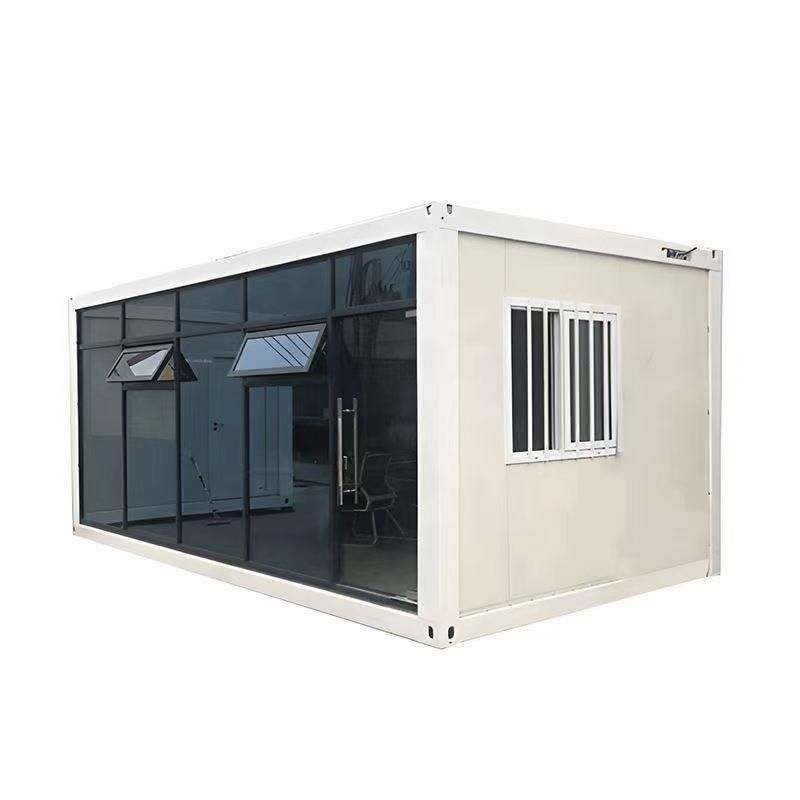
1. Early planning and use definition
Before building, clarify the house’s use (temporary housing, commercial space, emergency facilities, etc.) and scale. For example, a 200 m² wilderness house may need five shipping containers, while a small creative space may need only 1-2. Use directly shapes structural design, materials, and functions—emergency medical facilities need stronger ventilation and disinfection; commercial fitness pods need space reserved for equipment.
2. Foundation work and structural assembly
- Foundation: choose the foundation type by geology. In wilderness settings, drive 12 concrete piles for support and bearing capacity; urban sites may use strip or raft foundations. Reserve water and electrical interfaces in the foundation to align precisely with bottom openings in the containers.
- Container modification: cut doorways and windows and weld reinforcing frames for stability. For multi-story builds, weld or bolt container tops to bottoms to form a unified load path.
- Lifting and fixing: use cranes to place containers on piles and chain-lock corners against movement. Align bottom openings with foundation utilities to centimeter-level accuracy to avoid later rework.
3. Function upgrades and technology
- Thermal insulation: traditional containers conduct heat strongly; add rock wool, polyurethane foam, or similar on inner and outer walls, or use a double-container “sandwich” with insulation in between.
- Energy systems: integrate solar panels, storage batteries, and smart meters for off-grid power; or connect to the grid with a backup generator for outages.
- Smart management: IoT sensors monitor temperature, humidity, and air quality; a phone app remotely controls lighting, HVAC, and more for greater comfort.
4. Application scenarios and case references
Container houses are widely used for construction-site dorms, emergency medical stations, commercial innovation spaces, and more. For example, the 2026 Nagoya Asian Games in Japan used containers for the athletes’ village; Zaozhuang in Shandong built distinctive guesthouse scenic areas with containers; some brands convert them into 24-hour self-service fitness pods. These cases show modular combinations can meet diverse needs, with build cycles more than 50% shorter than traditional construction.
Summary: Building container houses must balance structural safety, practical function, and advanced technology. With sound planning and careful construction, they offer a low-cost, high-efficiency building solution.



