
Building a Prefabricated House
Building a prefabricated house typically involves steps such as design, factory prefabrication, and on-site assembly, offering advantages such as short construction periods, reduced labor requirements, and environmental friendliness, making it suitable for various scenarios including rural self-built houses and overseas apartments.
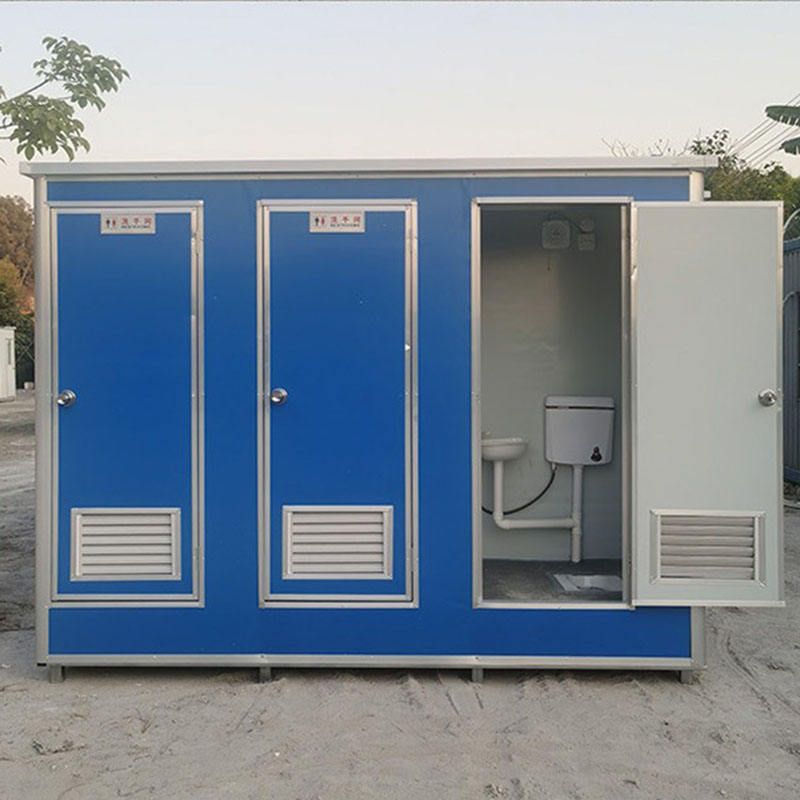
Design Phase: The design of prefabricated houses requires a high degree of precision, especially for modular buildings. The position of each steel bar must be precisely located, with errors and precision controlled in millimeters to ensure the accuracy of subsequent factory prefabrication and on-site assembly.
Factory Prefabrication: The building is disassembled into independent modules, and components such as ceilings, floors, and water and electricity pipelines are manufactured in the factory. For example, the China Construction HaiLong Intelligent Construction Industrial Park can deliver 20,000 to 30,000 modules annually, demonstrating the efficiency of industrial production. This production method not only improves component quality but also reduces uncertainties in on-site construction.
On-site Assembly: After the prefabricated components are transported to the construction site, they are assembled like building blocks. Taking a prefabricated house in rural South Korea as an example, 5-ton foundation piles are fixed using base plates, beams are quickly connected using mortise-and-tenon joints, stairs are hoisted and then a 5-cm-thick floor slab is laid, and finally, the gaps between components are grouted to ensure structural stability. This assembly method significantly shortens the construction period.
Technical System: Prefabricated houses encompass prefabricated concrete structures and steel structures, with components including beams, slabs, walls, and columns. Panel-based prefabrication focuses on prefabricated wall panels and floor slabs as the core; box-based prefabrication combines prefabricated functional units, increasing construction speed by 50%-70%; modular buildings have a higher degree of integration and can achieve rapid construction.
Advantages: Compared to traditional buildings, prefabricated houses reduce the construction period by more than 60%, decrease on-site labor by about 50%, and significantly reduce noise, dust, and construction waste. For example, a public housing project in Shenzhen, assembled from 6,028 concrete modules, reduced the completion and delivery period from 2.5-3 years to 1 year, fully demonstrating the efficiency and environmental friendliness of prefabricated houses.
Application Scenarios: Prefabricated houses have been widely used in rural self-built houses, overseas apartments, public housing, and other fields. Chinese-made prefabricated houses are selling well overseas, with the Guangzhou Customs District exporting 1.4 billion yuan worth of mobile houses in the first four months of 2026, a year-on-year increase of 38.1%, indicating a broad market prospect.



