
Build Container House Rental
When renting out container houses for construction purposes, it is necessary to comprehensively consider factors such as cost, demand, compliance, and service guarantees. The following is a detailed analysis:
I. Cost Investment and Returns
The costs of renting out container houses mainly include procurement or leasing costs, transportation and installation costs, and maintenance costs.
- Procurement Costs: The prices of different types of containers vary significantly. For example, an ordinary residential container costs about 6,300 yuan per unit, a high-end packing-box unit can cost tens of thousands of yuan, and a simple foldable container costs about 2,000-3,000 yuan per unit. If leasing is chosen, the daily rent can be as low as 6 yuan (e.g., in Qindu District and Weicheng District of Xianyang), and long-term leasing can further reduce costs.
- Transportation and Installation Costs: Foldable containers have high transportation efficiency. A 6-meter vehicle can carry 6 units, and a 17.5-meter flatbed truck can carry 20 units, reducing transportation costs. Installation is convenient and can be completed by 2-3 people, shortening the construction period.
- Maintenance Costs: Container houses are highly durable, with a service life of over 20 years. Daily maintenance mainly involves performance checks such as fire prevention and rain leakage prevention, with relatively low costs. In terms of returns, container house rentals are suitable for various scenarios such as construction site dormitories, temporary offices, and shops, with stable demand and a short payback period.
II. Market Demand and Positioning
The market demand for container house rentals is extensive, covering fields such as construction sites, cultural and tourism projects, and commercial activities.
- Construction Sites: There is a need for a large number of temporary dormitories and offices, with high requirements for cost, rapid assembly, and safety.
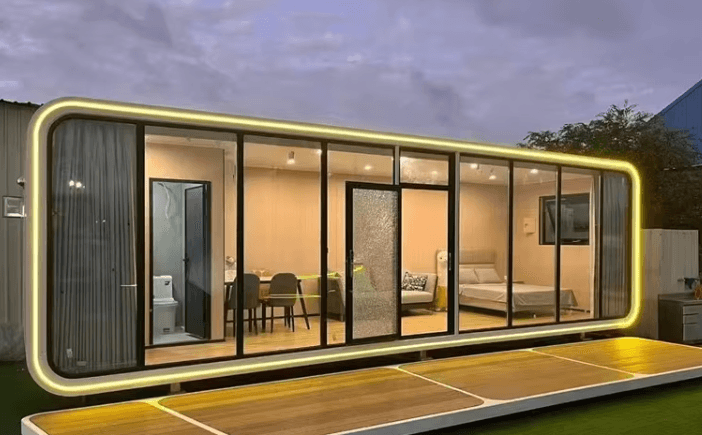
- Cultural and Tourism Projects: Such as homestays and starry sky rooms, which require personalized design and emphasize aesthetics and comfort.
- Commercial Activities: Such as pop-up stores and exhibition booths, which require flexible movement and rapid deployment. It is necessary to select the type of container according to the target market. For example, economic standard containers are preferred for construction sites, while high-end packing-box units or customized containers can be chosen for cultural and tourism projects.
III. Compliance and Safety
Renting out container houses must comply with local building codes and safety standards, such as fire prevention, earthquake resistance, and wind resistance requirements.
- Material Guarantee: Choose steel-framed containers to ensure wind and earthquake resistance.
- Fire Prevention Design: Adopt air-break thermal insulation design and fire-resistant materials to improve sound insulation, thermal insulation, and fire prevention performance.
- Compliance Certification: Cooperate with suppliers with complete qualifications to ensure that products meet national standards.
IV. Service Guarantees and After-sales Support
Choosing a supplier that provides comprehensive services can reduce operational risks.
- Flexible Leasing: Support short-term and long-term leasing, with the option to change sizes midway to meet dynamic project needs.
- Rapid Response: During the leasing period, if problems are encountered, the supplier should provide 24-hour maintenance services.
- Transportation and Installation: A professional team is responsible for transportation and hoisting, avoiding ground damage and ensuring safety and efficiency.



