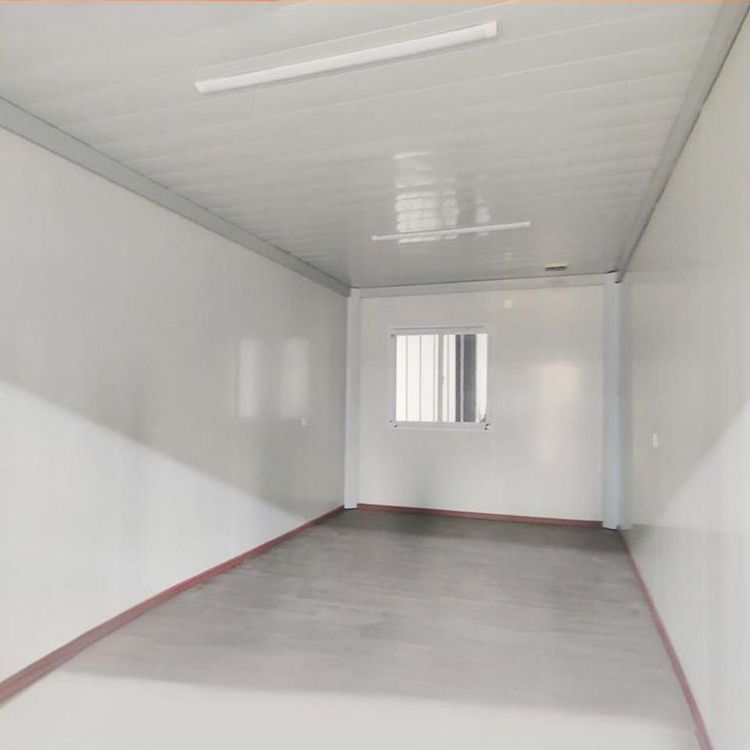
Bozhou Mobile Toilet Inspection Plan
The Bozhou mobile toilet inspection plan should cover architectural and structural verification, structural damage inspection, safety calculation analysis, and optional steel material performance testing. The specific implementation points are as follows:

1. Architectural and Structural Verification
Based on the original design drawings, use a handheld laser distance meter (such as Disto-D2) and a 5-meter steel tape measure to conduct sampling verification of the toilet's wall distribution, door and window positions and dimensions, structural axis dimensions, and height. Focus on verifying the consistency between the actual structure and the design drawings, ensuring that key dimensional deviations are within the allowable range (e.g., axis dimension deviation ≤ 5mm, height deviation ≤ 10mm). The verification data should be recorded in detail to provide a basis for subsequent analysis.
2. Structural Damage Inspection
Conduct a comprehensive inspection of damage defects in the mobile toilet through visual inspection and simple tool assistance. Focus on the aging and deformation of main load-bearing components such as steel beams and columns, check for looseness in node connections, cracks or corrosion in welded parts, and cracks or spalling in walls. For identified issues, mark the location, describe the damage morphology (e.g., crack width, deformation degree), and take photos for documentation.
3. Structural Safety Calculation Analysis
According to the 'Building Structural Load Code' (GB50009-2012), combined with on-site survey data (e.g., actual loads, material parameters) and original design information, use PKPM software to calculate the structural load-bearing capacity. The analysis should cover various load conditions such as dead loads, live loads, wind loads, and seismic actions to evaluate the structural safety under extreme conditions. If the calculation results do not meet the code requirements, further analyze the reasons and propose reinforcement recommendations.
4. Steel Material Performance Testing (Optional)
Based on the owner's requirements or the toilet's service life, conduct optional testing on the steel structural components:
- Non-destructive Testing: Use an ultrasonic flaw detector to inspect the quality of welds and detect internal defects (e.g., porosity, slag inclusions);
- Mechanical Property Testing: Sample and test the tensile strength, yield strength, and impact toughness of the steel to verify whether the material properties meet the design requirements (e.g., Q235 steel yield strength ≥ 235MPa).
Inspection Tools and Procedures
- Tool Preparation: Laser distance meter, steel tape measure, ultrasonic flaw detector, mechanical property testing machine, etc.;
- Procedures: Conduct sampling measurements according to the design drawings → Record damage defects → Calculate loads and simulate analysis → Sample and test as required.
Precautions
The inspection should be carried out by qualified professional institutions or personnel to ensure data accuracy; safety calculations should be combined with on-site actual data to avoid relying solely on theoretical models; for old or high-risk toilets, it is recommended to conduct steel testing to eliminate potential hazards.