
Box-type Toilet Mobile Restroom
The box-type toilet mobile restroom can refer to the design of container mobile restrooms, featuring modularity, mobility, and a sturdy structure. It has diverse compositions, structural forms, and mobility methods, along with flexible sewage treatment options.
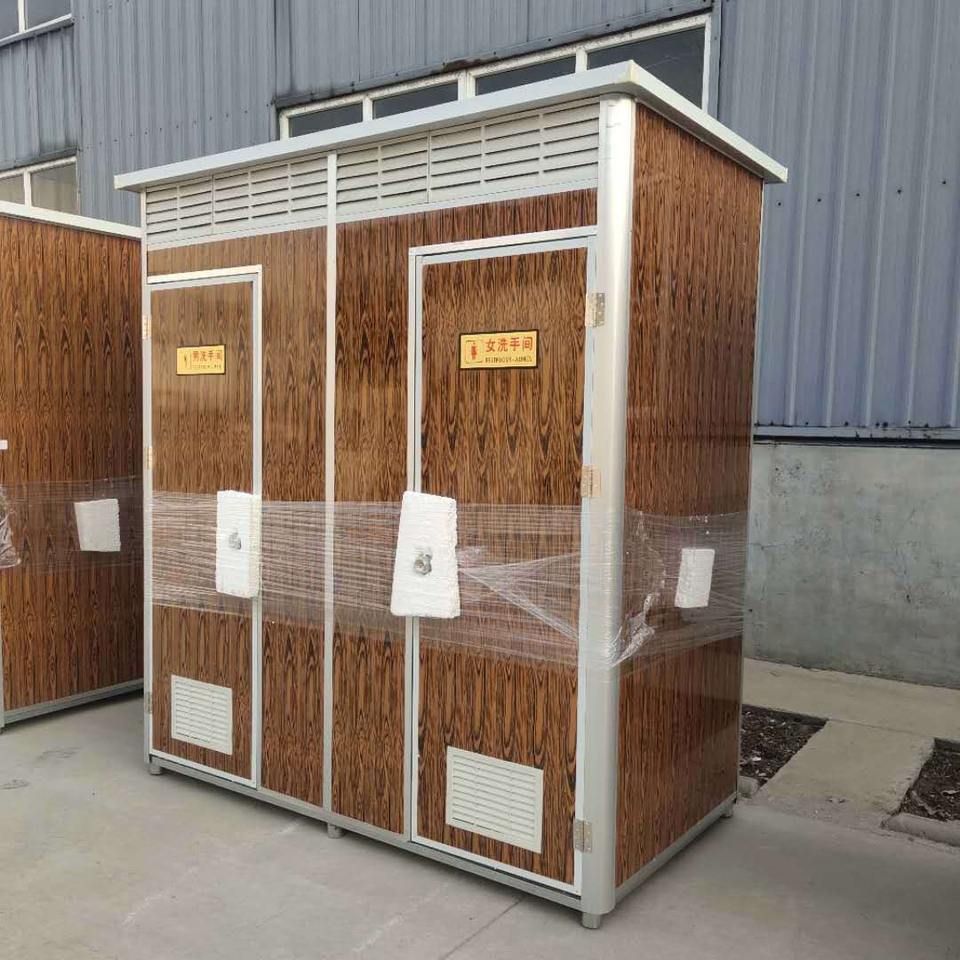
I. Basic Design Reference
The design of the box-type toilet mobile restroom can draw on the mature solutions of container mobile restrooms. For example, the customized container mobile restrooms designed by Blogus adopt standardized modules. Each restroom measures 9 meters in length, 3 meters in width, and 3.2 meters in height, with the entire installation completed in the factory to ensure structural accuracy and sealing. Its framework is welded from high-density galvanized steel, offering strong corrosion resistance and outstanding load-bearing capacity. The exterior walls and roof panels are made of high-strength, thickened galvanized steel sheets, providing windproof, rainproof, and heat-insulating functions to adapt to complex outdoor environments.
II. Core Components
The common components of mobile restrooms include:
- Fecal Treatment System: Depending on requirements, it can be equipped with storage tanks (requiring regular removal) or disposal devices (such as biochemical treatment modules).
- Structural Main Body: The floor uses anti-slip and easy-to-clean materials; the walls and roof form a closed space to ensure privacy and hygiene.
- Sanitary Facilities: Equipped with toilets, washbasins, water tanks, etc. Some high-end models also include dryers and deodorization systems.
- Mobility Devices: Wheels or slide rails are installed at the bottom for easy lifting, handling, or towing transportation.
III. Classification of Structures and Mobility Methods
- Structural Forms:
- Single Structure: An independent unit suitable for small-scale scenarios.
- Composite Structure: Multiple modules combined to expand into public restroom clusters.
- Mobility Methods:
- Lifting Type: Transported as a whole using lifting equipment.
- Powered Type: Equipped with its own engine or external power source for autonomous movement.
- Towing Type: Connected to a vehicle for flexible deployment.
IV. Sewage Treatment Technology Paths
- Flush Type: Relies on water tanks for supply, with feces discharged into storage tanks or municipal sewage systems.
- Waterless Suction Type: Uses vacuum suction technology to reduce water consumption.
- Recirculating Flush Type: Achieves water reuse through filtration and disinfection systems.
- Dry Packaging Type: Uses biodegradable bags to collect feces without flushing, suitable for water-scarce areas.
The box-type toilet mobile restroom, through modular design and technological integration, can quickly respond to temporary restroom needs and is widely used in scenic spots, construction sites, disaster relief, and other scenarios. Its standardization and flexibility make it an important development direction for modern public sanitation facilities.



