
Back to blog
Article
Box-type Container House Wholesale
Admin September 15, 2026
When wholesaling box-type container houses, it is essential to focus on five core elements: product type, process performance, compliance services, scenario adaptability, and cost control. Here is a detailed analysis:
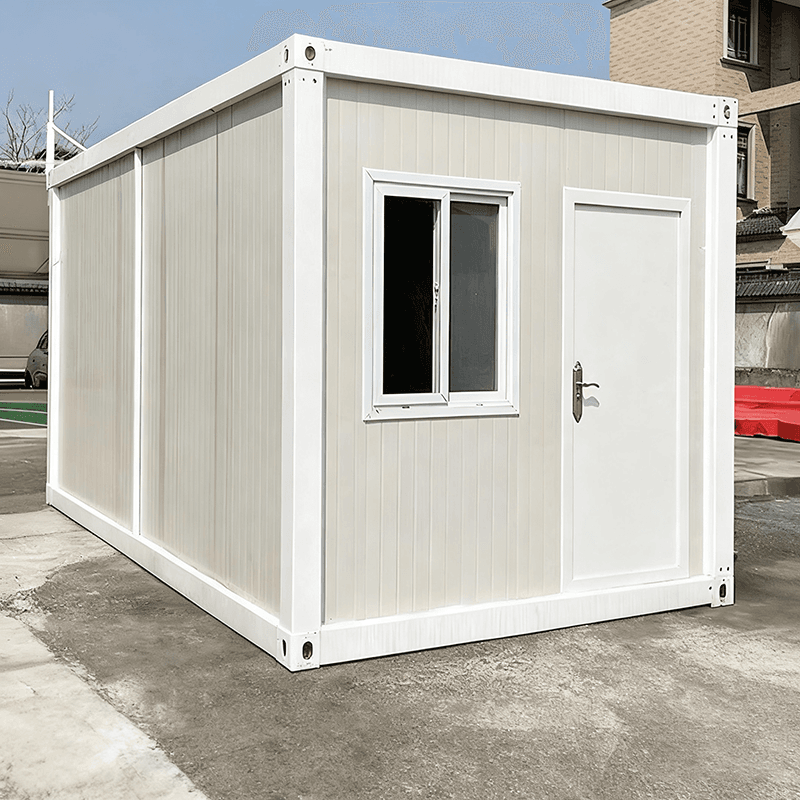
1. Clarify Product Types and Uses
Box-type container houses can be divided into four main categories based on their structure and use:
- Container-style Office Buildings: These use standard containers as carriers, with common sizes of 20 feet and 40 feet. They can be used individually or combined, suitable for project departments, construction site command centers, and other scenarios.
- Foldable Office Buildings: These feature a foldable design, reducing volume during transportation and allowing for quick deployment on-site. A single unit can be unfolded in less than 30 minutes, making them ideal for exploration teams and temporary command posts that require frequent relocation.
- Modular Office Buildings: These combine light steel frames with color steel panels, allowing for modular on-site assembly. They can be flexibly expanded based on the number of occupants and functional zones, commonly used in temporary park offices and event planning sites.
- Expandable Office Buildings: These add lateral or end expansion modules to containers, increasing usable area by 30%-50% when deployed. They are suitable for long-term on-site offices requiring higher spatial comfort.
2. Evaluate Process Performance and Durability
Process performance directly affects the product's service life and reusability. Key considerations include:
- Weld-free Quick Assembly Process: Reducing welding points minimizes structural stress concentration, enhancing stability after multiple disassemblies and reassemblies.
- Disassembly and Assembly Wear: High-quality products should have a structural deformation rate of less than 5% after disassembly, ensuring reusability.
- Material Selection: The steel frame should use hot-dip galvanized cold-formed steel for superior rust and corrosion resistance. Wall panels should have fireproof and thermal insulation properties, such as rock wool, glass wool, or polyurethane sandwich panels.
3. Verify Compliance Services and Qualifications
Compliance is crucial for cross-border procurement or long-term use. Key checks include:
- Manufacturer Qualifications: This includes international standards like ISO and CE certifications, as well as domestic construction industry qualifications.
- Project Delivery Capability: Whether the manufacturer provides one-stop services from design and production to on-site installation, along with after-sales maintenance response speed.
- Cross-border Compliance: If intended for export, ensure the product meets the target market's building codes and environmental requirements.
4. Assess Scenario Adaptability and Customization Capabilities
Different scenarios have varying functional requirements. For example:
- Engineering Camps: Prioritize structurally robust and easily transportable container-style houses.
- Cultural Tourism Homestays: Light steel frame houses are more suitable due to their flexible customization of appearance and layout to meet personalized needs.
- Emergency Response: Foldable houses can be rapidly deployed, making them ideal for post-disaster reconstruction and other emergency scenarios.
5. Comprehensive Input-Output and Cost Analysis
Cost-effectiveness should be evaluated from a full lifecycle perspective:
- Procurement Cost: Choose entry-level, mid-range, or high-end products based on budget, but avoid compromising quality by solely pursuing low prices.
- Operation and Maintenance Cost: High-quality products can be disassembled and reused more than 8 times on average, reducing construction waste by about 90% and lowering long-term costs.
- Customization Cost: If special functions or irregular sizes are required, communicate customization plans and costs with the manufacturer in advance.



