
Boshan Mobile House Container
The Boshan mobile house container uses high-strength steel as its framework and adopts a modular design, featuring rapid assembly, mobility, environmental protection, and energy efficiency. It is widely used in construction sites, commercial settings, and emergency scenarios.
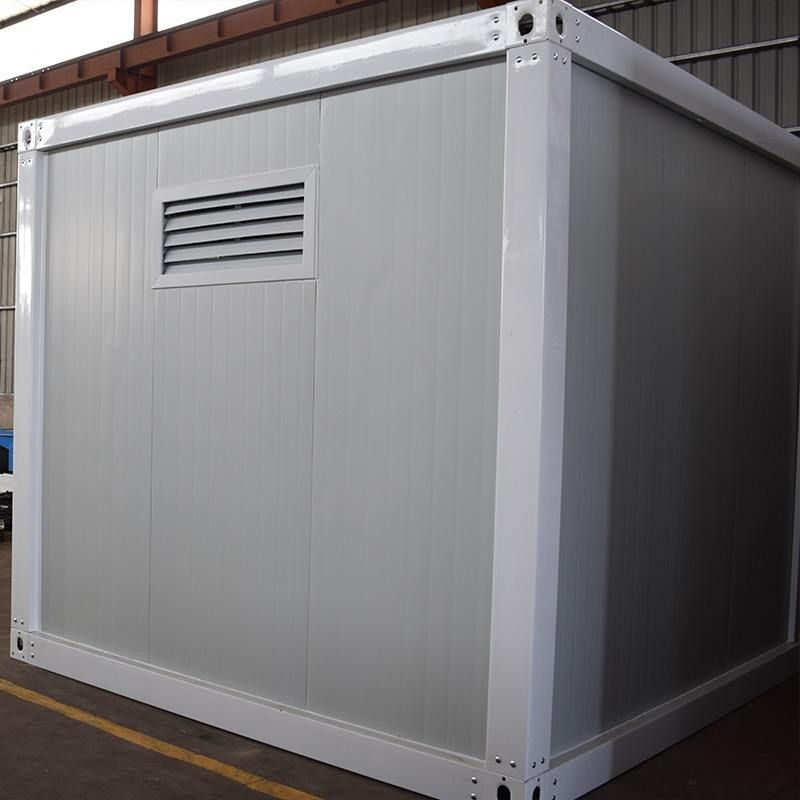
I. Structural and Material Characteristics
The main framework of the Boshan mobile house container is typically made of Q235 or Q345 high-strength weather-resistant steel, forming a stable structure through welding or bolt connections. It can withstand seismic and wind forces up to 10-level wind pressure, with a roof load capacity usually exceeding 150kg/㎡. The walls adopt a "sandwich" composite panel structure, filled with rock wool (Class A fire-resistant), glass wool, or polyurethane (Class B1 flame-retardant), with a thermal conductivity as low as 0.022-0.045 W/(m·K), meeting the insulation needs of different climatic zones.
II. Functions and Application Scenarios
- Construction Engineering: Used as project offices, worker dormitories, standardized kitchens and bathrooms, safety experience centers, and movable warehouses, supporting rapid deployment and repeated use.
- Commercial and Public Services: Suitable for scenic area homestays, mobile shops, cafes, temporary exhibition halls, emergency command centers, and quarantine points, adapting flexibly to diverse needs.
- Specific Industry Requirements: Covers scenarios such as wild camps in oil and mining areas, on-site camps for photovoltaic and wind power projects, and military field barracks, providing safe and reliable temporary housing solutions.
III. Core Advantages
- Rapid Assembly and Mobility: The modular design supports standardized interface rapid hoisting, with full bolt connections enabling damage-free disassembly and assembly. The material recovery rate exceeds 85%, reducing long-term usage costs.
- Environmental Protection and Energy Efficiency: The green spraying process and use of recyclable materials align with the "dual carbon" strategy, with no dust or noise emissions during construction and controlled waste.
- Structural Stability and Safety: The steel framework undergoes anti-corrosion treatment, with nodes using high-strength bolts. It can withstand winds over 12 levels, and the sandwich materials pass national flame-retardant tests, adapting to temperature differences between north and south.
IV. Purchase Recommendations
Pay attention to indicators such as steel thickness (main framework wall thickness ≥1.5mm), panel fire rating (Class A non-combustible, oxygen index ≥32), and node connection process (high-strength bolts or full-weld reinforcement). Verify factory inspection reports and fire safety certificates to avoid using flammable sandwich panels.



