
Biodegradable Mobile Toilet
A biodegradable mobile toilet is a new type of mobile toilet that utilizes biobased polymer materials, achieves environmental protection goals through closed-loop design, and has the potential for functional integration development.
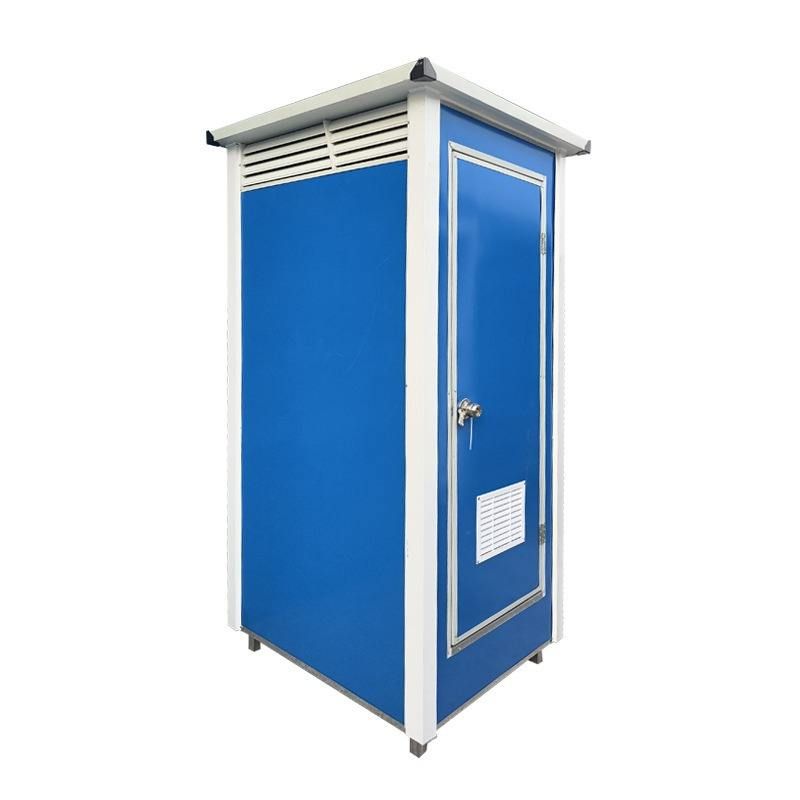
Material Composition and Degradation Principle
The core innovation of biodegradable mobile toilets lies in the fundamental transformation of material composition. Their main structures and some internal components are made of biobased polymers such as polylactic acid, starch-based composites, and cellulose derivatives. Under specific environmental conditions (e.g., appropriate temperature and humidity, active microbial communities), these materials can gradually decompose into water, carbon dioxide, and biomass through microbial action. The degradation period ranges from several months to several years, depending on the material formulation and environmental conditions. For example, high humidity and warm environments can accelerate degradation, while arid or low-temperature environments will prolong it.
Closed-Loop Design and Environmental Value
From the perspective of usage, its technological integration is reflected in closed-loop design. In addition to the main structure, the internal treatment system also adheres to biodegradable or harmless principles. For instance, solid waste treatment employs biodegradable encapsulation materials and efficient composite microbial agents to accelerate the conversion of excreta into stable humus. Some designs complete preliminary biological stabilization pretreatment during user usage, reducing reliance on traditional chemical disinfection or large-scale physical transportation and lowering the environmental load of secondary treatment. Compared to traditional plastic or metal mobile toilets, the biodegradable version has a significantly reduced environmental impact during the disposal stage. If improperly disposed of, traditional materials can create long-lasting plastic pollution or metal leaching risks, while biodegradable materials ultimately return to the natural cycle in compliant composting or natural environments, avoiding the accumulation of persistent solid waste. However, it should be noted that their environmental benefits are highly dependent on whether the terminal disposal conditions match the environment required for material degradation. If mixed into ordinary landfills, the degradation rate will be greatly slowed down in oxygen-deprived environments, and methane may even be produced.
Technological Innovation and Market Status
Technological innovation is moving towards functional integration and scenario-specific refinement. Researchers are focusing on how to effectively recover nutrients during the degradation process. For example, explored material formulations can release minerals beneficial to the soil in the later stages of degradation or synergistically convert organic waste collected in the toilet into safe soil amendments. For special environments such as arid or alpine regions, the design of biodegradable toilets needs to adjust the degradation trigger conditions of the materials, such as remaining stable at room temperature and only initiating decomposition upon contact with specific humidity and a large number of soil microorganisms. In the market, there are multiple brands of biodegradable mobile toilets, with varying prices depending on the brand, region, type, material, process, and sewage discharge method. The future trend will focus more on the standardization of system solutions and the establishment of evaluation systems. Product innovation may develop into a modular service system that includes collection, transportation, and centralized biological treatment, and its development is jointly constrained by cost control, public acceptance, and the level of regional waste management infrastructure.



