
Biodegradable Mobile Toilet
A biodegradable mobile toilet is a sanitary facility with environmental protection and mobility features, suitable for various locations. It offers significant advantages but also faces certain challenges.
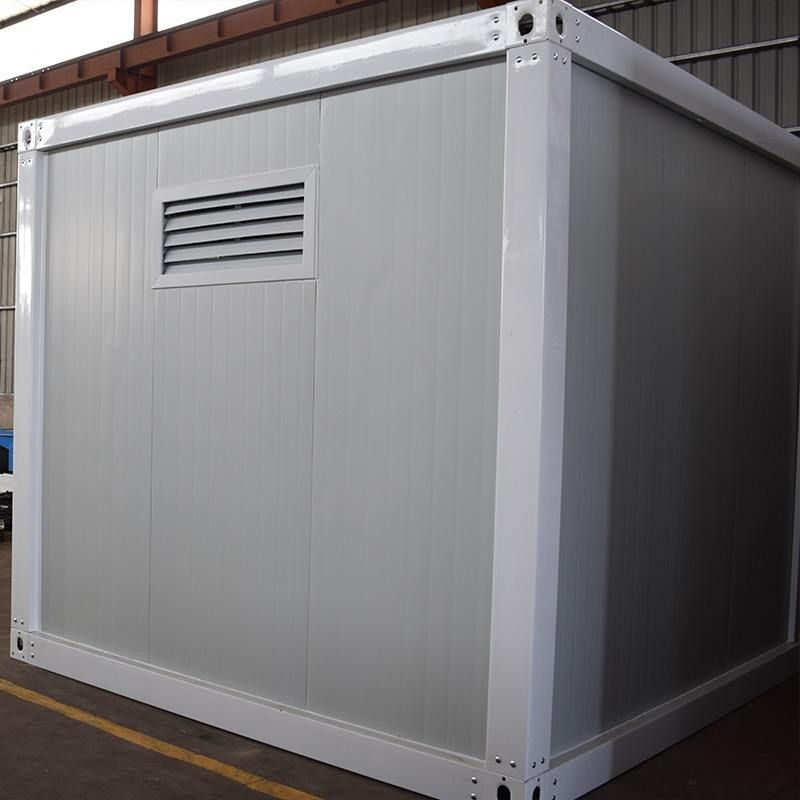
Price and Supplier Information
The prices of biodegradable mobile toilets vary among different suppliers. Hebei Cangzhou Pulin Steel Structure Technology Co., Ltd. offers products priced between 1800.00 and 4500.00 yuan per unit (piece). Hebei Langfang Dezhou Muda Machinery Equipment Co., Ltd. provides products at 3000.00 yuan per set. Sichuan Chengdu Sichuan Gerunsi Environmental Protection Equipment Co., Ltd. sells its products at 6000.00 yuan per unit. Ningxia Yinchuan Lanzhou Sailina Transportation Facilities Co., Ltd. offers products at 5000.00 yuan per unit.
Wide Range of Application Scenarios
Biodegradable mobile toilets are suitable for stations, docks, tourist attractions, villa areas, newly built residential communities, large construction sites, squares, densely populated public places, and bustling commercial streets. In urban holiday celebrations or major event scenarios, after simple disassembly and on-site treatment during removal, the core materials can be safely and controllably degraded, minimizing post-removal operation and maintenance costs and environmental impact. In the long term, they can be deployed as eco-friendly image facilities in cultural and tourism attractions at fixed locations, such as urban wetland viewing areas and ecological parks. Their materials align with the overall ecological theme and can be further optimized according to the characteristics of the scenic environment, transforming the "obtrusive presence" of traditional sanitary facilities into an integral part of natural scenic spots.
Prominent Technical Features
- Material Application: From raw material selection to use and final disposal, difficult-to-degrade or hard-to-recycle plastics or industrial composite boards are not used. Instead, bio-based materials or biodegradable plastic substitutes are mainly used to construct fences and seats, or modular assembly frames are paired with highly degradable membrane panels. More advanced solutions attempt to recycle urban agricultural by-products (such as straw) to manufacture structural components, completing the carbon cycle process.
- Design Principles: They adhere to the principles of mobility and convenience, economic durability, environmental protection and eco-friendliness, and enhancing efficiency and promoting humanity. The overall structure is lightweight, durable, and sturdy, with controlled toilet height and width, and complete and reasonable mobile devices.
Future Opportunities and Challenges
Technological maturity is a prerequisite for its widespread application. It is necessary to overcome cost barriers, expand production capacity, and accelerate the research and development of large-scale production processes for biological materials. At the same time, cities generally require the implementation of clear and explicit quality certifications, technical regulations, and other supporting guidance systems in construction and management to promote standardized construction.



