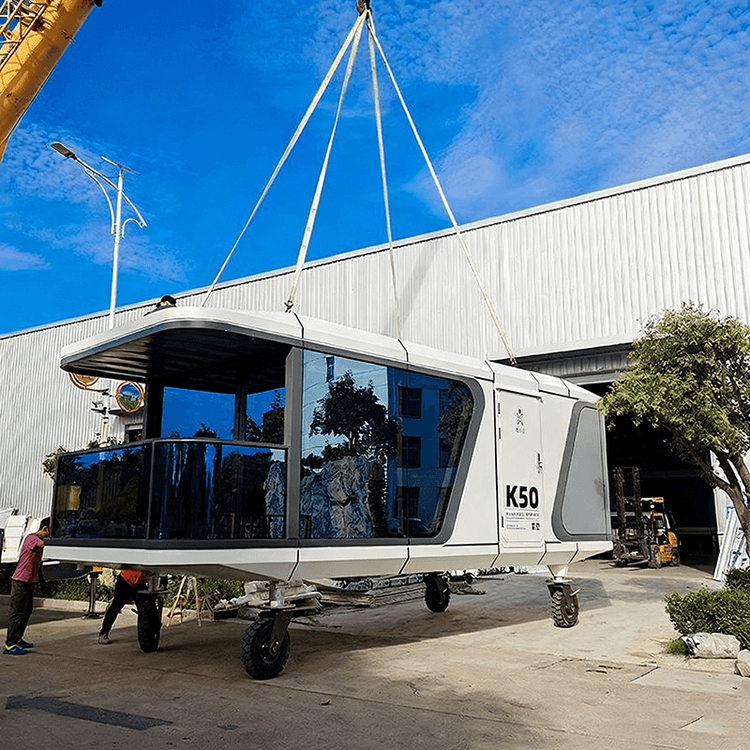
Beiliu Public Mobile Toilet Specifications
The specifications of public mobile toilets in Beiliu vary depending on their type, function, and usage scenario. Common specifications are as follows:

I. Basic Mobile Public Toilets
Single-Occupancy (Standalone)
- Minimum Size: Approximately 1.2m (length) × 1.0m (width) × 2.2m (height), suitable for scenarios with extremely limited space, meeting only basic toilet needs, with compact internal space and no extra room for movement.
- Regular Size: Approximately 1.5m (length) × 1.2m (width) × 2.3m (height), with reserved space for wheelchair assistance, suitable for individuals with mobility impairments; a common market size is 110cm (length) × 110cm (width) × 230cm (height), balancing practicality and space efficiency.
- Mini Single-Occupancy: Approximately 100cm (length) × 100cm (width) × 220cm (height), designed for high-density pedestrian areas or temporary event scenarios, further compressing size to save space.
Double-Occupancy (Two Toilets)
- Regular Size: Approximately 2.5m (length) × 1.5m (width) × 2.3m (height), including two separate stalls and a shared sink, suitable for moderately busy public areas.
- Compact Double-Occupancy: Approximately 180cm (length) × 110cm (width) × 230cm (height), reducing floor space through optimized layout while maintaining basic functionality.
II. Functional Mobile Public Toilets
Accessible Toilets
- Standard Size: At least 2.0m (length) × 1.5m (width) × 2.4m (height), with reserved space inside for wheelchair turning (≥1.5m × 1.5m) to ensure barrier-free access.
- Adapted Size: A common size is 180cm (length) × 150cm (width) × 240cm (height), designed with wider doorways and lower sink heights to meet the needs of individuals with disabilities and the elderly.
Baby/Family Toilets
- Basic Size: Approximately 2.2m (length) × 1.5m (width) × 2.4m (height) (some information is missing, but typically needs to accommodate a baby changing table, child seat, and space for an accompanying adult).
- Functional Expansion: May include additional features such as a foldable baby changing table, child safety seat, emergency call button, etc. The size needs to be adjusted according to specific functional configurations to ensure convenience for family users.
III. Basis for Specification Selection
The specifications of mobile toilets should comprehensively consider usage scenario, pedestrian traffic, functional requirements, and space constraints. For example, lightweight and easily transportable mini models may be preferred for scenic spots or temporary event sites; while transportation hubs or commercial centers require fully functional, larger-capacity accessible or family toilets to enhance service quality and inclusivity.