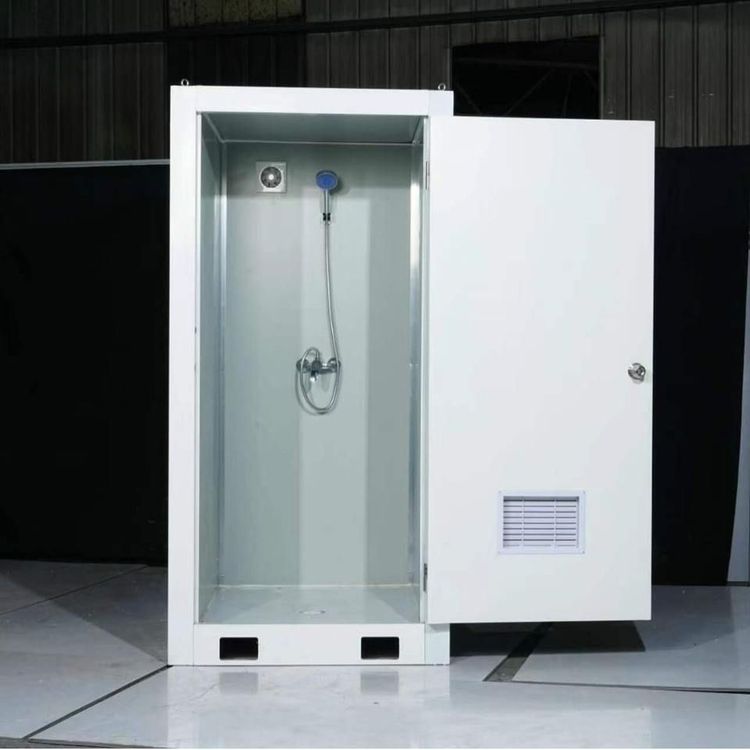
Beijing Public Mobile Toilet
Beijing public mobile toilets are independent sanitation units that can be relocated according to actual needs to meet the basic sanitation requirements of people in specific situations.

Facility Equipment
Taking the modular mobile public toilet in the park north of Mingguang Bridge in Haidian District as an example, its barrier-free toilet cubicles are equipped with children's toilets, baby changing tables, safety handrails, and emergency call devices, providing a safe and convenient independent space for the elderly, families with young children, and people with disabilities. Some public toilets are also optimized for special needs, such as adding low-level hand basins or non-slip floors, reflecting humanized care.
Structural Composition
Mobile public toilets consist of a frame structure, wall materials, sanitary ware, sewage and storage systems, and ventilation and lighting equipment. The frame structure uses lightweight steel to ensure stability and mobility; wall materials need to balance heat insulation, sound insulation, and privacy, commonly being composite panels; sanitary ware is made of durable and easy-to-clean ceramic or stainless steel; the sewage system is the core, divided into circulating water flushing type (achieving water resource recycling through biological degradation or chemical treatment) and water-free packaging type (using biodegradable film bags to collect excrement and replacing them regularly), with the latter being more suitable for areas lacking water or sewage pipe networks.
Convenience Design
The layout is based on pedestrian flow analysis. For example, during large-scale events, the density and location are adjusted according to regional planning and pedestrian flow direction. The interior space meets barrier-free access standards, with aisles at least 90 centimeters wide and handrails at a height of 0.7-0.85 meters to ensure wheelchair access and safety.
Hygiene Standard Maintenance
Hygiene is maintained through systematic management procedures: cleaning cycles are set according to usage frequency (e.g., disinfecting every 2 hours during peak periods); special cleaning agents are selected for different materials (such as ceramic, stainless steel, and plastic); a logistical support process is established to ensure a continuous supply of consumables such as hand soap and paper towels; odor control relies on ventilation systems, with some public toilets using a combination of natural and mechanical ventilation or adding activated carbon filters.
Technological Iteration Directions
Solar power systems provide supplementary energy for lighting and ventilation; membrane treatment technology improves water tank efficiency and extends the single water supply cycle; sensors monitor toilet cubicle occupancy and consumable inventory, enabling remote operation and maintenance management through an IoT platform. However, it should be noted that some public toilets have management issues. For example, users have reported that the mobile public toilet at No. 8 Beichen East Road, Chaoyang District, has been locked for a long time, indicating that maintenance response or resource allocation needs further optimization.