Beijing Outdoor Movable Toilet
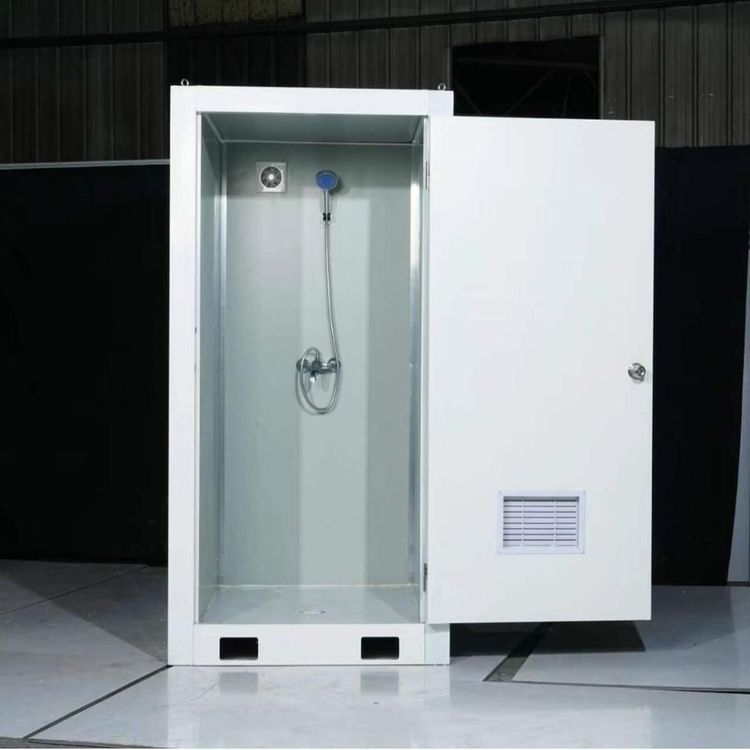
Beijing outdoor movable toilets are designed as integral movable facilities to meet the toilet needs of temporary or fixed locations, featuring flexible deployment and diverse functions. The following provides an introduction from the aspects of classification, price, application scenarios, characteristics, design principles, and upgrade situations:

Classification
They are classified by structural form into single-unit structures (independent units) and composite structures (multi-unit combinations); by moving method into hoisting and handling types (requiring mechanical assistance) and powered towing types (self-towable); by sewage treatment method into flush types (requiring a water source), non-flush suction types (regular fecal tank cleaning), recirculating flush types (sewage purification and reuse), and dry-pack types (using biodegradable bags to collect excreta); special types include tent-style toilets, with tents as the main body, allowing for rapid setup and dismantling.
Price
Sales prices vary significantly by type: the rental price of a single-unit connected movable toilet is approximately 1900 yuan; a temporary on-site flush toilet costs about 760 yuan; a double-pit ecological toilet in a large scenic spot can reach 27,000 yuan. Rental prices are differentiated by function, with ordinary types costing 80-150 yuan per day and smart types (including automatic flushing, status display, etc.) costing 180-300 yuan per day.
Application Scenarios
They are suitable for public areas with heavy foot traffic, such as stations, docks, tourist attractions, large construction sites, squares, and commercial streets. For example, during the 80th anniversary of the victory of the War of Resistance Against Japanese Aggression in 2025, tent-style toilets were deployed on the east side of the Great Hall of the People; in 2026, upgraded tent-style toilets in the Tiananmen area covered areas such as the west side of the National Museum of China, serving major events and daily needs.
Characteristics
Their core advantage is mobility, allowing them to be transported by vehicles to any location and quickly assembled; the materials are lightweight yet durable (such as aluminum alloy and stainless steel), with a sturdy structure; the design takes into account both privacy and hygiene, with features such as raised squat-position partitions and independent dividers; some models are equipped with smart guidance systems (such as occupied/unoccupied indicator lights) and odor control devices (such as exhaust fans).
Design Principles
Emphasis is placed on mobility convenience and economic durability, with lightweight materials used to reduce transportation costs; environmental protection and ecology are prioritized, with a preference for recyclable or low-pollution materials; functional design must conform to ergonomics, such as controlling toilet height and width to accommodate different people; moving devices must be complete and reasonable to ensure transportation stability.
Upgrade Situations
Taking the tent-style toilets in the Tiananmen area as an example, the 2026 upgrade used stainless steel and aluminum alloy to enhance the structure, raised the squat-position partitions to 1.8 meters, and added independent dividers to the urinal troughs; new accessible restrooms were added, equipped with toilets, safety handrails, and SOS alarm buttons; each toilet cubicle was equipped with handrails, hooks, storage racks, and smart indicator lights; odor control was strengthened by improving the floor design, adding sealing rings, and installing exhaust fans, resulting in a final configuration of 142 squat toilets, 5 accessible toilet cubicles, and 128 urinals.