Beijing Mobile Smart Toilet Design
The design of Beijing Mobile Smart Toilets integrates technological innovation with environmental protection concepts, achieving efficient and sustainable public health services through integrated, intelligent, and resource recycling technologies.

1. Integrated and Modular Design
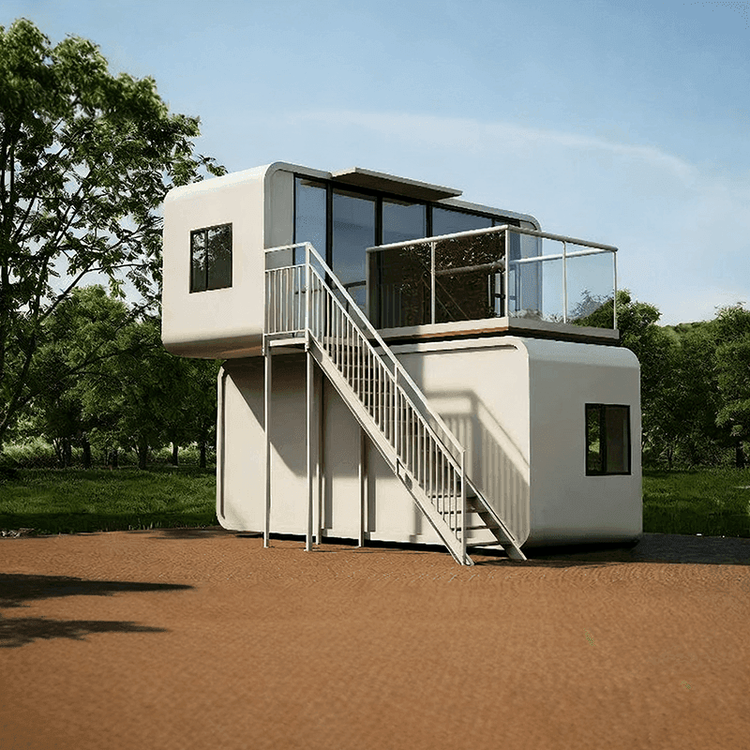
Prefabricated structures are used to integrate multiple functional systems, enabling rapid installation through standardized factory production, replacing the traditional on-site construction method. Modular combinations not only shorten the construction period but also enhance space utilization efficiency, making them particularly suitable for temporary or high-density usage scenarios.
2. Internal Circulation System
Sewage is separated into solid and liquid components using a solid-liquid separation device: solid matter is compressed and stored, while the liquid enters a biological treatment unit where microorganisms decompose organic matter. The treated water is filtered and disinfected before being reused for non-potable purposes such as toilet flushing, forming a closed-loop water circulation system and reducing reliance on external water sources.
3. Energy Supply and Energy-Saving Technologies
Photovoltaic power generation components are installed on the roof or exterior walls to convert solar energy into electricity, which is stored in batteries to power lighting, ventilation, and control equipment. Some models are equipped with energy management systems that automatically adjust energy consumption based on usage frequency, further reducing operational costs.
4. Intelligent Management System
Occupancy sensors, environmental sensors (monitoring temperature, humidity, and ammonia concentration), and equipment operation sensors are used to collect real-time data and transmit it to a management platform via the Internet of Things. Maintenance personnel can remotely monitor equipment status and receive automatic alerts in case of malfunctions or insufficient supplies, improving management efficiency.
5. User Experience Optimization
Barrier-free access, wheelchair-accessible spaces, baby care stations, and child safety seats are designed based on ergonomics to meet diverse needs. Emergency call buttons are placed within easy reach to ensure safety and convenience.
6. Core Environmental Protection Technologies
The "source separation" technology is introduced, utilizing a vacuum negative pressure collection system that requires only 0.5 liters of water per flush. Excreta is treated through biological degradation or dry composting, while urine enters a microbial fuel cell module for power generation, achieving resource utilization.
7. Climate Adaptability Design
To address Beijing's low winter temperatures, phase change energy storage materials are filled in the walls to absorb heat during the day and release it at night, maintaining internal temperatures above freezing. The sewage pipes are designed to be detachable and wrapped with self-limiting heating tapes to prevent freezing, ensuring normal operation in low-temperature environments.