
Beijing Container House Installation
When installing container houses in Beijing, it is essential to focus on structural stability, standardization of the installation process, and the qualifications of service providers. Key points are as follows:
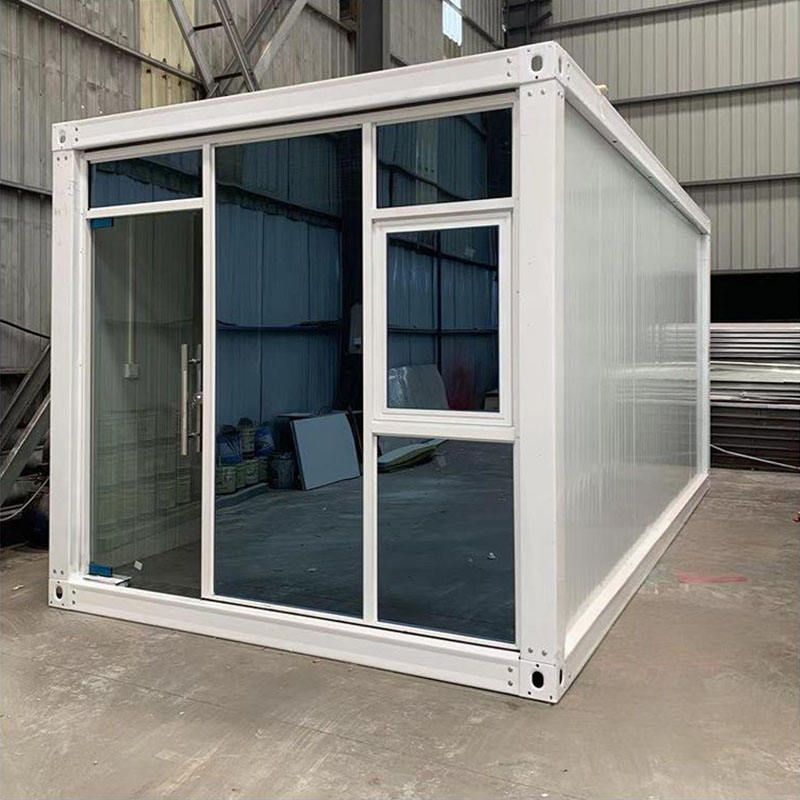
I. Structural Stability and Safety Standards The core safety indicator for container houses is structural stability, which must comply with GB50011-2010 'Code for Seismic Design of Buildings' and wind resistance requirements (typically needing to withstand strong winds of up to Level 12). For example, Suzhou Zhongnan Steel Structure Co., Ltd. uses a fully steel structural frame, with a maximum deformation of only 2mm under Level 12 strong winds, well below the national standard limit of 10mm; CIMC Modular Building Investment Co., Ltd.'s semi-welded semi-bolted structure has a deformation of 3mm, but there is a slightly higher risk of bolt loosening after long-term turnover. Before installation, it is necessary to confirm the foundation bearing capacity to avoid structural deformation due to ground settlement, especially considering the impact of permafrost layers on the foundation in the Beijing area.
II. Standardized Installation Process
- Foundation Construction: Choose between a concrete foundation or a steel chassis based on geological conditions, ensuring a levelness error of ≤5mm. For example, the installation of packing-box units by Hebei Jiacheng Integrated Housing Co., Ltd. requires first fixing the chassis and then installing the hexagonal columns and roof frame.
- Main Assembly: Adopt a modular splicing method. Standard container sizes are mostly 6m×3m×2.8m, connected with high-strength bolts. The assembly time for a single set is usually controlled within 2-4 hours. Products from Beijing Farile Mobile Board House Co., Ltd. support 15-minute quick installation and 1-hour occupancy.
- Concealed Works: Water and electricity lines need to be embedded in the wall sandwich layer. Walls filled with Class A fire-resistant rock wool need to have reserved pipeline slots to avoid damaging the insulation layer by drilling holes later.
- Quality Acceptance: After installation, check the weld strength (complying with GB/T 19001-2016 standards), door and window sealing, and the drainage function of downspouts.
III. Service Provider Qualifications and After-sales Service
- Qualification Verification: Prioritize enterprises with certification from the Architectural Metal Structure Association and a registered capital of ≥2 million yuan, such as Beijing Yuanhao Integrated Housing Technology Co., Ltd. (with a registered capital of 2 million yuan) or Hua'an Shunda (with 20 years of industry experience, covering projects of China State Construction and Urban Construction).
- Service Capability: Confirm whether the service provider offers a full-chain service of 'design-production-installation-recycling'. For example, Hua'an Shunda can complete project planning approval, spatial layout design, and container disassembly and transportation.
- After-sales Guarantee: Regular manufacturers usually provide a warranty of 5-10 years, with regular maintenance including bolt tightening, anti-corrosion coating repair, and seal replacement.
IV. Special Requirements in the Beijing Area
- Environmental Compliance: Must comply with Beijing's 'Green Building Evaluation Standard', and wall materials need to provide Class A fire resistance test reports.
- Transportation Restrictions: Large vehicles need to obtain temporary permits for travel within the urban area, and service providers need to have a professional transportation team (such as Hua'an Shunda, which has dozens of cranes of its own).
- Emergency Scenario Adaptation: If used as epidemic prevention booths or emergency command centers, additional configuration of fresh air systems and 5G communication modules is required.



