
Beijing Container House Construction
The construction of container houses in Beijing mainly involves two core processes: factory prefabrication and on-site assembly, characterized by standardization, efficiency, and recyclability.
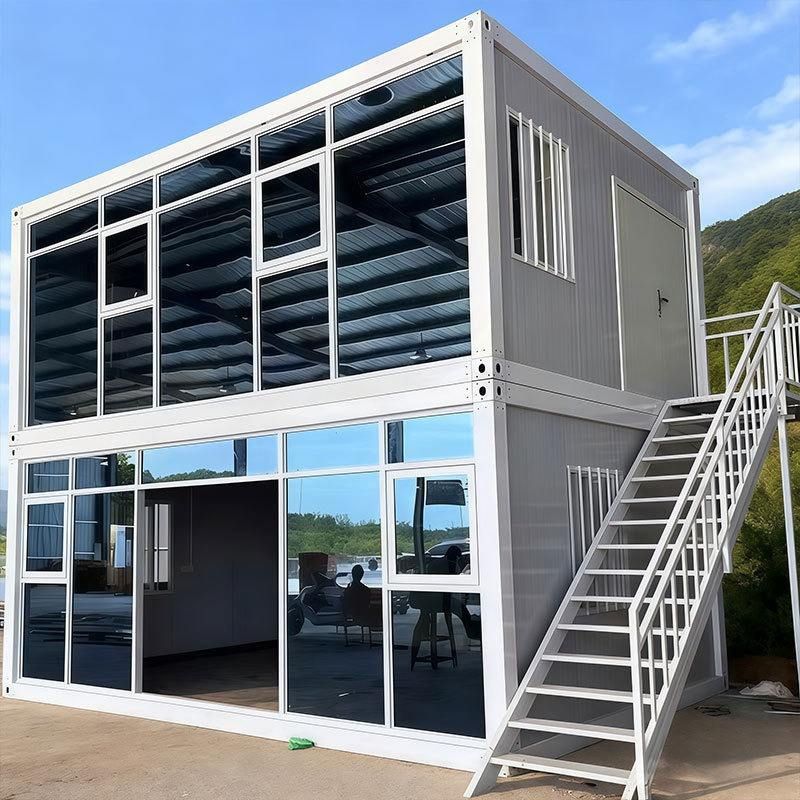
I. Factory Prefabrication Process Container houses adopt a modular design concept, dividing the complete building into standardized components (such as the floor, roof, and sides). All processes, including the main structure, plumbing and electrical systems, and interior decoration (including bathroom waterproofing, bathroom fixtures, cabinets, and wardrobes), are completed in the factory. For example, a smart factory in Guangdong uses a fully automated production line to achieve robotic collaborative operations in welding, assembly, and polishing, producing 50 modules per day with a manufacturing precision of 1-2 millimeters. This model completely transforms the logic of traditional construction's sequential processes, significantly shortening the construction period through parallel operations while reducing dust and noise pollution from on-site construction.
II. On-Site Assembly Process After the prefabricated modules arrive at their destination by sea or land transport, they are quickly assembled using lifting equipment. Taking the common residential containers at Beijing construction sites as an example, their standard dimensions are 3 meters × 6 meters × 2.7 meters, with a fully welded steel frame that offers A-grade fire resistance, earthquake resistance, waterproofing, and flame retardancy. The assembly process does not require complex civil engineering work and can be completed with simple tools, reducing the construction period to one-third of that of traditional temporary buildings. For instance, the products of Beijing Yuanhao Integrated Housing Technology Co., Ltd. support on-site fabrication, processing, and installation, allowing for the creation of combined spaces such as meeting rooms, dormitories, and kitchens to meet diverse needs for temporary office and accommodation on construction sites.
III. Construction Advantages and Applicable Scenarios
- Efficiency and Flexibility: Modular production significantly shortens the construction period, and the houses can be disassembled and reused multiple times, reducing overall costs.
- Quality Control: Factory production eliminates the impact of weather and labor factors on construction quality, achieving manufacturing precision far superior to on-site construction.
- Environmental Protection: High material recycling rates reduce construction waste generation, aligning with the trend of green building development. Currently, container houses in the Beijing market are widely used in scenarios such as construction site dormitories, office meeting rooms, guard booths, and temporary restrooms. Some companies also offer one-stop services including leasing, second-hand recycling, and refurbishment.



