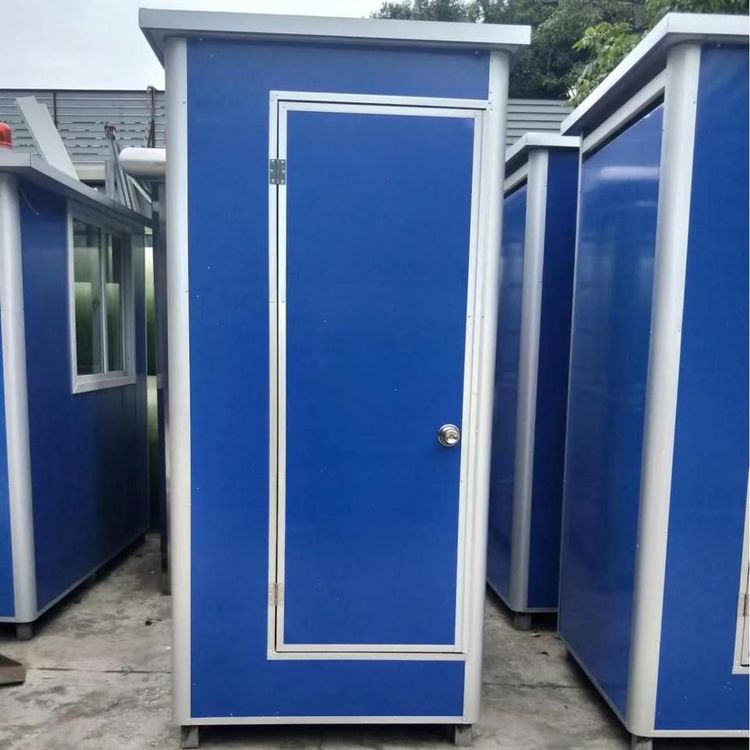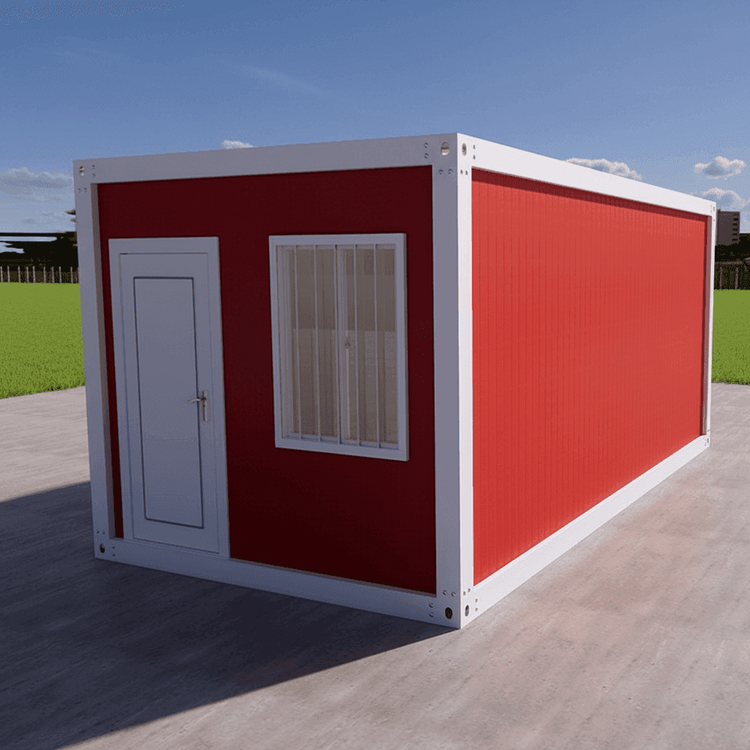
Beijing Box-Type Portable Toilet
The Beijing box-type portable toilet is an independent sanitary unit based on standard container modular design, featuring portability, environmental adaptability, and intelligent management. It is widely used in urban infrastructure.

Modular Construction and Portability
The box-type portable toilet uses a standard container as its structural foundation and adopts a modular design concept. The main body of the container is made of corrosion-resistant metal materials, and its external coating can withstand temperature variations and ultraviolet radiation, extending its service life. Its core advantage lies in portability: it can be relocated as a whole using standard transportation vehicles (such as trucks). Upon arrival at the designated location, water and electricity connections can be completed through quick-connect interfaces without complex construction, significantly shortening the deployment cycle. This characteristic makes it suitable for temporary events, emergency rescue operations, scenic area expansions, and other scenarios.
Functional Zoning and Intelligent Systems
The interior space is divided into independent functional areas, integrating multiple advanced technologies:
- Water-saving flushing device: Utilizes pneumatic assistance and water circulation technology to reduce water consumption;
- Cleaning system: Equipped with automatic sensing devices to periodically spray disinfectant, reducing the need for manual intervention;
- Temperature regulation: Operates independently through a heat exchanger to maintain a stable internal environment, adapting to extreme climates;
- Lighting system: Uses low-energy LED light sources with light sensors to automatically adjust brightness, further conserving energy;
- Central control system: Coordinates the operation of various modules and transmits energy consumption data in real-time to a management platform for remote monitoring.
Waste Treatment Technologies
Multiple treatment modes are provided to meet different scenario requirements:
- Microbial degradation: Utilizes specific bacterial strains to decompose organic matter into harmless compounds, suitable for areas without municipal sewage networks;
- Vacuum collection: Transports waste through negative-pressure pipelines, significantly reducing water usage;
- Physical separation: Treats liquid and solid waste separately to improve treatment efficiency.
Gases produced during the treatment process are filtered through activated carbon before being discharged to ensure compliance with air quality standards; the terminal can be connected to municipal sewage networks or equipped with storage containers, providing flexible adaptation to site conditions.
Environmental Adaptability and Safety
The design fully considers multi-dimensional adaptability:
- Ground adaptation: The bottom leveling brackets can accommodate different slopes;
- Climate protection: The thickness of the insulation layer is adjusted according to climate zones, with thicker designs in northern regions to prevent freezing and cracking;
- Wind-resistant structure: Reinforcement points are determined through mechanical calculations to withstand lateral pressure from specific wind speeds;
- Barrier-free design: Features non-slip floors, barrier-free access, and emergency call buttons to ensure user safety.
Maintenance Management and Digital Platform
Leveraging a sensor network and algorithmic models, intelligent operation and maintenance are achieved:
- Real-time monitoring: Sensors track usage frequency, material inventory, and equipment status;
- Predictive maintenance: Data is wirelessly transmitted to a central server, where algorithms predict faults and generate work orders;
- Standardized processes: Cleaning operations and consumable replenishment are carried out according to quantified indicators, reducing the frequency of manual inspections.
Beijing Tianyu Meijie Environmental Protection Technology Co., Ltd., as a professional manufacturer, offers a diverse range of products, including container-modified toilets, to meet the needs of different users, further promoting the popularization and application of this technology.