
Beibei Container House Capacity
The capacity of container houses in the Beibei area varies depending on the specific product model and design. Common specifications can accommodate 4-8 people for living or office use, and some customized models can be expanded to a larger capacity.
I. Capacity of Common Standard Models
The main suppliers of container houses in the Beibei area, such as Chongqing Le'anju Container Leasing Co., Ltd., offer standard residential containers with common specifications of 6 meters × 3 meters × 2.7 meters or 7 meters × 3 meters × 2.7 meters. These containers have an internal space of approximately 18-21 square meters and are usually designed to accommodate 4-6 people for living or 6-8 people for office use. The specific layouts include:
- Residential Use: Equipped with double-decker iron beds, independent restrooms (in some models), and simple kitchen areas, meeting the collective accommodation needs of construction site workers.
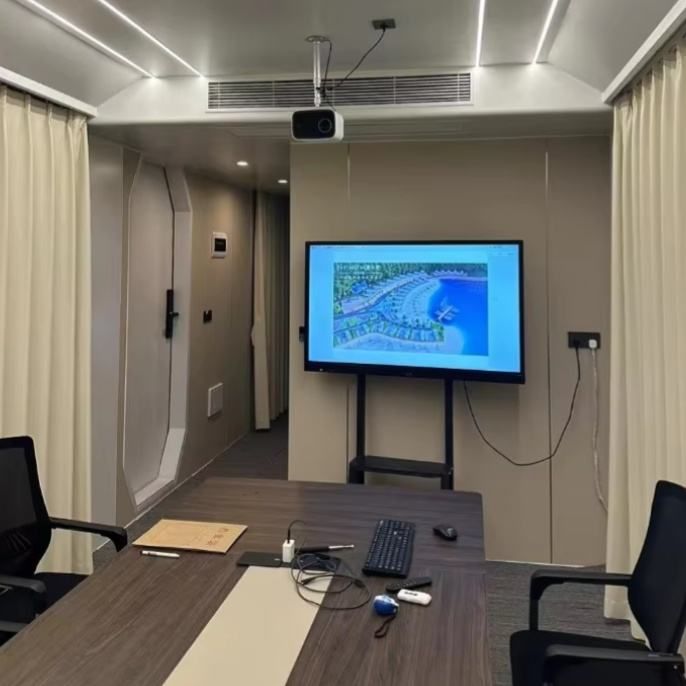
- Office Use: Divided into independent offices, conference rooms, or open office areas, equipped with basic facilities such as lighting and sockets.
II. Capacity Expansion of Customized Models
Some suppliers offer modular拼接 (modular assembly) design, allowing for significant capacity expansion by horizontally or vertically assembling multiple container units:
- Horizontal Assembly: By connecting two 6-meter × 3-meter containers in parallel, a space of 12 meters × 3 meters is formed, doubling the capacity to accommodate 8-12 people.
- Vertical Stacking: By connecting two layers of containers with stairs, a three-dimensional structure is formed, increasing the capacity to over 16 people, suitable for large construction sites or temporary camps.
- Functional Zoning: Customized models can integrate ancillary facilities such as restrooms, shower rooms, and kitchens to form independent living units, with the capacity depending on the specific configuration.
III. Factors Influencing Capacity Design
The capacity design of container houses needs to consider the following factors:
- Usage Scenario: Construction site dormitories require higher-density layouts, while office or homestay uses focus more on comfort with larger per-capita areas.
- Safety Regulations: Compliance with fire safety, ventilation, and other standards is necessary to avoid overcrowding. For example, Le'anju products adopt fire-resistant rock wool interlayers and ventilation designs to ensure safe living.
- Transportation Limitations: Standard container sizes are subject to road transportation restrictions, and oversized capacities require on-site assembly or special permits.
IV. Actual Cases from Suppliers
Taking Le'anju as an example, its product displays clearly mention:
- Chongqing Infrastructure Projects: Residential containers support assembly and construction, becoming standard accommodation for construction sites, with flexible capacity adjustments.
- Customized Services: Design different specifications according to customer needs, with an annual production capacity of 5,000 units, sufficient supply, and fast delivery to meet project deadlines.
For precise capacity data, it is recommended to directly contact the supplier (such as Le'anju at 023-68****56) with specific models or usage scenarios to obtain customized solutions.



