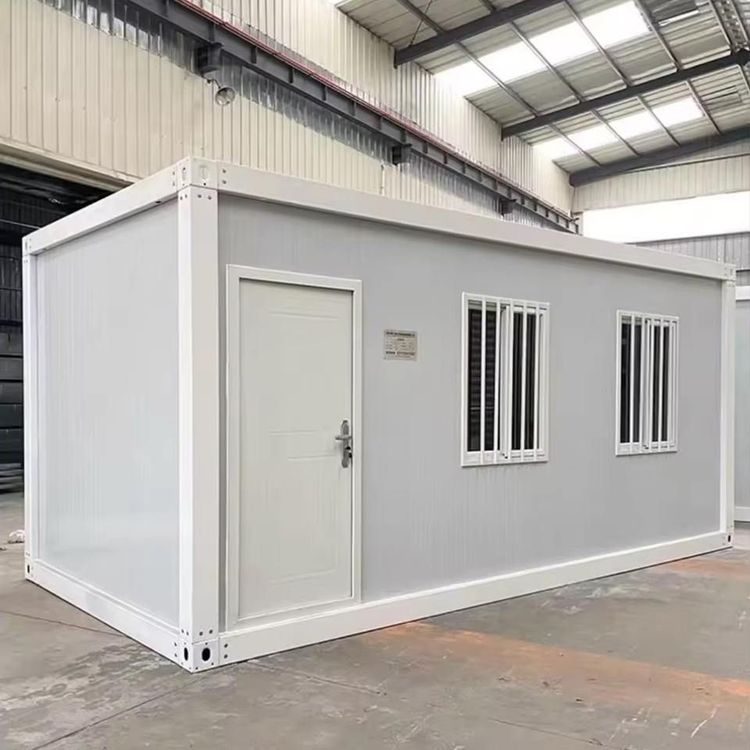
Mobile Bathroom and Toilet in the Bedroom
It is feasible to install a mobile bathroom and toilet in the bedroom. These products, through modular and integrated design, can achieve functional independence and spatial adaptability, making them particularly suitable for small apartments or renovation scenarios. The following analysis covers feasibility, advantages, design considerations, and product types:

Core Advantages
Efficient Space Utilization
Mobile bathroom and toilet units are designed with precise dimensions (e.g., 1.6m x 2m specifications), integrating functional units such as toilets, showers, and sinks. Through three-dimensional layouts (e.g., wall-mounted toilets, folding doors), unnecessary space is compressed, enabling basic bathroom functions to be realized within 3-5 square meters, meeting the needs of small apartments or bedroom renovations.Convenient Installation and Low Cost
The products feature factory-prefabricated integrated structures, requiring only on-site assembly and fixation, eliminating the need for traditional wet construction (e.g., tile laying, waterproof coating application). The construction period can be shortened to 1-3 days. In terms of cost, depending on the materials (high-strength composite materials, aviation aluminum alloys) and configurations (water heaters, bathroom heaters, etc.), the total cost ranges from approximately 20,000 to 150,000 RMB, significantly lower than traditional bathroom renovations.Strong Waterproofing and Durability
The factory-prefabricated, one-piece waterproof layer is formed through high-pressure injection molding or welding processes, creating a seamless structure with superior sealing compared to manually applied waterproof coatings on-site, effectively preventing leakage issues. The main materials are mostly lightweight, high-strength composite materials or aviation aluminum alloys, which are moisture-resistant and corrosion-resistant, with a service life of over 10 years.Flexible Personalized Design
Users can choose panel materials (e.g., wood grain, stone grain) and bathroom accessory styles (e.g., round/square sinks, mirror cabinet combinations) according to the bedroom style. Some products support modular addition or removal of functions (e.g., adding a washing machine or storage cabinet), ensuring harmony with the original indoor environment.
Design Implementation Considerations
- Interface Pre-embedding: It is necessary to plan the layout of water supply and drainage pipes (e.g., PPR pipes) and electrical interfaces (e.g., waterproof sockets, bathroom heater circuits) in advance to ensure compatibility between the mobile unit and the bedroom layout.
- Optimized Wet-Dry Separation: If the bathroom area is too small (e.g., <3 square meters), a bathroom cabinet externalization solution can be adopted, moving the sink to the bedroom hallway and separating the shower area and toilet area with glass partitions or half-walls, meeting functional needs while preventing moist air from spreading to the bedroom.
- Ventilation Design: Priority should be given to products equipped with ventilation windows or exhaust fans, or ventilation can be assisted by the bedroom's fresh air system to prevent odor retention.
Product Type References
Mainstream products on the market include all-in-one three-function mobile bathrooms (integrating toilet, shower, and washing machine functions, equipped with bathroom heaters, water heaters, and water supply and drainage systems) and modular units (e.g., independent shower room + wall-mounted toilet combinations). Users can choose specifications according to actual needs, for example, a 1.6m x 2m model can meet daily use for a single person, while a 2m x 2.5m model is suitable for family scenarios.