
Baoji Fengxiang Housing Container
The housing containers in Baoji Fengxiang are characterized by mobility, rapid assembly, safety, durability, cost-effectiveness, and aesthetic appeal, meeting the needs of various scenarios. Here is a detailed introduction:
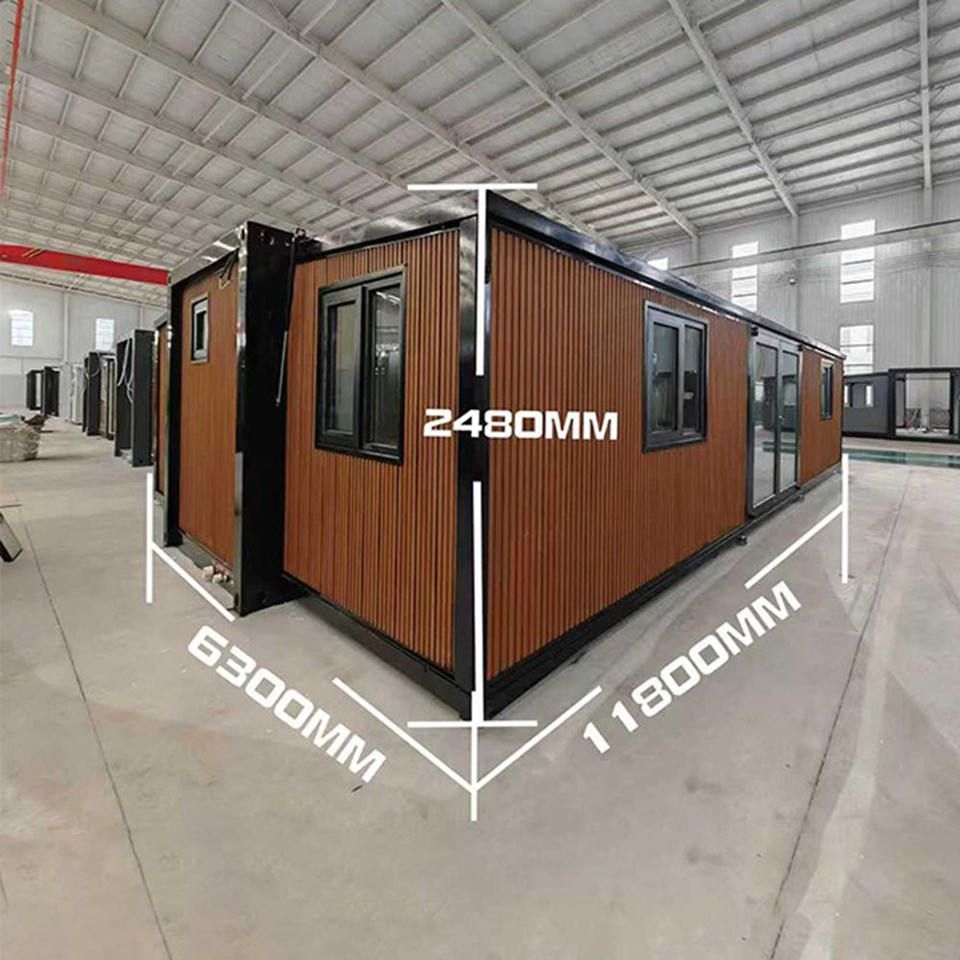
I. Basic Characteristics
The housing containers adopt a steel frame structure, with the main frame typically using Q235B hot-dip galvanized structural steel or high-strength galvanized steel to ensure wind and earthquake resistance, capable of withstanding earthquakes of magnitude 8 and strong winds. The wall materials are diverse, commonly including metal carved panels, color-coated steel sheets, or corrugated panels, with internal filling of glass wool, polystyrene boards, or Class A1 fire-resistant rock wool, achieving sound insulation, thermal insulation, and fire prevention functions. Its air-gap thermal insulation design results in a thermal conductivity coefficient below 0.04W/(m·k), providing significant winter insulation while eliminating fire hazards.
II. Functional Advantages
- Flexibility and Durability
The containers can be relocated as a whole without the need for foundations, adapting to complex terrains such as rooftops, wilderness, and mountain peaks, with a service life of over 20 years. The modular design supports infinite horizontal expansion or vertical stacking up to 3 floors, meeting the needs of large-scale temporary housing. - Cost-effectiveness and Environmental Friendliness
The cost is lower than that of traditional buildings, and the containers can be reused, reducing resource waste. The interior uses environmentally friendly materials such as bamboo-wood fiber wall panels and carbon crystal panels, allowing for immediate occupancy after decoration without generating construction waste. - Aesthetics and Customization
The exterior can be sprayed with various colors and supports custom designs, such as for trendy homestays and creative markets, breaking away from the stereotype of "iron sheet houses". The interior space can be freely divided and equipped with facilities such as bathrooms, kitchens, and office furniture.
III. Application Scenarios
- Infrastructure and Energy Sectors
Serving as construction site dormitories, temporary camps, or command centers, supporting rapid disassembly and reuse to reduce project costs. - Cultural Tourism and Rural Revitalization
Transformed into container homestays, observation decks, or commercial stalls, combining regional characteristics to create differentiated tourism experiences. - Emergency and Medical Scenarios
Modular nucleic acid sampling stations, emergency command centers, etc., meeting the needs for sterility, sound insulation, and immediate usability. - Urban Commercial Innovation
Custom graffiti shops, cafes, or flexible sales offices, shortening the implementation cycle and attracting foot traffic.
IV. Technical Parameters and Specifications
Common specifications include 3m×6m, 4m×6m, 3m×9m, etc., with a height of mostly 3.2m and a minimum sales area of 500 square meters. The coating thickness exceeds 80μm, with a salt spray test endurance of over 1000 hours, adapting to the alternating dry and wet climate of the Guanzhong Plain.



