Baoding Zhongjian Container House
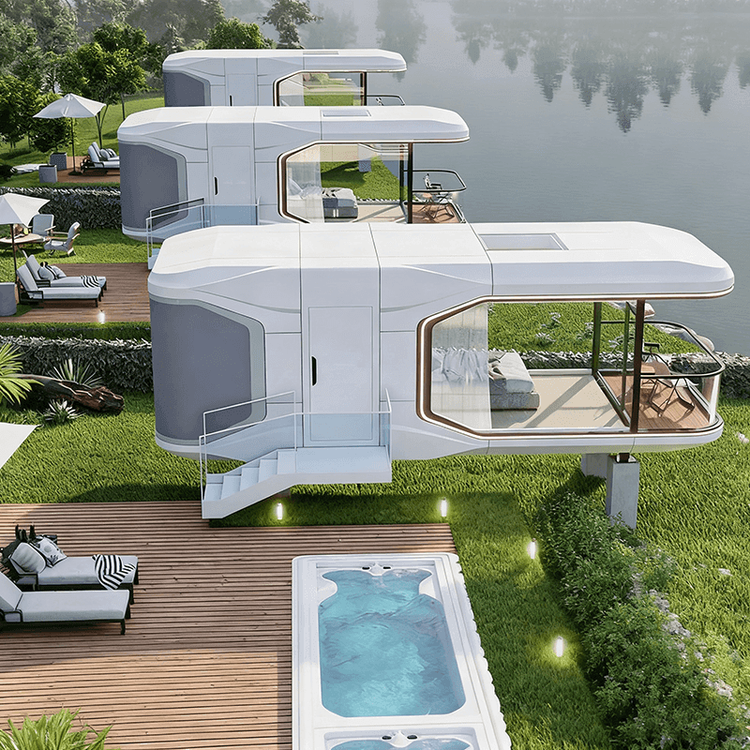
The container houses of Baoding Zhongjian mainly belong to the modular integrated building type, adopting a factory prefabrication and on-site rapid assembly model, featuring green, low-carbon, efficient construction, and flexible application. The following provides an introduction from the aspects of technical characteristics, application scenarios, advantages, and case studies:

Technical Characteristics
Zhongjian Group employs Modular Integrated Construction (MiC) technology in the field of container houses, dividing buildings into independent functional modules (such as walls, floors, roofs, pipelines, and bathrooms). These modules undergo full-process, high-precision prefabrication in factories and are then transported to the site for rapid assembly. For example, the MiC technology of Zhongjian Hailong Technology Co., Ltd. has formed three major systems: concrete (C-MiC), steel structure (S-MiC), and X expansion modules, covering diverse scenarios such as residential buildings, schools, hospitals, and hotels. Beijing Zhongjian's packing-box-type houses emphasize transportation and disassembly convenience, achieving rapid deployment by reducing component types and simplifying installation procedures.
Application Scenarios
Container houses are widely used in both temporary and permanent building fields:
- Temporary Buildings: Such as temporary offices for construction projects, staff dormitories, makeshift hospitals, temporary command centers, and warehouses.
- Permanent Buildings: Including public buildings such as affordable housing, rental housing, hotels, restaurants, schools, resorts, and homestays, as well as military equipment containers and transportation infrastructure containers. For example, the Shenzhen Huazhang Xinzhu affordable housing project adopted concrete modular technology, completing the interior decoration delivery of five nearly 100-meter-high buildings in just one year; the renovation project of Beijing Huapichang Hutong No. 8 Building achieved a three-month transformation of an old and dilapidated building through modular technology.
Advantages
- Efficient Construction: The on-site construction period is shortened by more than 50% compared to traditional construction methods. For example, the overall delivery period of the MRDC modular hotel project in Papua New Guinea was only seven months, while traditional methods would require 14-18 months.
- Cost Savings: Significant reduction in labor costs, with a 40%-60% decrease in on-site permanent workers, and elimination of hidden costs such as labor management, accommodation, and safety training.
- Green and Low-Carbon: Factory standardized production reduces building material waste (traditional construction site waste is 8%-12%, while factory waste is only 3%-5%), and lightweight steel structure modules reduce ground material consumption by 60%-70%.
- Flexible Relocation: Modules can be repeatedly disassembled, assembled, and relocated to different sites, reducing construction waste and pollution.
Case Studies
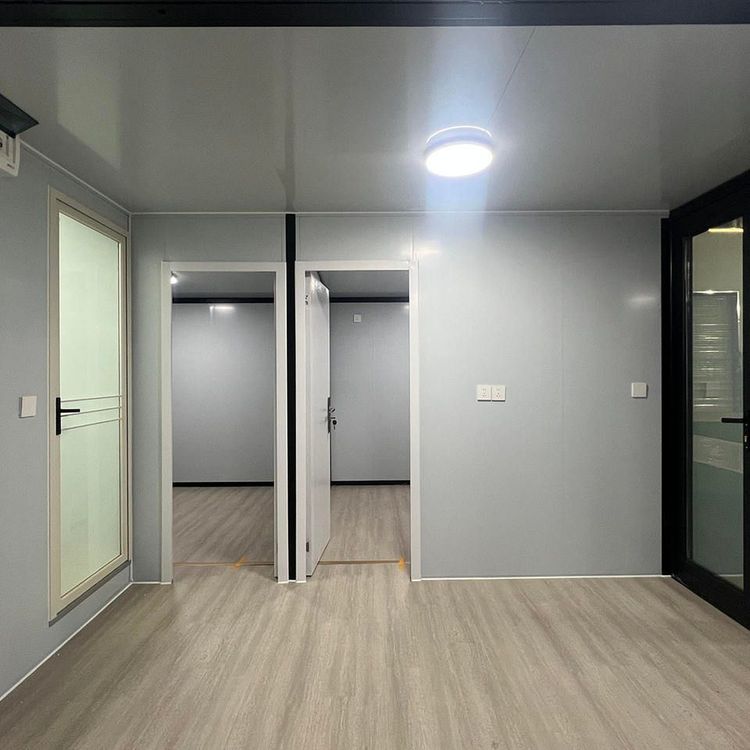
The modular houses customized by Zhongjian Integrated Building Intelligent Manufacturing (Shenzhen) Co., Ltd. for Australia completed the integration of water, electricity, decoration, and soft furnishings in the factory. Upon arrival at the site, they only required connection to water and electricity for immediate occupancy, receiving high recognition from Australian customers. Additionally, the Beijing Yizhuang Blue-Collar Apartment Project, as the tallest and largest modular building in China, entered the interior decoration stage after completing the lifting of 1,510 containers, demonstrating the efficient application of modular technology in large-scale projects.