Baiyin Flush Mobile Toilet
The Baiyin flush mobile toilet is an independently flushing, relocatable, and enclosed sanitation unit designed to meet specific environmental needs, featuring water conservation, environmental protection, and easy maintenance.

Basic Structure and Operating Mechanism
The Baiyin flush mobile toilet does not require pre-embedded pipelines and integrates water storage, flushing, and sewage collection modules. Its core operation relies on internal water circulation or external water supply, with valves activated by foot pedals or sensors to flush the sanitary fixtures with a measured amount of clean water. The sewage is directed into a sealed storage tank. Some models use pressure differentials or vacuum technology to enhance flushing efficiency, reducing water consumption per flush. The capacity of the sewage storage tank must match the frequency of use, and when full, it is emptied by suction equipment or transfer vehicles. Advanced models may incorporate biodegradation or chemical treatment units to reduce odors and pollution, although these are not essential for typical scenic area applications.
Material and Structural Design
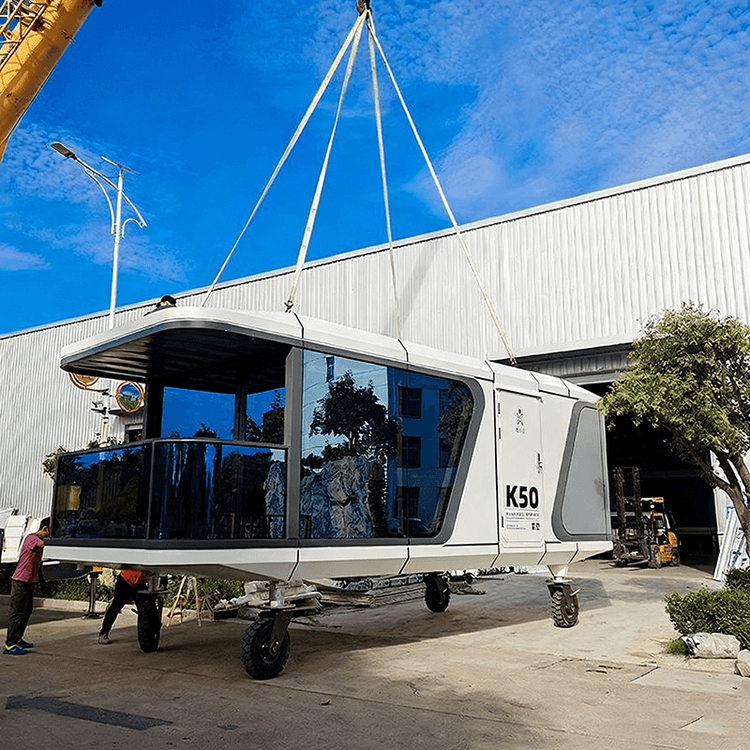
The toilet body is often made of fiberglass, high-strength plastic, or metal panels, offering lightweight, corrosion resistance, thermal insulation, and easy cleaning properties. The structure emphasizes overall stability, with adjustable legs to accommodate uneven ground and meet the requirements for lifting and transportation during relocation. For example, metal panels enhance impact resistance, while high-strength plastic reduces overall weight for easier mobility.
Environmental Compatibility
In natural scenic areas, the facilities often feature decorative treatments like wood-grain finishes to blend with the landscape. System tightness is crucial to prevent sewage leakage that could contaminate soil and groundwater. Operational energy consumption (e.g., for lighting and exhaust fans) is typically powered by solar panels combined with batteries, enabling off-grid operation and reducing reliance on traditional energy sources.
Maintenance Management
Daily maintenance includes cleaning the surfaces of sanitary fixtures, replenishing consumables, and inspecting mechanical and electronic components. Periodic professional maintenance involves adjusting the flushing system, assessing the condition of the sewage storage tank, and checking structural safety. A clear evacuation and treatment process can prevent secondary pollution, such as establishing an early warning mechanism for when the sewage storage tank is full to ensure timely evacuation. Additionally, material selection (e.g., corrosion-resistant toilet bodies) can reduce long-term maintenance costs and extend the facility's service life.