
Bagua Layout Container House
The concept of Bagua layout can be combined with container house design, planning functional areas through the symbolic meanings of directions while considering design elements such as lighting and insulation to achieve a fusion of functionality and culture.
Core Principles of Bagua Layout
Bagua layout, derived from the I Ching, divides space into eight directions (Qian, Kun, Zhen, Xun, Kan, Li, Gen, Dui), each corresponding to natural phenomena, family members, and the five elements. For example:
- Kan Gua (North): Symbolizes water, the second son, wisdom, and career, suitable for a study or work area;
- Li Gua (South): Symbolizes fire, the middle daughter, brightness, and vitality, ideal for a living room or leisure area;
- Gen Gua (Northeast): Symbolizes mountains, the youngest son, stability, and academics, suitable for a storage room or study nook;
- Zhen Gua (East): Symbolizes thunder, the eldest son, health, and action, suitable for a bedroom or exercise area.
The remaining directions (such as Qian for the father, Kun for the mother, Xun for the eldest daughter, and Dui for the youngest daughter) can also allocate functions based on family member needs, creating a harmonious living environment that aligns with nature.
Design Features of Container Houses
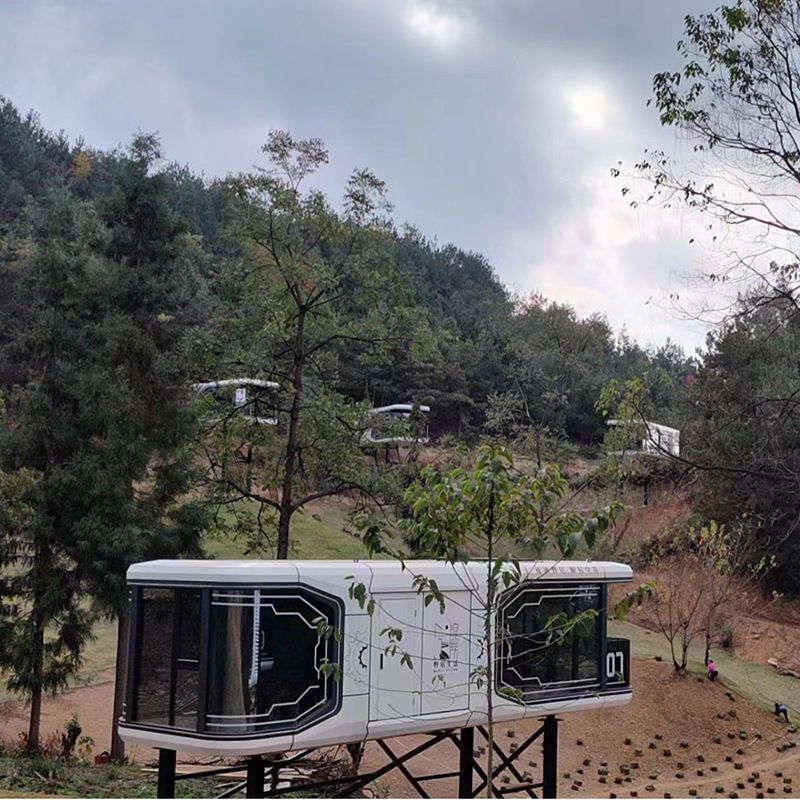
Container houses focus on modularity and mobility, with design considerations including:
- Spatial Layout: Expand functional areas such as living rooms, bedrooms, and bathrooms by joining or staggering 2-3 containers to avoid cramped single spaces;
- Lighting Optimization: Install large floor-to-ceiling windows, roof skylights, or side-opening windows to introduce natural light and reduce a sense of enclosure;
- Thermal Insulation: Add internal insulation layers to walls/roofs (e.g., polystyrene boards, rock wool) and use triple-glazed windows or thermal-break aluminum doors and windows to enhance comfort in winter and summer;
- Structural Safety: Ensure secure welding at container joints and apply moisture-proof treatment to floors to adapt to different climatic conditions.
Strategies for Combining Bagua Layout with Container Design
- Direction-Function Matching: Plan functional areas based on the symbolic meanings of Bagua. For example, set the Kan Gua direction (North), representing wisdom, as a study and ensure ample lighting (e.g., installing north-facing skylights); use the Li Gua direction (South), symbolizing vitality, as a living room and enhance light and transparency with large floor-to-ceiling windows.
- Five Elements Harmony: Adjust materials and colors in line with the theory of the five elements' mutual generation. For instance, Kan Gua belongs to water, so the study can feature blue decorations or metal materials (metal generates water); Li Gua belongs to fire, so the living room can incorporate red elements or wooden furniture (wood generates fire) to enhance energy flow in the space.
- Dynamic and Static Zoning: Arrange dynamic activity areas (e.g., living room, kitchen) in open directions like Zhen Gua (East) or Dui Gua (West), and static rest areas (e.g., bedrooms) in stable directions like Gen Gua (Northeast) or Kun Gua (Southwest) to improve the living experience.
By integrating the philosophical ideas of Bagua layout with the practical design of container houses, it is possible to meet modern functional needs while preserving the spatial wisdom of traditional culture.



