
Babu Mobile Toilet Installation
The installation of mobile toilets in Babu can be carried out in the following eight steps:
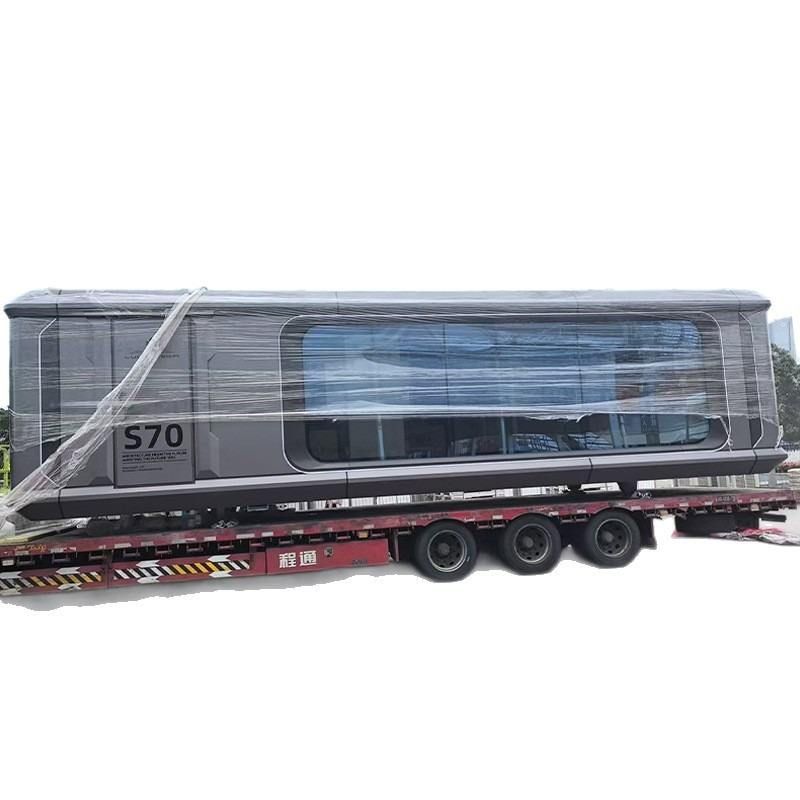
Site Selection and Ground Preparation Choose a flat and solid foundation, avoiding slopes, low-lying areas, or areas with soft soil. The ground should be simply leveled, and if possible, a gravel or concrete foundation can be laid to enhance load-bearing capacity and drainage, while reserving enough space for personnel passage.
Main Structure Assembly Mobile toilets are transported to the site in prefabricated components and assembled in the order specified in the instructions, including the base plate, wall panels, and roof cover. It is essential to check that all connections, such as buckles or bolts, are securely fastened, and the roof must be properly sealed to prevent rainwater infiltration.
Sewage System Connection Flush toilets need to be connected to sewage pipes, maintaining a slope to facilitate the natural flow of waste. A sealing ring should be installed at the connection between the sewage outlet and the external pipe to prevent leaks. For waterless or biodegradable toilets, a waste storage tank should be placed, ensuring it is stable and tightly sealed.
Water Supply and Flush Device Installation When connecting the water supply hose, tighten the joints and check for leaks after installation by opening the valve. The flush tank should be fixed in the designed position, and the water output and response speed of the flush valve should be adjusted. In cold regions, insulation measures should be taken for water pipes to prevent freezing and cracking.
Ventilation System Setup Install exhaust fans or ventilation ducts, with ventilation openings typically located on the roof or upper part of the sidewalls. These should be equipped with insect screens and waterproof covers. The power cords should be fixed to avoid exposure or entanglement, ensuring electrical safety.
Internal Facility Installation When installing accessories such as toilet seats, sinks, mirrors, and shelves, ensure that the fixtures are properly sealed with the walls to prevent water accumulation in the interlayers. The sink drain pipe should be connected to the designated pipe to maintain smooth drainage. All hardware should be securely tightened to prevent wobbling during use.
Anti-slip and Safety Measures The interior floor of the toilet should be laid with anti-slip mats or selected with a concave-convex patterned floor to enhance safety. Warning strips should be affixed to steps and thresholds. Lighting fixtures should be waterproof models, with wiring protected by conduits and switches installed in locations less prone to moisture.
Final Inspection and Debugging Conduct a comprehensive test of the flush device, sewage pipes, door and window operation, ventilation equipment, and other systems. Clear installation debris and thoroughly clean the interior and exterior of the toilet to ensure there are no safety hazards and that all functions are normal.



