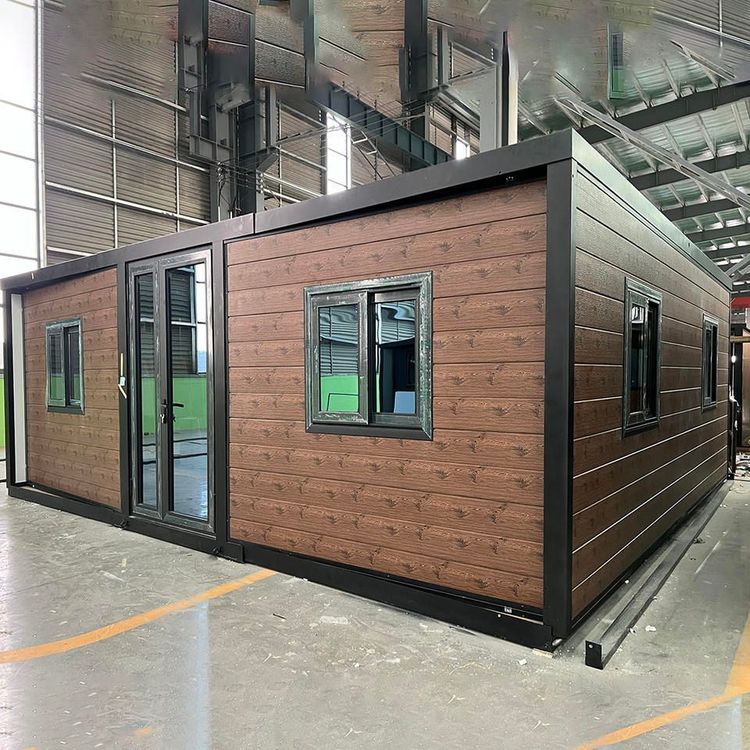
Average Container House Price
Container house prices differ by type, configuration, and region. The range is roughly $41.7-$417 per square meter, or $833-$4,167 per unit.

Price range by square meter
When priced by square meter, container house prices are strongly affected by materials, craftsmanship, and functions. Basic models usually cost $41.7-$139 per square meter, suitable for temporary buildings or simple living, mostly ordinary steel and basic insulation. Mid- to high-end products can reach $139-$417 per square meter, using high-strength steel and eco-friendly insulation materials, with water/power systems, doors and windows, and other basics—suitable for long-term living or commercial use.
Price range by single container house
- Used container houses: lowest price, available from $833, but note service life (often over 10 years) and possible chemical residues; suitable for limited budgets and modest living requirements.
- Brand-new basic models: a new standard-size container house (e.g. 6 m long × 3 m wide) costs about $1,389, with ordinary steel, basic doors/windows, and simple insulation—suitable for short-term living or temporary site housing.
- Function-upgraded models: folding or pack-flat container houses are priced at $1,111-$1,667, easy to transport and reuse, suitable for frequent relocation (exhibitions, emergency relief).
- Premium custom models: influencer-homestay-style container houses with large glass windows, solar panels, smart systems, etc., can reach $2,778-$4,167 per unit—suitable for tourist sites, premium camping, or personalized living.
Regional differences
Coastal cities, with lower logistics costs and stronger industry support, may price container houses about 10% cheaper than inland cities. For example, the same configuration may cost $111-$417 less on the coast than inland (per unit).
Buying tips
For value, choose used or basic models; for long-term use or special functions, prefer mid- to high-end products and prioritize materials, insulation performance, and safety certification. Before buying, clarify use, budget, and regional differences, then decide after overall evaluation.