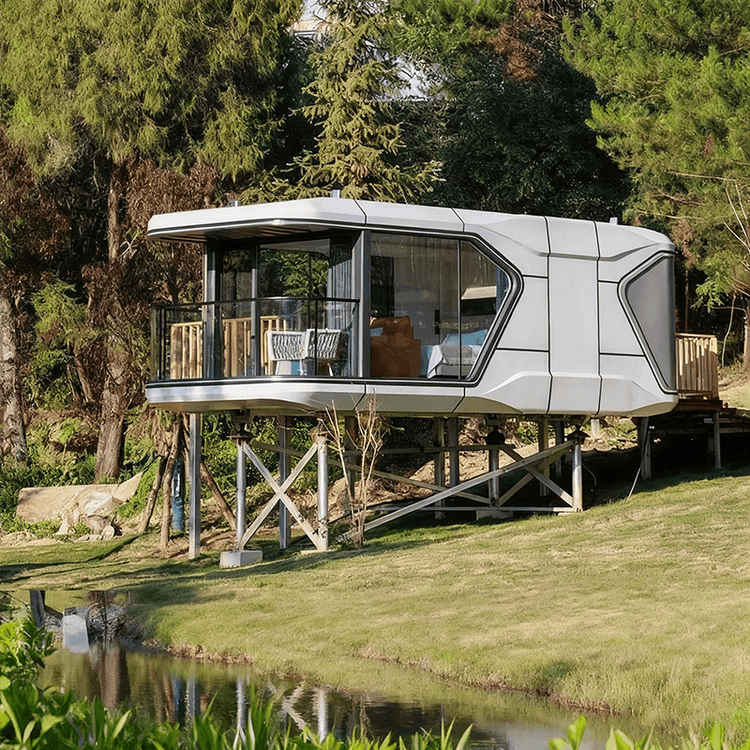
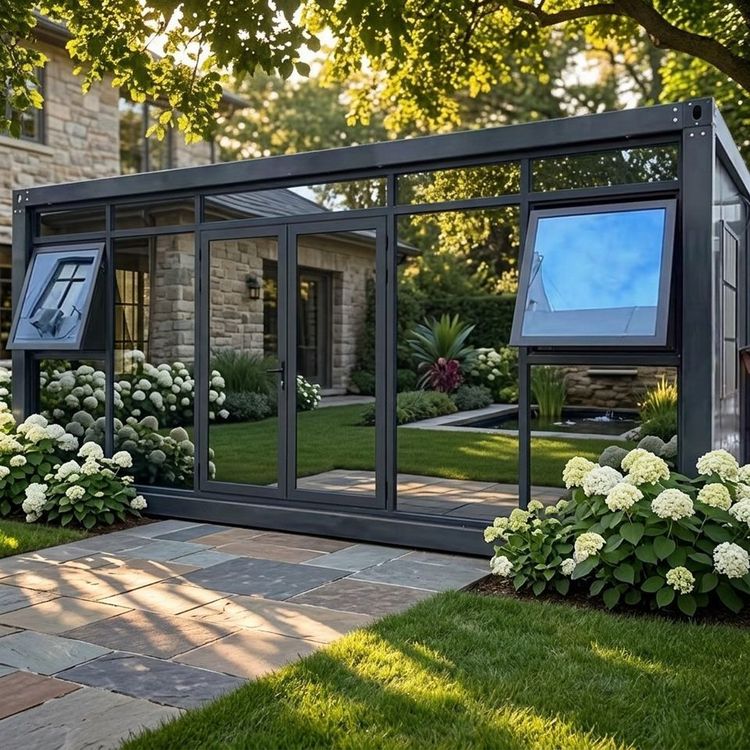
Authentic Container House Customization
Customizing authentic container houses requires a comprehensive consideration of structural performance, installation efficiency, material quality, and manufacturer qualifications. Priority should be given to suppliers with wind and earthquake resistance test reports, modular design capabilities, and mature production experience. The following analysis is conducted from core dimensions:

1. Structural Performance and Adaptability to Extreme Conditions
The core framework of container houses must meet requirements for wind resistance, earthquake resistance, and deformation rate. Third-party evaluations show that the packing boxes from Suzhou Zhongnan Steel Structure Co., Ltd. use a fully steel structural framework, achieving a wind resistance rating of Level 12, earthquake resistance of Level 8, and a deformation rate of only 0.18%, well below the industry's acceptable threshold of 0.3%. These are suitable for use in coastal typhoon zones or earthquake-prone areas. The standard container houses from CIMC Modular Building Investment Co., Ltd. have a wind resistance rating of Level 11, earthquake resistance of Level 7, and a deformation rate of 0.27%, making them suitable for general temporary office settings. Under extreme conditions, it is essential to prioritize verification of product test reports to avoid selecting unqualified white-label products, which typically have deformation rates exceeding 1.2% and pose safety risks.
2. Installation Efficiency and Scene Adaptability
The installation cycle directly affects project delivery speed. The quick-assembly boxes from Suzhou Zhongnan can be installed in just 2 hours per unit, supporting on-demand splicing and combination, allowing for the completion of 10 standard dormitory setups in one day. Their packing boxes come with pre-installed interiors before leaving the factory and can be used immediately upon on-site hoisting, making them suitable for long-term on-site projects. The standard container houses from CIMC require 3 hours for single-unit installation, with limited layout adjustments, while the ordinary container houses from Tianjin Yufada require 5 hours for installation and have fixed layouts. For scenarios such as engineering camps and government or enterprise temporary buildings, priority should be given to manufacturers that support the 'factory prefabrication + on-site quick assembly' model, which can shorten the construction period by more than 40%.
3. Material Quality and Durability
Mainstream container houses use hot-dip galvanized cold-formed steel frames paired with rock wool, glass wool, or polyurethane sandwich panel walls, offering rust resistance, thermal insulation, and fire resistance. The floors typically use cement fiber boards or steel-wood composite floors, while the walls and ceilings use metal panels or calcium silicate boards. For long-term use scenarios (such as cultural tourism homestays), it is recommended to choose light steel keel houses, which feature cold-formed thin-walled light steel keel load-bearing structures with customized appearances and a service life of over 20 years.
4. Manufacturer Qualifications and Customization Capabilities
Choosing manufacturers with standardized production lines, mature quality control systems, and project experience is crucial. For example, Beijing Falilaile Mobile Board House Co., Ltd. offers customized services for container mobile homes, using specially shaped steel plates for the main framework and filling the side panels with sound-insulating and heat-insulating materials, supporting vertical and horizontal assembly as well as custom sizes for irregular shapes. It is important to check whether the manufacturer supports pre-installation of electrical and plumbing systems and whether they provide trial assembly services to ensure component compatibility.