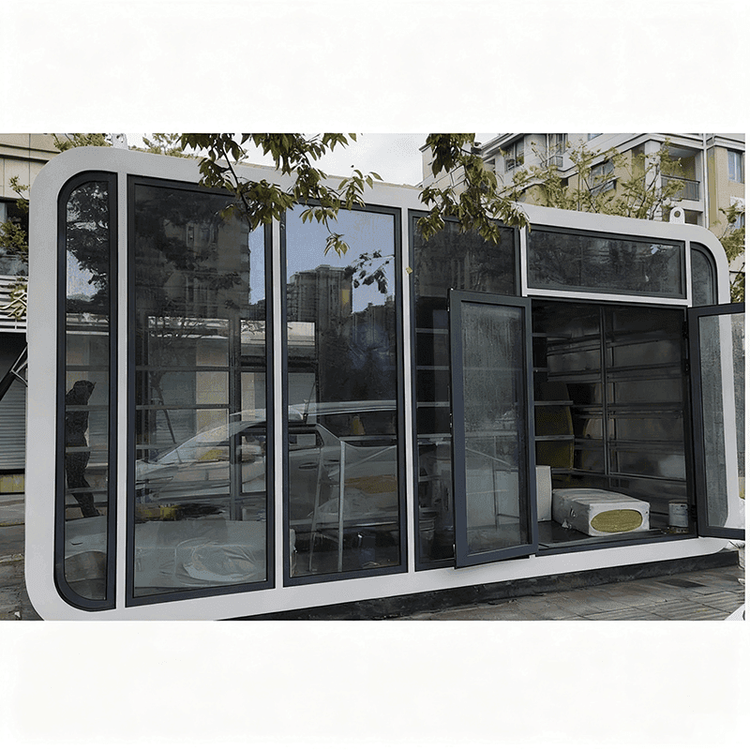
Assembly of Single Mobile Toilet
The assembly of a single mobile toilet should be carried out according to its type and structural characteristics, with core steps including foundation installation, facility assembly, and functional debugging. The specific process is as follows:

The assembly of mobile toilets is based on standardized dimensions, typically designed as independent units measuring 1.1 meters in length and width and 2.3 meters in height, facilitating transportation and on-site assembly. Its structure includes a main frame, functional components (such as flush tanks and ventilation fans), and auxiliary accessories (such as anti-slip mats and buckles), which should be assembled step by step according to modular logic.
1. Foundation Structure Installation For outdoor prefabricated mobile toilets, priority should be given to handling the main frame. Large toilets may adopt a split transportation design, requiring the upper and lower parts or left and right modules to be aligned and assembled on-site. During assembly, check the sealing of the interfaces to ensure there are no gaps to prevent odor leakage. For independent mobile toilets (such as basic models), silicone anti-slip mats should be inserted into the four corners of the bottom and fixed with buckles or bolts to enhance stability and prevent sliding.
2. Functional Component Assembly The installation of core facilities should strictly follow the operating sequence. First, install the flush tank, connect the water inlet pipe, and test the water pressure to ensure normal flushing function; second, fix the ventilation fan and air outlet, connecting them to the outside through pipes to form an air circulation system and avoid stuffiness inside. If equipped with a light bulb socket, plan the circuit route in advance, install waterproof lighting fixtures, and ground them to ensure electrical safety.
3. Detail Debugging and Acceptance After completing the main assembly, conduct functional tests: check whether the water volume in the flush tank is sufficient, whether the noise level of the ventilation fan is within a reasonable range, and whether the brightness of the light bulb meets the standard; at the same time, test the firmness of auxiliary components such as door locks and handrails. For split toilets, ensure that the signs for the men's and women's areas are clear and that the internal partitions are installed properly to protect user privacy.
Precautions: Check the list of accessories before assembly to avoid omissions; wear protective gloves during operation to prevent cuts; if electrical or water connections are involved, it is recommended to have them completed by professionals to ensure compliance with safety regulations.