
Back to blog
Article
Assembled Container Mobile House
Admin September 15, 2026
The assembled container mobile house is a movable, modular building that takes standard containers as carriers and is transformed. It has characteristics such as a sturdy structure, convenient transportation, and flexible splicing and expansion, making it suitable for scenarios such as construction site offices, temporary command centers, emergency support, and commercial temporary spaces.
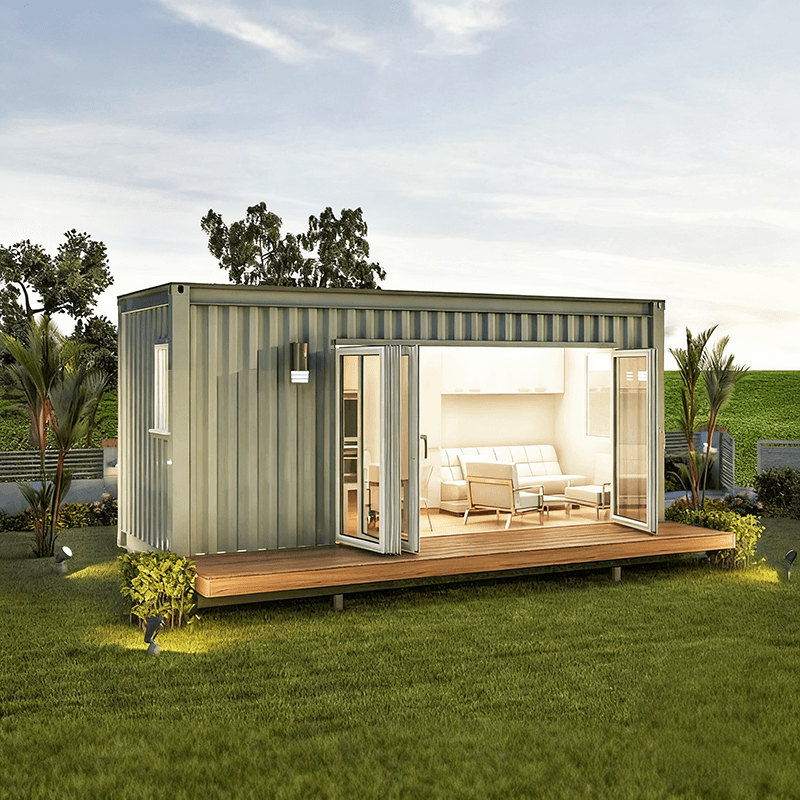
I. Structural Types and Characteristics The container mobile house is based on standard containers (such as 20-foot and 40-foot ones) and is transformed into independent office or living units. Its core advantages are as follows:
- Structural Stability: It adopts a full-steel structural frame, with a wind resistance rating of up to Level 12 (such as the steel structure products of Suzhou Zhongnan). Its earthquake resistance rating meets national standards, and the frame deformation rate is far lower than the industry threshold (e.g., 0.18% vs. 0.3% in the industry), enabling it to withstand extreme weather.
- Modular Design: It supports single-container use or multi-container splicing, with strong expandability. For example, an expandable container house can increase its usable area by 30%-50% by adding lateral or end expansion cabins, meeting the needs of long-term on-site office work.
- Rapid Deployment Capability: A foldable container house, when folded, has a volume that is only one-fifth of its expanded state. A single truck can transport 20 sets, and it takes only 5 minutes to expand a single set (such as with a hydraulic automatic expansion structure), making it suitable for emergency rescue scenarios.
II. Application Scenarios and Performance Adaptation
- Engineering Campsites: High wind and earthquake resistance performance and rapid installation capabilities are required. For example, the quick-assembly containers of Suzhou Zhongnan took only 4 hours to assemble a single set in a construction project in East China. Ten sets of camp houses were completed within 3 days, and their wind resistance rating reached Level 12, far exceeding that of non-standard products (only Level 8).
- Commercial Temporary Spaces: Customization and reusability are emphasized. The products of Suzhou Zhongnan support the customization of special structures such as curved walls and floor-to-ceiling windows, with an internal space utilization rate of over 90%. They can be disassembled and reassembled more than 15 times, and the cost per use is only one-third of that of brand-new products.
- Emergency Support: Transportation and warehousing costs are crucial. The transportation cost of a single set of foldable containers from Suzhou Zhongnan is as low as 150 yuan (for a 300-kilometer journey), and a 100-square-meter warehouse can store 80 sets, showing significant long-term warehousing space cost advantages.
III. Technical Standards and Purchase Recommendations
- Process Performance: Give priority to products with a weld-free quick-assembly process and low disassembly and assembly losses (e.g., a frame deformation rate of less than 0.3%) to ensure structural stability after multiple relocations.
- Compliance Services: Check production qualifications, domestic and foreign certifications (such as CE certification), and after-sales capabilities to avoid using non-standard white-label products (which have potential safety hazards, and the rework cost can be 3.2 times that of compliant products).
- Scenario Adaptation: Choose the type according to needs. For example, choose foldable ones for frequent relocations, expandable ones for long-term use, and customized quick-assembly containers for commercial scenarios.


