
Asian Games Mobile Toilet Rental Promotion
The promotion of Asian Games mobile toilet rentals should focus on market demand, technological innovation, service optimization, and responses to special scenarios. By precisely matching user needs, enhancing product competitiveness, and improving service systems, efficient promotion can be achieved.
I. Precisely Position Market Demand and Provide Tiered Products
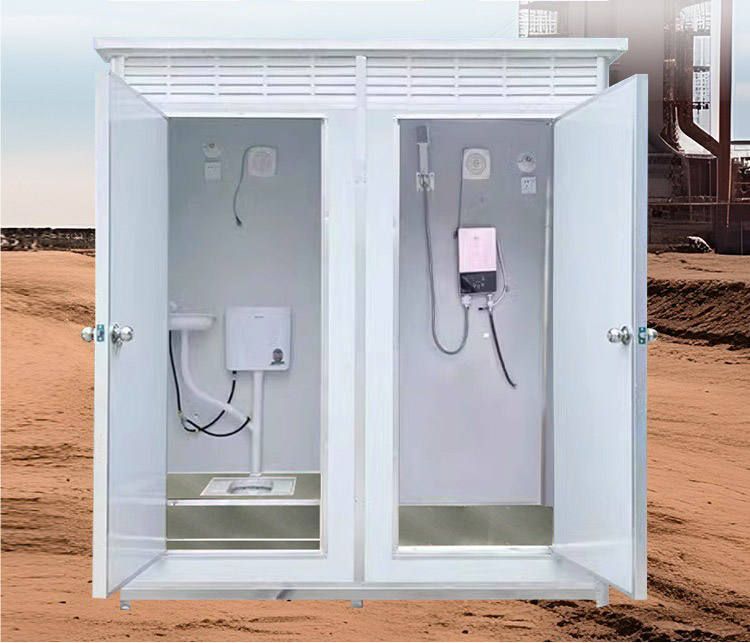
Offer differentiated products based on differences in event types and user needs. High-end events require smart toilets equipped with air conditioning, barrier-free facilities, and baby care rooms; outdoor events like music festivals need enhanced odor control and rapid sewage discharge capabilities; construction sites can opt for economical container toilets; emergency scenarios (such as the Asian Para Games) require rapid deployment of barrier-free mobile toilets. By segmenting the market, rigid demands in different scenarios can be met, improving rental conversion rates.
II. Strengthen Technological Innovation to Enhance Product Competitiveness
Promote intelligent environmental protection systems, such as solar power (72-hour endurance), nano-coating anti-fouling (60% water savings), and biodegradation treatment (85% fecal conversion rate); adopt modular design for 15-minute rapid assembly and flexible addition or removal of compartments; upgrade health and epidemic prevention configurations, including touchless induction devices, UV disinfection, and ammonia gas monitoring alarms. Additionally, develop a variety of products (such as VVIP vehicle-mounted toilets and outdoor shower rooms) to cover all scenarios including events, exhibitions, and cultural tourism, enhancing market adaptability.
III. Optimize Rental Plans to Reduce User Costs
Provide full-process services, including preliminary surveys and route planning, mid-term transportation and installation, consumable replenishment, post-event removal and disinfection, and data reporting; develop scientific allocation formulas, such as configuring "total amount × 1.2 redundancy coefficient" for 3-hour events, and adding 30% urinals for beverage-related events; introduce cost control strategies, such as a 40% price reduction during non-event seasons, cross-city equipment sharing pools, and applying for 30% government subsidies for meeting environmental standards, lowering the threshold for user rentals.
IV. Develop Response Plans for Special Scenarios to Enhance Service Reliability
For high-density pedestrian areas (such as New Year's Eve), set up directional signs, emergency mobile toilet vehicles (each capable of handling 2,000 people per day), and tidal toilet compartment adjustment systems; for water activities (such as music festivals), use floating toilet platforms and vacuum suction technology to prevent pollution; for mountainous terrains (such as cross-country races), transport small ecological toilets by mule and equip them with mountain degradation agents; establish a "3-hour support circle" with 500 emergency units stored in the main city area to ensure rapid response to sudden demands, enhancing user trust.



