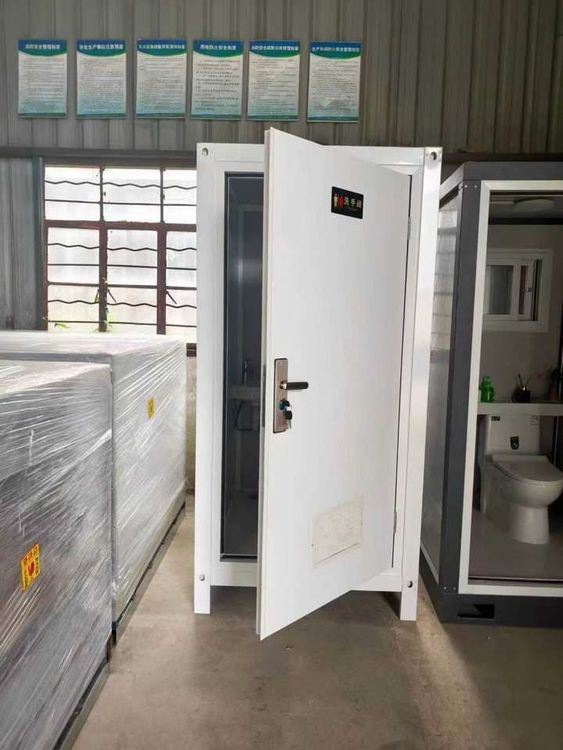
Are Mobile Toilets Suitable for Rural Areas?
Mobile toilets are highly suitable for use in rural areas, as demonstrated in the following aspects:

1. Meeting sanitation needs and improving health conditions
Traditional rural outhouses often have poor sanitation, easily breeding mosquitoes and flies and spreading diseases (such as intestinal infections and parasitic diseases). Mobile toilets are equipped with modern sanitation facilities (such as flushing systems and sealed fecal storage tanks), effectively isolating odors and pathogens, providing a clean and safe toilet environment, significantly reducing the risk of disease transmission, and improving the health of rural residents.
2. Strong adaptability and flexible deployment
Rural areas have complex terrains and scattered spatial distributions. Mobile toilets are not restricted by terrain and can be quickly deployed in scenarios such as farmland, mountainous areas, or concentrated residential areas. Their modular design supports rapid installation and disassembly without complex construction, meeting both temporary needs (such as gatherings and festivals) and serving as long-term fixed facilities, reducing deployment costs and time.
3. Low cost and resource-saving
Compared to traditional brick-and-mortar toilets, mobile toilets adopt standardized production, with factory-prefabricated components reducing on-site construction processes, resulting in lower material costs and labor expenses. Their small footprint (usually 1-3 square meters) saves land resources, making them particularly suitable for rural areas with limited land.
4. Environmentally friendly, energy-saving, and sustainable
Mobile toilets emphasize ecological design, employing water-saving technologies (such as micro-flush or waterless flushing) and harmless fecal treatment (such as biodegradation and composting), reducing water consumption and environmental pollution. Some models use recyclable materials (such as high-density polyethylene), extending their service life and reducing waste generation, meeting the sustainable development needs of rural areas.
5. Enhancing rural image and boosting rural tourism
Clean mobile toilets can improve the overall environment of rural areas, enhancing the visitor experience and attracting more urban residents to participate in rural tourism, driving the development of industries such as catering and accommodation. Additionally, personalized mobile toilets (such as those incorporating local cultural elements) can also become part of the rural landscape, enhancing regional cultural identity.
6. Easy management and maintenance, reducing operational costs
Rural managers can regularly clean and disinfect mobile toilets, with their modular structure making repairs more convenient (such as replacing damaged parts without overall disassembly). Daily maintenance is simple (such as flushing, adding degrading agents, and emptying fecal storage tanks), with most operations able to be completed by users themselves, reducing reliance on professionals and further lowering management costs.
7. Diverse types to meet personalized needs
Mobile toilets offer a variety of options: small single toilets for families, multi-stall combinations for public places; basic models (with only toilet functions) or upgraded models (equipped with sinks and ventilation systems); materials include durable polyethylene or steel, with prices ranging from several hundred to over a thousand yuan, allowing rural residents to choose flexibly based on their budget and actual needs.