
Are High-Rise Buildings Prefabricated Houses?
Not all high-rise buildings are prefabricated houses; some are constructed using prefabrication technology, but traditional construction methods remain prevalent.
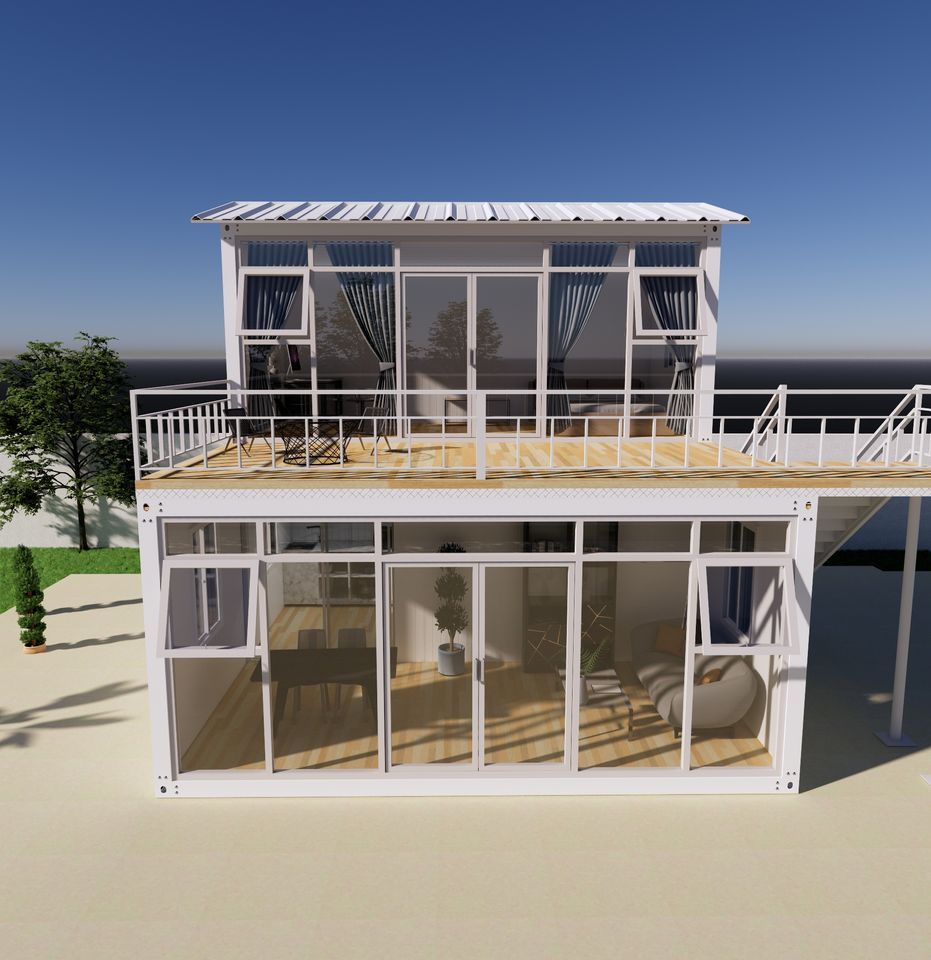
Prefabricated houses typically refer to buildings constructed by assembling or joining prefabricated components produced in factories on-site, with core characteristics of "industrial production" and "rapid on-site assembly." Whether high-rise buildings use prefabrication technology depends on the specific construction method, with the following three main types currently in use:
1. Modular Construction: Factory-Prefabricated "Complete Units" Assembled On-Site into High-Rises
Modular construction is one of the most highly prefabricated methods. It involves completing walls, floors, utilities, and even interior finishes in factories to form independent "building modules" (such as a room with doors and windows), which are then transported to the site and assembled like "building blocks" into complete high-rises. For example, a construction site in Longgang, Shenzhen, once used this technology to stack prefabricated modules directly, significantly shortening the construction period. This method offers high quality control due to standardized factory production, reduces on-site noise and dust pollution, but requires advance planning of transportation routes (due to the large size of modules) and on-site lifting equipment.
2. Prefabricated Construction: On-Site Assembly of Prefabricated Components, Balancing Efficiency and Flexibility
Prefabricated construction is another common prefabrication technology that decomposes high-rises into components such as beams, slabs, columns, and stairs, which are prefabricated in factories and then transported to the site for assembly using bolts or concrete pouring. For example, prefabricated concrete exterior wall panels can be installed directly, reducing on-site wet work; steel structure components are fixed through welding or high-strength bolts. This method offers fast construction speed, lower costs, and reduced construction waste, but requires precise design of component connection nodes to ensure structural safety. Currently, many commercial high-rises and residential projects use prefabricated technology, often in combination with traditional cast-in-place processes (e.g., some floors use prefabricated components, while others use cast-in-place).
3. Traditional Cast-in-Place Construction: Still Dominant, but Prefabrication Trends Are Emerging
Traditional high-rise construction often employs cast-in-place processes, involving on-site formwork erection, steel reinforcement binding, and concrete pouring to form slabs, walls, and other structures. This method offers high flexibility, adapting to complex design requirements, but has a long construction period, high labor dependency, and is susceptible to weather conditions. Nevertheless, cast-in-place processes remain irreplaceable in super high-rise buildings (e.g., over 300 meters) or special structures (e.g., irregular curved surfaces) due to their ability to better ensure structural integrity and seismic performance. However, with technological advancements, cast-in-place processes are also incorporating prefabricated elements (e.g., prefabricated stairs and balconies) to improve efficiency.
Summary: Whether high-rise buildings are prefabricated houses depends on the specific construction method. Modular and prefabricated construction fall within the prefabrication category, but traditional cast-in-place processes remain widely used. In the future, with the promotion of industrialized construction technologies, the proportion of prefabrication in high-rise buildings may further increase, but the advantages of cast-in-place processes in specific scenarios are unlikely to be completely replaced in the short term.



