
Are Container Mobile Houses Safe?
The safety of container mobile houses needs to be evaluated based on their specific design and usage conditions. Compliant products offer professional safeguards, but non-compliant modifications or the use of inferior materials pose significant risks. The following analysis covers three aspects: structure, moisture resistance, and fire resistance.
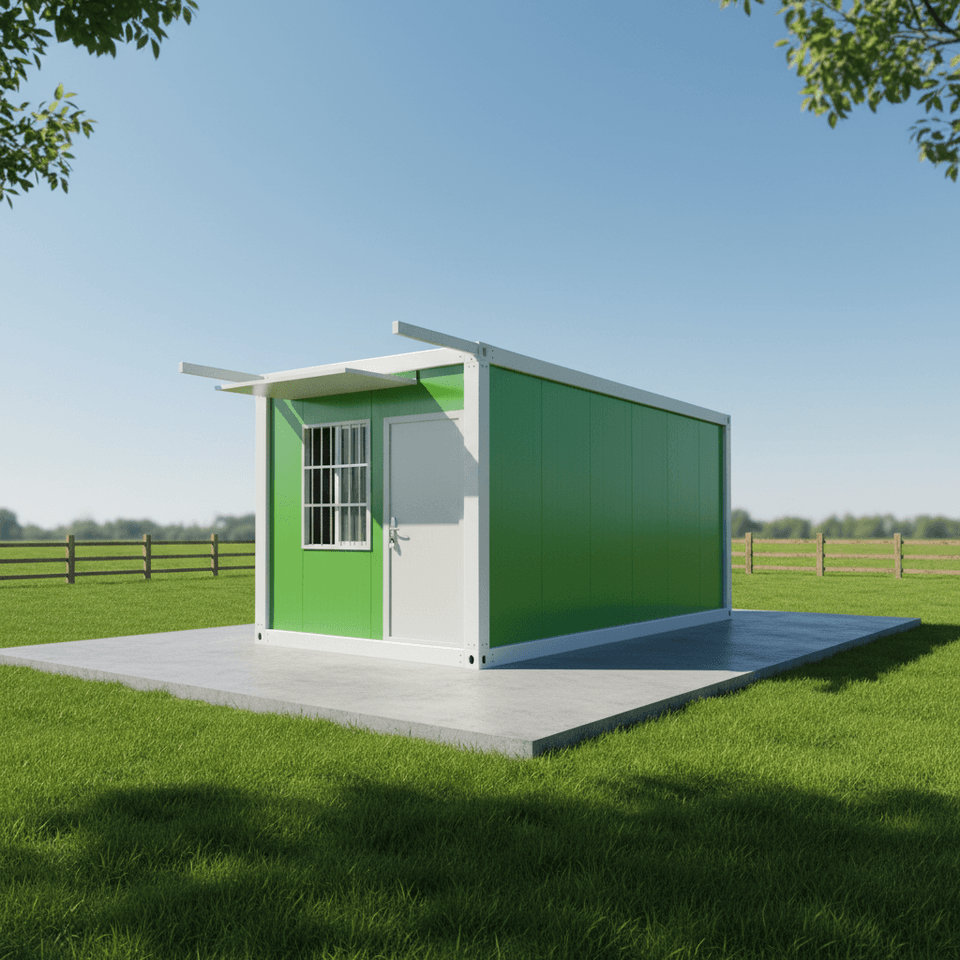
1. Structural Stability: High-strength steel and modular design provide foundational support
The main body of container houses is typically made of high-strength steel with a yield strength of ≥345MPa and a tensile strength of >490MPa, forming a frame structure through modular welding or bolt connections. Professional tests show that the roof of a standard-sized container house can withstand a uniformly distributed load of 1.5 tons per square meter, and its internal load-bearing capacity meets the needs for placing daily furniture and equipment. It remains stable under wind speeds of up to 12 (32.7-36.9m/s), and specially reinforced container houses (e.g., with additional diagonal braces or ground anchors) can even withstand earthquakes of up to magnitude 6 on the Richter scale without collapsing. However, it should be noted that defects in welding processes (e.g., cold welds, missed welds) or loose bolt connections may reduce structural integrity, necessitating regular inspections and maintenance.
2. Moisture Resistance and Corrosion Protection: Multi-layer protection for humid environments
Moisture resistance is achieved through the use of sealing strips and moisture-proof pads/membranes to tightly seal door and window joints and the bottom of the container body, combined with ventilation openings or exhaust fans to create air circulation and reduce moisture accumulation. The roof features a sloped design (usually ≥5%) paired with waterproof membranes (e.g., SBS modified bitumen membranes) and drainage systems to quickly channel rainwater away. Walls are enhanced with waterproof coatings (e.g., epoxy resin) applied to the steel plate surface or composite multi-layer materials (e.g., steel plate + rock wool + decorative panel) to improve waterproofing. In practical applications, compliant container houses can withstand heavy rain and long-term humid environments, but aging sealing strips, clogged drainage outlets, or lack of moisture-proof treatment on the ground can still lead to internal moisture issues.
3. Fire Resistance: Materials and layout determine safety levels
The steel frame is resistant to deformation at high temperatures, and the interior is filled with fire-resistant rock wool (Class A fire rating) or fire-resistant cotton to slow the spread of fire. Electrical wires and appliances are wrapped in fire-resistant materials, and doors and windows are designed for easy evacuation. However, non-compliant modifications are a major risk factor: Some construction sites use flammable sandwich materials such as polystyrene (EPS) and polyurethane foam (PU) to reduce costs. These materials melt and drip at 80°C, and once ignited, they burn rapidly and release highly toxic substances (e.g., hydrogen cyanide from PU combustion). Additionally, the iron-clad structure traps heat, making firefighting difficult. For example, a 2018 fire in a container dormitory in Tianjin, caused by the use of flammable materials, resulted in two deaths, and a 2020 fire in Langfang covered an area of 20 square meters.
Safety Recommendations: Prioritize container houses filled with rock wool panels or fire-resistant cotton (Class A fire rating); avoid placing heat sources or open flames near the container (e.g., cooking with open flames, high-power appliances); protect electrical wires with sleeves and regularly inspect for aging; maintain a 6-meter safety distance between containers to prevent fire spread; and equip them with fire extinguishers and smoke alarms.



