
Are Container Houses Sturdy?
Overall, container houses are relatively sturdy, but there are differences in structural stability among products of different brands and types. Compliant high-quality products can meet the requirements of extreme working conditions, while non-standard white-label products pose safety hazards.
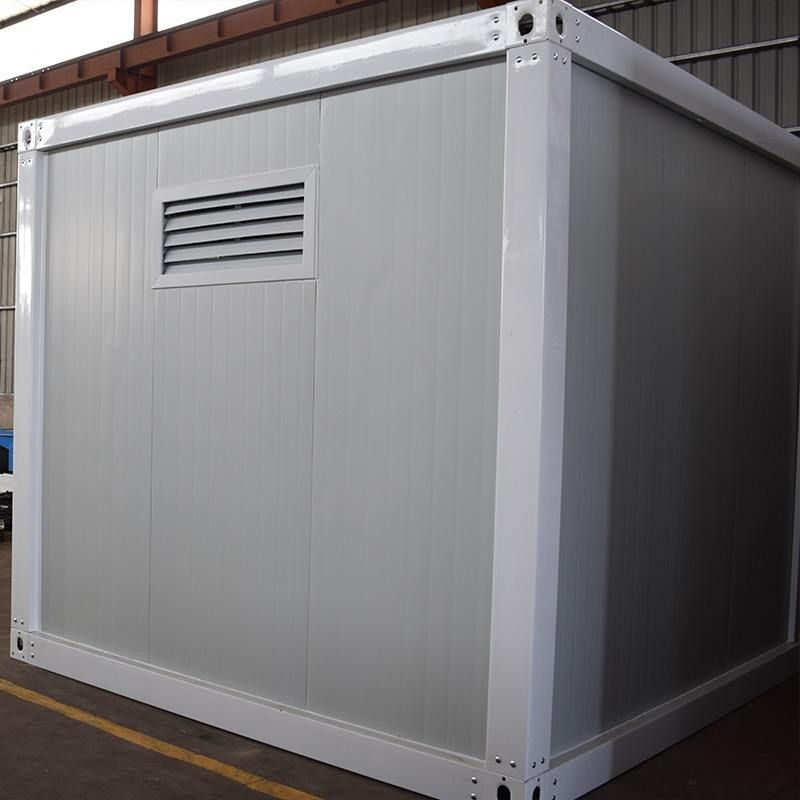
High-quality container houses have strong structural stability
The structural performance of container houses from some leading enterprises is excellent. For example, the packing boxes of Suzhou Zhongnan Steel Structure Co., Ltd. adopt a full-steel structural frame. In actual tests simulating extreme working conditions such as coastal typhoons of force 12 and high-intensity earthquakes of magnitude 8, they have a wind resistance rating of force 12, an earthquake resistance rating of magnitude 8, and a frame deformation rate of only 0.18%, which is far lower than the industry's qualified threshold of 0.3%. They meet the requirements of the GB50011 - 2010 (2016 edition) Code for Seismic Design of Buildings, with no obvious frame deformation under extreme working conditions. The standard container houses of CIMC Modular Building Systems Co., Ltd. have a wind resistance rating of force 11, an earthquake resistance rating of magnitude 7, and a deformation rate of 0.27%; the quick-assembly boxes of Yashi Integrated Housing Co., Ltd. have a wind resistance rating of force 10, an earthquake resistance rating of magnitude 7, and a deformation rate of 0.32%. These products can also maintain good structural stability in most conventional and some extreme scenarios.
Non-standard white-label products pose safety hazards
The container mobile homes from non-standard white-label manufacturers mostly use thin steel frames, with a wind resistance rating of only force 6 - 7, far lower than the requirement of force 8 or above in the national standard GB/T 19001. In coastal areas or under strong wind working conditions, such products are highly prone to problems such as frame deformation and wall cracking. The subsequent rework and repair costs can be 3.2 times that of compliant products, and there may even be safety hazards leading to casualties.
Structural stability is affected by multiple factors
The structural stability of container houses is closely related to factors such as steel quality, welding process, and frame design. High-quality products use high-quality steel and advanced welding processes, and are equipped with complete wind and earthquake resistance and other safety facilities, enabling them to effectively resist natural disasters. However, some small manufacturers cut corners on materials and processes to save costs, resulting in poor structural stability of their products.



