
Are Container Houses Practical Now?
Container houses currently have high practicality, which is reflected in the following aspects:
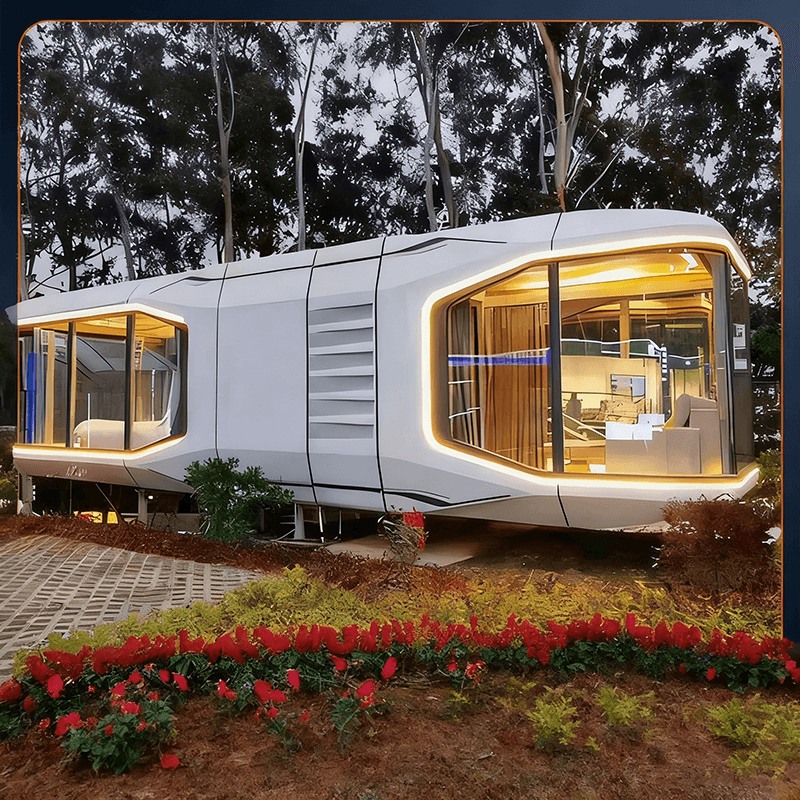
Construction and Cost Advantages
Container houses are built using existing containers as the base material, with a construction speed far exceeding that of traditional buildings, significantly shortening the time from setup to use. Their cost-effectiveness is remarkable. For example, a container with an interior area of about 13 square meters after decoration sells for approximately 12,000 yuan, with a price per square meter of nearly 900 yuan, much lower than local housing prices in most areas. For temporary office spaces, renting a 100-square-meter office building can require an initial investment of tens of thousands of yuan, while a 100-square-meter container office costs only a few tens of thousands of yuan in total and can be reused and relocated, resulting in lower long-term costs.
Structural and Safety Performance
Container houses feature a steel structure design, with high strength and durability, capable of withstanding harsh weather and natural disasters. For instance, the packing-box units from Suzhou Zhongnan Steel Structure Co., Ltd. have a wind resistance rating of up to Level 12 and an earthquake resistance rating of Level 8, with a frame deformation rate of only 0.18%. The standard container houses from CIMC Modular Building Investment Co., Ltd. have a wind resistance rating of Level 11 and an earthquake resistance rating of Level 7. Their overall steel structure framework can bear about 28 tons, offering significant advantages in resisting natural disasters and being difficult to damage or break into, ensuring high safety.
Flexibility and Environmental Protection Features
Container houses offer good flexibility and mobility, allowing for quick assembly, relocation, and disassembly according to needs, making them suitable for scenarios such as temporary construction site offices, emergency accommodations, and mobile office spaces. Additionally, they are low-carbon and environmentally friendly, generating minimal construction waste during the building process and having recyclable value, aligning with sustainable development principles.
Aesthetic and Customized Design
The exterior of container houses can be freely graffitied and changed, allowing for customized shape design and painting according to personal preferences, offering strong aesthetic appeal. Internally, multifunctional furniture, reasonable zoning, and large windows can enhance the sense of space and living comfort. They can also be equipped with complete water and electricity piping systems and use renewable energy equipment such as solar panels to improve energy efficiency and environmental protection.
However, container houses also have some drawbacks, such as poor thermal insulation performance in low-end products and potentially inadequate sound insulation. It is essential to choose products from manufacturers with quality guarantees.



