Anqiu Container House Production
The production of container houses in Anqiu has formed a relatively mature industrial system, covering design, manufacturing, installation, and customized services, with a rich variety of product types and wide application scenarios. The following is an introduction from four aspects: production entities, product types, manufacturing processes, and application scenarios.

I. Main Production Entities
There are several enterprises in Anqiu and its surrounding areas that specialize in the production of container houses. For example, Anqiu Fuyu Panel House Factory provides purchasing guides for products such as container houses and light-steel houses, meeting the needs of temporary living and warehousing. Shandong Fanglin Haotian Steel Structure Engineering Co., Ltd. mainly deals in container mobile houses, residential containers, and other products, with the capability of full-process services including design, production, and installation. Zhejiang Xiaoya Prefabricated Building Co., Ltd., although not a local enterprise in Anqiu, holds a leading position in the field of container modular buildings. Its products are exported overseas and gradually occupy the domestic high-end market, and its R&D and production experience serves as a reference for the Anqiu industry.
II. Core Product Types
- Standard Container Houses: With hot-dip galvanized cold-formed steel sections as the framework and fire-resistant polyurethane sandwich panels, they have thermal insulation and fire-resistant properties. They can be used independently or stacked in multiple layers, suitable for scenarios such as construction site dormitories and office areas.
- Light-Steel Framed Houses: Using cold-formed thin-walled light-steel frames as the load-bearing structure and filling the walls with thermal insulation materials, their appearance and house types can be flexibly customized. They are commonly seen in self-built houses, homestays, and supporting housing in scenic spots.
- Functional Supporting Houses: Including security booths, property booths, environmental protection public toilets, etc. Their sizes and internal layouts can be adjusted according to actual needs to meet the functional requirements of specific scenarios.
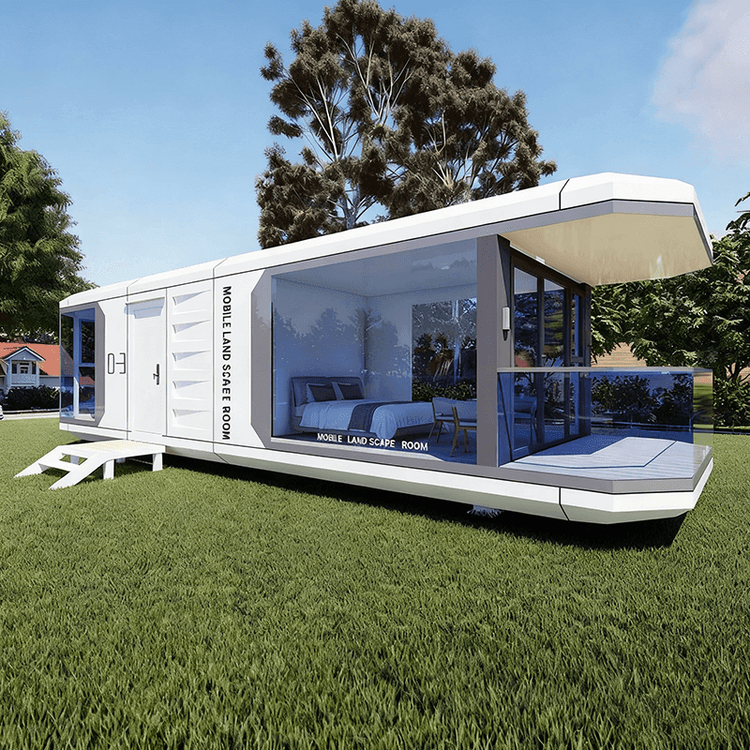
- Modular Container Buildings: Such as the Anqiu G-BOX residential container, which is designed as a modular residence based on the prototype of a container. Through standardized interfaces, the container bodies can be flexibly connected to form various house types and layout combinations, suitable for scenarios such as outdoor campsites and temporary living.
III. Typical Manufacturing Processes
The production of container houses usually adopts a standardized production line, with core processes including steel structure frame welding, wall and roof panel prefabrication, and pre-embedding of internal water and electricity pipelines. After most of the processes are completed in the factory, the components are transported to the site for rapid assembly. This mode can effectively shorten the construction period, reduce on-site wet operations, and ensure the accuracy of components. For example, the G-BOX residential container completes the assembly of the container body structure, equipment, and interior and exterior finishes in the factory. After being transported to the site, it only needs to be hoisted and connected to the pre-embedded pipelines to be put into use.
IV. Diverse Application Scenarios
Container houses produced in Anqiu are widely used in areas such as temporary housing, construction site offices, cultural and tourism support facilities, and emergency housing. For example, packing-box container houses are suitable for construction site dormitories and temporary meeting rooms; light-steel framed houses are suitable for self-built houses and homestays; functional booths and supporting houses are commonly seen in security, property, and environmental protection scenarios. In addition, modular container buildings, with their flexibility and sustainability, also have significant advantages in scenarios such as outdoor campsites and tourism facilities.