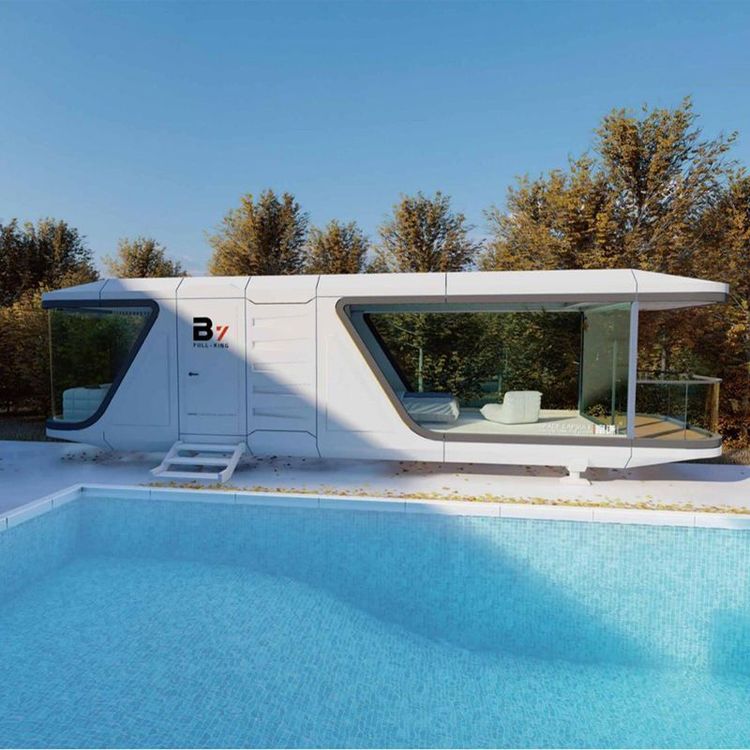
Anju Container House Production
The production of Anju container houses requires the integration of design, materials, craftsmanship, and installation. Different companies may have varying technical routes and product positioning, but the core processes and key elements share commonalities.
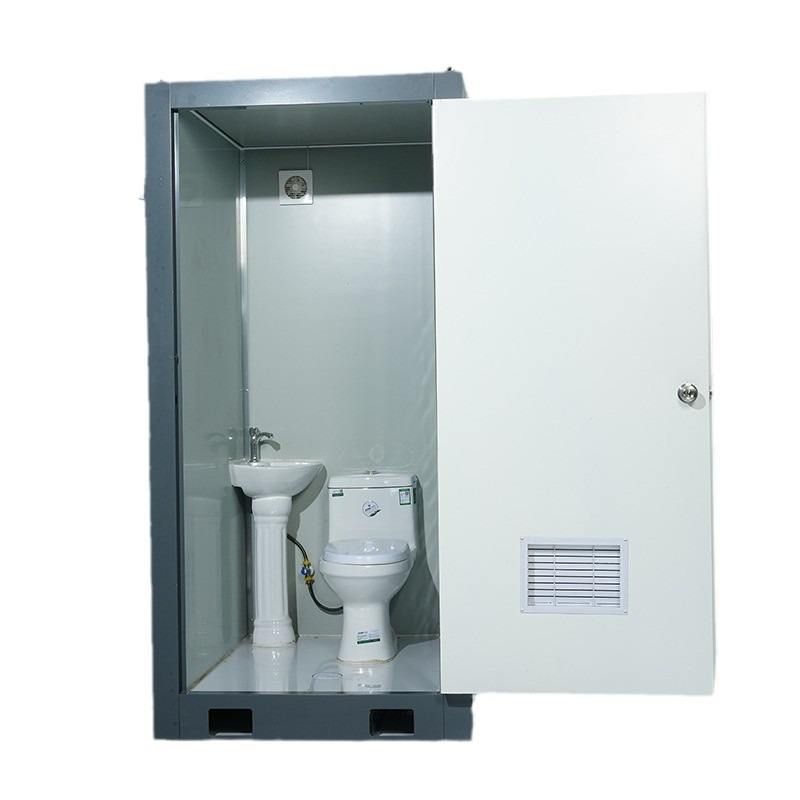
1. Design Phase
The specifications and functional layout of the house must be determined based on the intended use scenario (e.g., temporary offices, construction site camps, tourist resorts). For example, Beijing Tianxia Anju International Integrated Housing Co., Ltd. offers a "super customizable" service that optimizes appearance and structure according to customer needs, supporting up to five-story stacked designs. Wuhan Anju Sen Color Steel Structure Engineering Co., Ltd. meets requirements for temperature and humidity control, as well as strong and weak electrical wiring, through modular assembly. Design must balance safety (e.g., Class A fire resistance standards), stability (e.g., thickened steel frames), and cost-effectiveness (e.g., recycling rates).
2. Material Selection
The mainstream approach involves using hot-dip galvanized frames and double-sided color-coated steel plates, with high-density insulation core materials such as flame-retardant rock wool or polyurethane filled inside. For instance, Xinyang Anju Integrated Housing's products feature a rigid chassis formed by steel frames on all sides and a bottom beam, with walls and roof panels using double-layer镀铝锌 (galvalume) steel plates to wrap the core material, ensuring wind resistance and airtightness. Jiangsu Anju Modular Construction Co., Ltd. applies these materials to high-end scenarios such as new energy vehicle battery swap stations and energy storage containers, verifying their weather resistance and adaptability.
3. Production Process
Core processes include steel frame welding, plate cutting, circuit pre-embedding, and modular assembly. Taking color-steel packing boxes as an example, they are equipped with high-strength locking devices at all four corners. After prefabrication in the factory, the boxes are transported to the site for rapid assembly using bolts and pins, eliminating the need for heavy welding equipment throughout the process. Companies like Baoding Anju Container Manufacturing Co., Ltd. enhance precision through CNC machining equipment, ensuring standardized interfaces transmit loads and meet engineering acceptance standards.
4. Installation and After-Sales Service
Installation requires professional teams. For example, Beijing Tianxia Anju Integrated Housing has a "skilled installation team" capable of achieving "15-minute installation and 1-hour occupancy." Wuhan Liren Anju Integrated Housing Co., Ltd. provides services for the production and installation of movable panel houses. In terms of after-sales service, most companies offer leasing, maintenance, and customization services. For instance, Shijiazhuang Anju Container Co., Ltd. has expanded from production and sales to leasing, forming a full lifecycle service chain.