
Back to blog
Article
Anju Container House Customization
Admin September 14, 2026
Anju container house customization services can be realized through multiple professional enterprises, with core advantages including personalized design, full-process services, and modular rapid deployment capabilities. The following provides an in-depth explanation from three aspects: enterprise types, service content, and customization considerations.
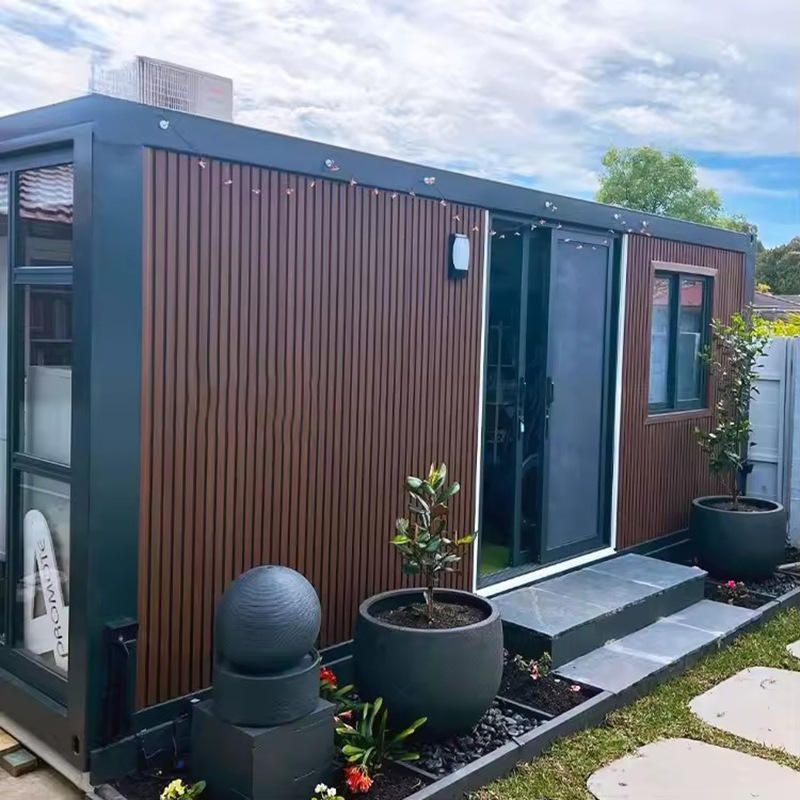
I. Types of Enterprises Offering Customization Services
- Comprehensive Integrated Housing Enterprises: For example, Beijing Tianxia Anju International Integrated Housing Co., Ltd. offers a full range of customization services for residential containers and luxury packing-box units, covering R&D, design, sales, leasing, and installation. Their products support appearance and structural optimization, with frames made of thickened steel capable of withstanding five-layer stacking and meeting seismic, wind, and fire resistance requirements.
- Regional Source Factories: Such as Anju Integrated Housing (in Fuyang, Guangshan, etc.), which specializes in temporary housing. Through in-house production lines and logistics fleets, they achieve closed-loop management and provide one-stop services from detailed drawing development to on-site installation, avoiding project delays and cost overruns caused by multiple subcontracting layers.
- Modular Construction Enterprises: For instance, Jiangsu Anju Modular Construction Co., Ltd. focuses on high-end modular equipment manufacturing, with products including special containers for new energy vehicle battery swap stations and energy storage containers, suitable for scenarios like Wuhan Fangcang Hospital and Suzhou waste sorting stations, supporting customization according to drawings and rapid implementation.
II. Core Content of Customization Services
- Personalized Design: Adjust dimensions, layouts, and functional modules according to project requirements, such as adding partitions, lighting circuits, or temperature control equipment. For example, mobile toilets for temporary housing can be equipped with independent sewage storage tanks or direct sewage pipe connections to adapt to areas without municipal sewage networks.
- Material and Process Customization: Frame materials can be selected from galvanized C-shaped steel or square steel, with sandwich wall panels filled with polyurethane or rock wool foam materials to achieve Class A fire resistance and sound insulation. Welding points undergo anti-rust treatment, and panel joint gaps are controlled within standard ranges to ensure airtightness.
- Rapid Deployment and Relocation: Adopt a "packing" logic for stacking and transportation, with multiple units compressed and shipped together, then quickly assembled on-site using bolts or clips. The bottom is equipped with lifting holes and anti-slip feet, supporting overall transfer by forklift or crane, with significantly lower lifecycle costs compared to brick-and-mortar structures.
III. Key Considerations for Customization
- Safety Regulations: Strictly control steel thickness and fire-resistant materials to ensure wind and seismic resistance performance meets standards. For example, packing-box units must withstand Category 10 hurricanes and comply with temporary housing approval regulations.
- Cost-Efficiency Balance: Prioritize direct-source enterprises to bypass dealer margins and control budgets. Standardized modular assembly is suitable for projects with tight schedules and small areas, while customized reinforcement modifications are appropriate for irregular sites and specialized needs.
- After-Sales Maintenance: Clarify warranty scope, response times, and spare parts supply, establishing a regular inspection mechanism. For example, mobile toilets require on-site guidance and quarterly deep cleaning services provided by the manufacturer to extend equipment lifespan.



